The Indian government borrows over ₹15 lakh crore every year through bonds, yet less than 1% of retail investors own even a single government bond directly. Government bonds offer sovereign-guaranteed returns of 6.8% to 7.5% with zero credit risk; better than most savings accounts and safer than any corporate bond. Despite these attractive rates, many retail investors simply do not know that they can now buy these bonds directly with as little as ₹10,000 through the RBI Retail Direct portal or modern SEBI-registered platforms.
Government Bonds in India 2026
Government bonds in India, also called G-Secs (government securities), are debt instruments issued by the central and state governments to fund public infrastructure, welfare schemes, and fiscal expenditure. Because they are backed by the sovereign status of the issuing government, they are fully guaranteed for both principal and interest repayment.
This guide covers every type of government bond available to Indian retail investors, current yields, how G-Sec prices move with the RBI’s rate decisions, and step-by-step instructions to buy your first government bond online.
Key Takeaways
- Unmatched Safety: G-Secs are the safest investment in India, backed by the absolute sovereign guarantee of the Government of India, which means zero default risk.
- Current Yield Landscape: As of June 2026, the 10-year G-Sec yield sits at roughly ~6.7%, State Development Loans (SDLs) offer 7.2% to 7.8%, and Treasury Bills yield between 6.5% and 7.0%.
- No Commissions: Retail investors can purchase these bonds directly through the RBI Retail Direct platform with zero commission, via NSE goBID, or using SEBI-registered Online Bond Platforms (OBPPs) like GoldenPi.
- Capital Gains Potential: G-Sec prices rise when the RBI cuts interest rates, allowing investors to benefit from both regular coupon income and capital appreciation.
- Highly Accessible: The minimum investment barrier has been lowered to a face value of just ₹10,000 for most G-Secs, making it incredibly easy for retail investors to participate.
What Are Government Bonds in India?
Government bonds (G-Secs) are sovereign debt securities issued by the Reserve Bank of India (RBI) on behalf of the central and state governments to borrow money from the public. They carry zero credit risk because they are backed by the taxing power of the Government of India.
These bonds typically pay fixed interest (called a coupon) twice a year and are available in maturities ranging from 91 days (Treasury Bills) up to 40 years. Today, retail investors can easily invest in them from as little as ₹10,000 through the RBI Retail Direct portal or SEBI-registered online platforms.
Types of Government Bonds in India: Complete Classification
Government bonds in India come in five main types—dated G-Secs, SDLs, Treasury Bills, Floating Rate Bonds, and Sovereign Gold Bonds—each with different tenures, yields, and investor profiles.
Comprehensive Classification Matrix (June 2026)
| Type | Issuer | Tenure Range | Coupon Type | Current Yield (June 2026) | Min. Investment | Taxability | Best For |
| Dated G-Secs | Central Government | 5 to 40 Years | Fixed (Paid Semi-Annually) | Varies by maturity (~5.8-7.1%) | ₹10,000 | Taxed at your slab rate | Long-term investors, retirees |
| State Development Loans (SDLs) | State Governments | 3 to 15 Years | Fixed (Paid Semi-Annually) | 6.3% – 7.5% (depending on maturity and state) | ₹10,000 | Taxed at your slab rate | Yield-seekers wanting sovereign safety |
| Treasury Bills (T-Bills) | Central Government | 91, 182, or 364 Days | Zero-Coupon (Issued at discount) | 5.2% – 5.9% | ₹10,000 | Returns are taxable as per applicable income tax provisions | Parking short-term surplus cash |
| Floating Rate Bonds (FRBs) | Central Government | 7 to 15 Years | Variable (Resets every 6 months) | Linked to a benchmark Government Security yield | ₹10,000 | Taxed at your slab rate | Periodic coupon resets in changing interest rate environments |
| Sovereign Gold Bonds (SGBs) | Central Government | 8 Years (Exit option after 5Y) | 2.50% Fixed + Gold Price changes | 2.50% cash yield + Gold return | 1 Gram of Gold | Interest taxed at slab; Capital gains tax-free at maturity | Long-term gold investors |
Dated G-Secs vs. State Development Loans (SDLs)
The primary distinction lies in who is borrowing your money. G-Secs refer directly to central government debt. State Development Loans (SDLs), on the other hand, are issued by individual state governments (such as Maharashtra, Tamil Nadu, or Karnataka) to manage their state budgets.
Because states are perceived to have a marginally higher operational risk than the central government, SDLs typically trade at a yield spread premium, offering 30 to 60 basis points (0.3% to 0.6%) higher returns than equivalent dated G-Secs, despite still carrying full sovereign backing.
Understanding Treasury Bills (T-Bills)
Treasury Bills do not pay periodic interest. Instead, they are zero-coupon instruments. This means they are issued at a discount to their face value and redeemed at full face value upon maturity. For example, you might purchase a 91-day T-Bill for ₹98.40, and the government pays you ₹100 when the 91 days are up. Your interest return is the ₹1.60 difference.
Must Read: Treasury Bond vs Treasury Bill
Sovereign Gold Bonds (SGBs): The Unique Hybrid
SGBs allow you to invest in gold without the hassle of physical storage. The government pays you a fixed interest rate of 2.5% per year on your initial investment amount, paid semi-annually. At maturity, you receive the cash equivalent of the prevailing market price of gold. If you hold these bonds for the full 8-year term, any capital gains you make from gold price appreciation are completely tax-free.
Latest Gold-Backed Bonds Update:
- SGB Discontinued: 5 SGB Alternatives to Invest in Gold in 2026

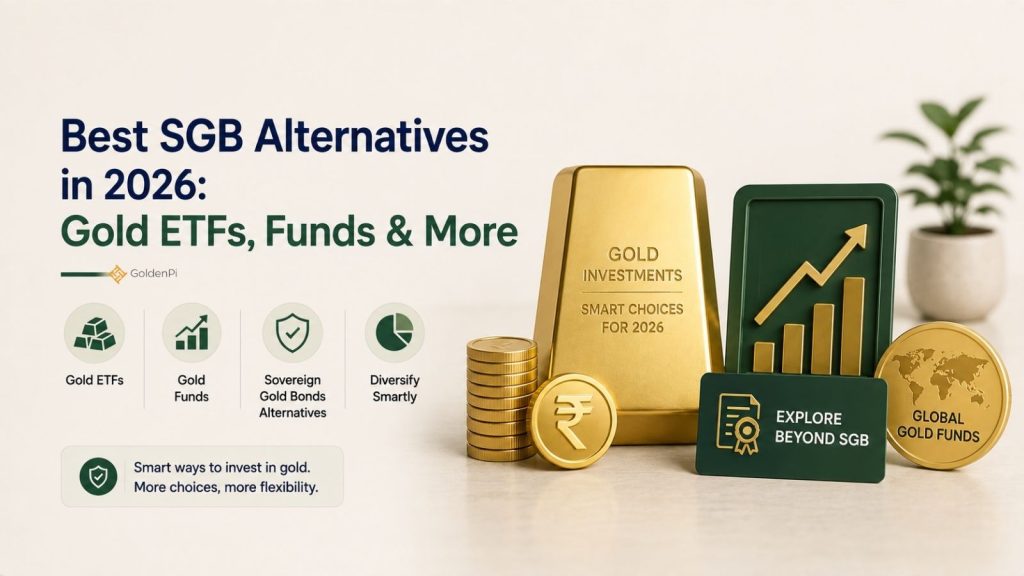
- Best SGB Alternatives in 2026: Gold ETFs, Funds & More
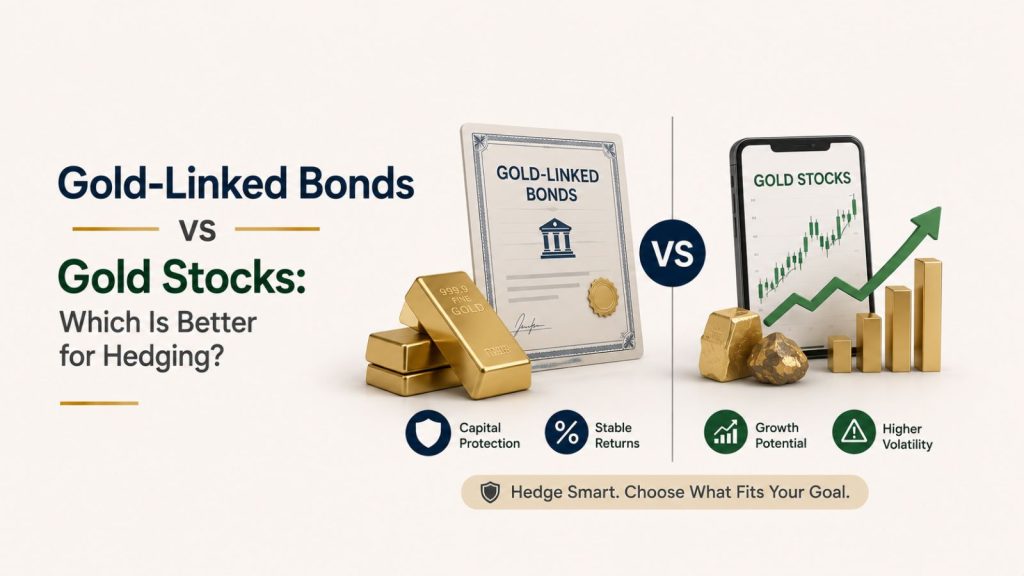
- Gold-Linked Bonds and Portfolio Hedging: When Gold Debt Beats Gold Mining Stocks
To learn more about SGBs maturing in 2026, see our blog on SGB Maturity Guide: Tax Rules, Redemption & Next Steps
India 10-Year Government Bond Yield: What It Means and Why It Matters
The India 10-year government bond yield is the most important number in Indian fixed income. It serves as the benchmark rate that determines corporate bond yields, home loan rates, and the overall cost of capital in the economy.
When the government’s borrowing rate rises, banks and corporate issuers are forced to raise their own interest rates to attract capital. Conversely, when the 10-year G-Sec yield cools down, it triggers a chain reaction that lowers borrowing costs across the country.
G-Sec Yield vs. Macro Policy Trend (2020–2026)
| Year | Average 10Y G-Sec Yield | RBI Repo Rate | Inflation Rate (CPI Annual Avg) |
| 2020 | 5.90% | 4.00% | 6.20% |
| 2021 | 6.20% | 4.00% | 5.10% |
| 2022 | 7.30% | 6.25% | 6.70% |
| 2023 | 7.30% | 6.50% | 5.70% |
| 2024 | 7.10% | 6.50% | 4.80% |
| 2025 | 6.90% | 5.75% | 4.50% |
| Active 2026 (As of June) | ~6.70% | 5.25% | 3.93% (Provisional) |
Macroeconomic Trend Analysis
Over the last six years, the benchmark bond yield has closely tracked the RBI’s monetary decisions. The 10-year yield peaked at a high of 7.60% in mid-2023, when the repo rate stood at 6.50% to combat high inflation. As inflation cooled down toward 4.30% in 2025 and 2026, the RBI began cutting interest rates, bringing the benchmark yield down to its current level of ~6.70% in June 2026.
Worked Example: Making Capital Gains from Falling Yields
Let’s look at how Anil used falling yields to boost his returns:
- In 2023: Anil bought a 10-year G-Sec with a coupon rate of 7.4% at its face value of ₹100.
- By 2025: The RBI cut interest rates, and the yield on new 10-year bonds fell to 6.9%. Because Anil’s older bond paid a much higher interest rate (7.4%) than new bonds, its value in the secondary market rose to ₹103.50.
Anil’s Total Return:
Total Return = Coupon Income (7.4%) + Capital Appreciation (3.5%) = 10.9% in 2 Years
By investing in safe government securities during a period of falling interest rates, Anil earned a double-digit return that rivalled riskier equity investments.
Government Bond Yields in 2026: Current Rates Across All Types
As of June 2026, government bond yields in India range from ~5% for short-term Treasury Bills to ~7% for long-term 30-year G-Secs. State Development Loans (SDLs) continue to offer an attractive premium over central government securities.
1. Central G-Sec vs. SDL Yield Curve (June 2026)
| Maturity Tenure | Dated G-Sec Yield (Central) | SDL Yield (Average State) | Yield Spread Premium |
| 1 Year | 5.90% | 6.25% | 35 bps (0.35%) |
| 5 Years | 6.10% | 6.50% | 40 bps (0.40%) |
| 10 Years | 6.30% | 6.75% | 45 bps (0.45%) |
| 15 Years | 6.55% | 7.45% | 50 bps (0.50%) |
| 30 Years | 6.95% | 7.50% | 55 bps (0.55%) |
Note: Illustrative yield levels based on prevailing market conditions in June 2026. Actual yields vary by issue, state, liquidity, and trading date.
Latest Government Bond Update:
- State Development Loans (SDLs): The Overlooked Government Bonds with Higher Yields

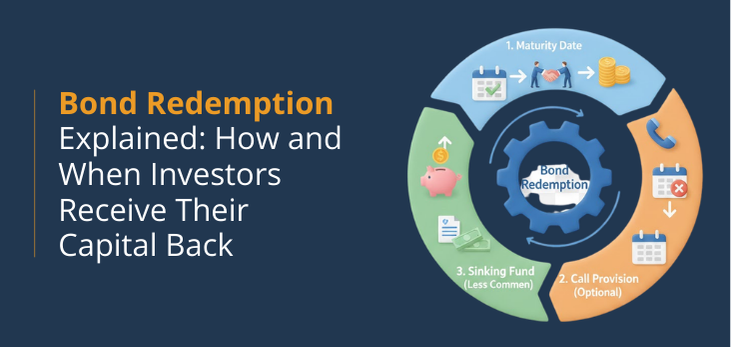
- Bond Redemption Explained: How and When Investors Receive Their Capital Back
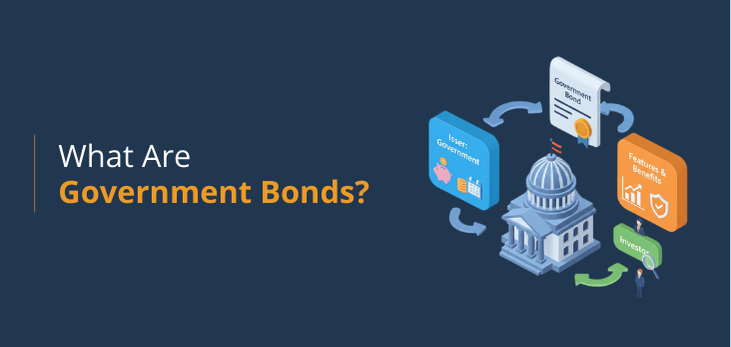
- What are Government Bonds?
2. Factors That Influence State Development Loan (SDL) Yields
SDL yields are highly volatile, with daily fluctuations in the secondary market and weekly auctions in the primary market. They depend on many factors:
| Factor | Effect on SDL Yield |
| Fiscal position of the state | Stronger finances can reduce spreads |
| Auction demand | Higher demand lowers yields |
| Issue size | Larger, more liquid issues may trade at lower yields |
| Market liquidity | More liquid securities typically command lower yields |
| Tenor | Longer maturities generally offer higher yields |
3. Treasury Bill (T-Bill) Yields (June 2026 Auction Results)
| T-Bill Tenure | Typical Yield Range (June 2026) | Auction Frequency | Minimum Investment | How to Bid |
| 91-Day | 5.2-5.4% | Weekly | ₹10,000 | Non-Competitive Bidding |
| 182-Day | 5.4-5.6% | Weekly | ₹10,000 | Non-Competitive Bidding |
| 364-Day | 5.7-5.9% | Weekly | ₹10,000 | Non-Competitive Bidding |
Benefits of Investing in Government Bonds: Why G-Secs Belong in Every Portfolio
Government bonds offer five key advantages that no other fixed-income instrument in India can match: sovereign safety, predictable income, capital appreciation in rate-cut cycles, equity diversification, and tax efficiency.
How G-Secs Compare to Other Options
| Benefit Category | G-Sec Advantage | Comparison with Corporate Bonds | Comparison with Bank FDs |
| Default Risk | Virtually Zero (Backed by the central government’s sovereign guarantee). | High-yield corporate bonds carry the risk of bankruptcy or delayed payments. | Only insured up to ₹5 lakh per bank by the DICGC. |
| TDS on Interest | Generally, interest is paid without TDS for listed G-Secs held in demat; investors are liable to pay applicable income tax. | TDS depends on the type of bond and applicable tax provisions. | Banks deduct TDS once the applicable threshold under the Income-tax Act is exceeded (subject to prevailing rules and declarations). |
| Capital Appreciation | High capital appreciation potential when interest rates fall. | Corporate bonds can also appreciate when interest rates fall, but changes in credit spreads and liquidity may affect returns. | No opportunity for capital gains; your interest rate is locked. |
| Performance During Market Stress | Prices often rise during stock market sell-offs as investors flee to safety. | Corporate bonds may suffer during economic downturns, as credit spreads widen. | FDs remain stable but do not gain value during market crashes. |
How G-Secs Protected Investors During the 2020 Crash
During the March 2020 stock market crash, when the Nifty 50 index fell by a massive 38%, some long-term G-Sec prices appreciated significantly due to a series of factors. This highlights the diversification benefits of G-Secs, which have historically performed well during many periods of equity market stress. However, this relationship is not guaranteed in every market cycle.
Risks of Government Bonds: What to Watch Out For
While government bonds have zero credit risk, they are not entirely risk-free. Before investing, you need to understand interest rate risk, inflation risk, and liquidity risk.
The Real Risks of G-Secs
- Interest Rate Risk: If you need to sell your bond before its maturity date, its price will depend on current interest rates. If rates have risen since you bought the bond, its price will fall, and you could face a capital loss.
- Inflation Risk: If your bond pays a fixed 7% interest rate, but inflation rises to 6%, your real return (adjusted for purchasing power) is just 1%.
- Liquidity Risk: Although billions of rupees worth of government bonds trade daily, most of this trading happens between large banks and institutions. Finding a retail buyer for a specific bond on the stock exchange can sometimes be difficult if you need to sell quickly.
Worked Example: Understanding Interest Rate Volatility
Let’s look at how the changes in interest rates affected Priya’s investment:
- Priya bought a 10-year G-Sec paying a 6.8% interest rate at its face value of ₹100.
- Shortly after, the RBI raised interest rates, and yields on new 10-year bonds rose to 7.8%.
- Because newer bonds offered better returns, the market price of Priya’s bond fell to ₹93.50. If Priya is forced to sell her bond now to get cash, she will face a 6.5% capital loss.
The Solution to Interest Rate Risk: If Priya simply holds her bond until the end of its 10-year term, she does not lose a single rupee. The government will repay her the full ₹100 face value and pay her all scheduled interest payments. To avoid losses, always match the maturity of your bond to your personal investment timeline.
How to Buy Government Bonds in India: 3 Methods for Retail Investors
Retail investors can buy government securities using three primary methods, depending on their existing accounts and investment preferences.
Comparison of Buying Methods
| Feature | RBI Retail Direct | Stock Broker | OBPPs (like GoldenPi) |
| Account Registration | Requires opening a dedicated portal account | Uses your existing Demat account | Quick online setup; links directly to your existing bank and Demat accounts |
| Commission & Fees | No account opening or trading fees charged | Standard brokerage charges or depository fees may apply | Free for primary issues; transparent pricing for secondary market bonds |
| Available Options | G-Secs, Treasury Bills, SDLs, and other eligible sovereign securities | Primarily, government security auctions; secondary market access depends on the broker | Government bonds, state bonds, plus a wide range of corporate bonds and NCDs |
| User Experience | Clean but functional government portal | Varies by broker; requires bidding during specific auction hours for primary auctions | Intuitive; options like comparing bonds side-by-side available |
| Best For | Investors looking for direct access to government securities | Active stock investors who want to manage everything in one portfolio | Diversified investors looking to build a balanced portfolio |
Buying Bonds Through Online Platforms (OBPPs)
Using platforms like GoldenPi allows you to easily compare government bonds with corporate bonds side-by-side. This helps you decide whether the extra yield offered by a corporate bond is worth the added risk or if you should stick to the safety of a government bond.
Take Action: Compare G-Sec yields with highly rated corporate bonds and build a secure, balanced income portfolio.
Explore government securities on GoldenPi today →
Need step-by-step help? Read on Government Securities in India 2026: Types, How to Buy & Why They Are a Safe Investment.
Government Bonds vs. Corporate Bonds vs. FDs: Which One Should You Choose?
When deciding where to park your money, you need to look at safety, returns, liquidity, and taxation side-by-side.
10-Row Fixed Income Comparison
| Feature | Government Bond (G-Sec) | AAA Corporate Bond | A-Rated Corporate Bond | Bank FD (State Bank of India) |
| 1. Average Yield (2026) | 5.90% – 7.10% | 8.00% – 9.00% | 9.00% – 12.00%+ | 6.00% – 6.70% |
| 2. Default Risk | Near Zero (Sovereign Backed) | Extremely Low | Moderate | Covered up to ₹5 lakh per bank |
| 3. Liquidity Level | High | Moderate to High | Moderate | Redeemable before maturity, with a penalty |
| 4. Minimum Ticket | ₹10,000 | ₹10,000 | ₹10,000 | Usually ₹1,000 |
| 5. Tax on Interest | As per your income tax slab | As per your income tax slab | As per your income tax slab | As per your income tax slab |
| 6. TDS Deduction | Generally paid without TDS on listed securities held in demat; interest remains taxable | Depends on the type of bond and applicable tax provisions | Deducted once the applicable threshold under the Income Tax Act is exceeded, subject to prevailing rules and declarations | |
| 7. Capital Gain Potential | High, esp. longer-duration securities | Moderate to High | Moderate to Low | None are held to maturity |
| 8. Role in a Diversified Portfolio | Portfolio safety and capital preservation | Income generation with relatively lower credit risk | Higher income with higher credit risk | Liquidity and short-term savings |
| 9. Available on GoldenPi | Yes | Yes | Yes | No |
Worked Example: Deepak’s Smart Asset Allocation
Deepak, a 55-year-old investor nearing retirement, wants to invest ₹3,000,000 in fixed-income assets. Instead of putting all his money into a standard bank Fixed Deposit (which pays 7%), he decides to build a diversified portfolio:
- Sovereign Safety Layer (40%): Deepak puts ₹1,200,000 into a 10-year G-Sec yielding 7.1% (earning ₹85,200 annually).
- High-Quality Corporate Layer (40%): He puts ₹1,200,000 into AAA-rated corporate bonds yielding 8.5% (earning ₹102,000 annually).
- Yield-Enhancing Layer (20%): He puts ₹600,000 into an A-rated NBFC bond yielding 10.5% (earning ₹63,000 annually).
The Financial Outcomes:
- Deepak’s Total Blended Return: 8.36% (Earning ₹250,800 annually)
- Standard Bank FD Return (7%): 7.00% (Earning ₹210,000 annually)
- The Difference: Deepak earns an extra ₹40,800 every year while keeping 80% of his portfolio in highly secure, low-risk investments.
To explore corporate bond options for your portfolio, click here.
Frequently Asked Questions — Government Bonds India
Government bonds are debt securities issued by the RBI on behalf of the government to raise capital. When you buy a bond, you are lending money to the government. In return, the government pays you a fixed interest rate (coupon) twice a year and returns your initial investment when the bond matures.
They carry zero credit risk, meaning there is no danger of the government defaulting on its payments. However, they are still subject to interest rate risk (prices can fall if interest rates rise) and inflation risk (rising prices can erode the purchasing power of your returns).
As of June 2026, the benchmark 10-year G-Sec yield is hovering around 6.70%, reflecting a stable interest rate environment after the RBI’s recent rate cuts.
You can buy them using three main methods: directly through the free RBI Retail Direct portal, through your existing stockbroker using the NSE goBID platform, or through SEBI-registered online bond platforms like GoldenPi.
The minimum investment is just ₹10,000 for most government securities, Treasury Bills, and State Development Loans, making them highly accessible for retail savers.
SDLs are bonds issued by individual State Governments. They carry the same sovereign backing as Central Government bonds but typically offer a 0.30% to 0.60% higher interest rate to attract investors.
The interest you receive from government bonds is added to your total income and taxed according to your individual tax slab. However, if you hold the bonds in your Demat account, no TDS is deducted from your payments. For primarily issued Sovereign Gold Bonds, any capital gains you make if you hold the bonds until maturity are 100% tax-free.
Risk Warning Box
Risk Alert: Government bonds carry near-zero credit risk but are subject to interest rate risk and inflation risk. If you sell your bonds in the secondary market before they mature, their prices can fall if interest rates have risen. To protect yourself, try to match the maturity of your bond to your personal investment timeline. This article is for educational purposes only. Please consult a SEBI-registered advisor before making investment decisions.
Conclusion
Government bonds are the foundation of any secure fixed-income portfolio. They offer unmatched sovereign safety, predictable income, and the potential for capital gains when interest rates fall.
Thanks to the RBI Retail Direct platform and modern online bond portals like GoldenPi, retail investors can now buy government securities with as little as ₹10,000 without needing to go through complex institutional intermediaries.
Explore a wide selection of government securities, compare G-Sec yields with highly rated corporate bonds, and start building your secure financial future today.
Compare and invest in government securities on GoldenPi →
Disclaimer
The details provided in this guide are for informational and educational purposes only and do not constitute formal investment, financial, legal, or tax advice. While government bonds carry zero default risk, secondary market trading is subject to interest rate risk and market volatility. Past performance and historic yields do not guarantee future returns. Please read all official offer documents, credit rating rationales, and term sheets carefully, or consult a SEBI-registered investment advisor before making any investment decisions.