|
Getting your Trinity Audio player ready...
|
Most investors use one pool of money for everything: daily expenses, short-term goals and long-term wealth creation. That’s where the problem starts. When the same money is expected to handle spending, safety and growth, decision-making often becomes confusing and stressful.
The 3-Bucket Strategy brings structure to this problem. By separating money based on when it will be needed, the approach helps investors manage liquidity, stability and growth in a more organised and practical way.
What Is the 3-Bucket Strategy?
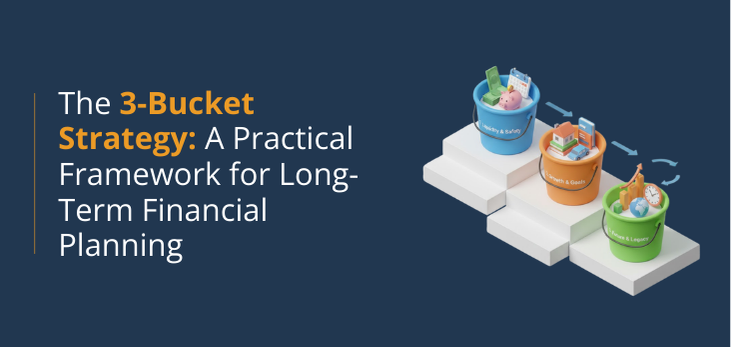
The 3-Bucket Strategy is a simple way to organise your money based on when you will need it. Instead of treating all investments the same, it divides your money into three separate buckets, each with a clear purpose.
- Short-term needs require safety and easy access
- Medium-term goals need a balance between stability and growth
- Long-term goals can focus more on growth over time
This strategy ensures investors make more informed decisions, maintain discipline amidst market fluctuations and optimally allocate their funds toward various long-term life objectives by linking each bucket to a specific time horizon.
The 3-Buckets Explained
Bucket 1: Short-Term Needs
- Purpose: Daily expenses and near-term requirements
- Typical holding period: 0–2 years
- Focus: Capital safety and easy access to money
- Common instruments: Savings accounts, liquid funds, short-term fixed-income options
Bucket 2: Medium-Term Goals
- Purpose: Planned expenses in the next few years
- Typical holding period: 3–7 years
- Focus: Balance between stability and reasonable growth
- How it works: Takes limited risk to beat inflation without large swings
- Instruments usually considered: Medium-term debt, conservative hybrid options
Bucket 3: Long-Term Goals
- Purpose: Wealth creation and future goals like retirement
- Typical holding period: 7+ years
- Focus: Growth over time
- Why volatility is acceptable: Longer time allows markets to recover and compound
- Mindset: Stay invested and avoid reacting to short-term fluctuations
How the Buckets Work Together
| Bucket | Time Horizon | Primary Goal | Risk Level | Role in Portfolio |
| Bucket 1 | 0–2 years | Safety & liquidity | Very low | Covers immediate needs |
| Bucket 2 | 3–7 years | Stability + growth | Moderate | Funds planned goals |
| Bucket 3 | 7+ years | Long-term growth | Higher | Builds wealth over time |
Who Can Use the 3-Bucket Strategy?
- Working professionals
When one salary has to manage monthly expenses, short-term goals, and long-term wealth, this approach brings order instead of confusion. - Retirees or those close to retirement
It helps separate money meant for regular living expenses from money that can stay invested for the long run. - People with irregular income
Freelancers, business owners, or consultants can use buckets to protect essential cash while still investing confidently.
Key Things to Keep in Mind
- Buckets aren’t set-and-forget: Life changes. Goals shift. Your buckets should be reviewed and adjusted over time.
- Your buckets should reflect your comfort with risk: There’s no perfect split. What works for one investor may not work for another.
- This is a framework, not a formula: The strategy guides decisions — it doesn’t lock you into rigid rules.
Final Thoughts
The 3-Bucket Strategy is about clarity, not complexity. By assigning money a clear role, it helps investors stay disciplined, avoid emotional decisions, and stay aligned with long-term goals.
FAQs: The 3-Bucket Strategy Explained
1. What is the three-bucket method?
The three-bucket method is a way to divide your money into short-term, medium-term, and long-term buckets. Each bucket has a clear purpose, so your money isn’t trying to do everything at once.
2. What are the 3 C’s of investing?
The 3 C’s usually stand for Cash, Consistency, and Compounding.
- Cash ensures liquidity for needs
- Consistency builds discipline
- Compounding grows wealth over time
3. What is the 3 pots strategy?
The 3 pots strategy is another name for the 3-Bucket Strategy. Each “pot” holds money for a different time horizon: now, soon, and later, helping investors balance safety, stability, and growth.
4. What is the three-bucket strategy for retirement in India?
In India, the three-bucket strategy helps retirees:
- Keep short-term expenses in safe, liquid options
- Use stable instruments for mid-term needs
- Invest long-term money in growth assets to beat inflation