Sustainable investing was once a phenomenon in other countries but has also found its place in India’s financial markets. In recent years, you may have seen various types of bonds, such as Green Bonds, ESG Bonds, Sustainability-Linked Bonds, and even Blue Bonds. Even though the nomenclature is similar, the underlying concepts and objectives may differ from one another.
Green Bonds and ESG-Linked Debt
The common perception among many investors is that these bonds are used for funding “environment-friendly” projects. However, there is more than meets the eye when we discuss sustainable bonds. Each kind has a different purpose, framework, and mechanism of financing.
In this article, we will cover the concepts of Green Bonds and ESG-linked debt, the regulatory framework in India, and how retail investors can participate in such opportunities.
Disclaimer: The above article is for knowledge purposes only. The information presented is not intended to be a basis for investment advice and should not be construed as such. Investing in bonds entails various risks like market risk, credit risk, liquidity risk, and interest rate risk. Investors are encouraged to read the offer document before making any investment decisions.
Start investing with just ₹10K & grow your wealth with fixed return opportunities.
Invest Now

What Are Green Bonds?
A Green Bond is a type of bond where the funds received through it can be invested solely for financing or refinancing environmentally friendly projects.
These projects could consist of:
- Renewable energy
- Solar and wind power generation
- Energy-efficient buildings
- Environmentally clean transportation
- Water management
- Pollution control
- Sustainable waste management
In comparison to a traditional corporate bond, the issuer pledges to invest the funds solely into green projects and should disclose any information concerning the utilization of funds. The issue of green debt securities in India is regulated under SEBI guidelines for Green Debt Securities.
Latest Bond Updates:
- India State Firms Pull ₹66 Billion Bond Sales as Yields Rise

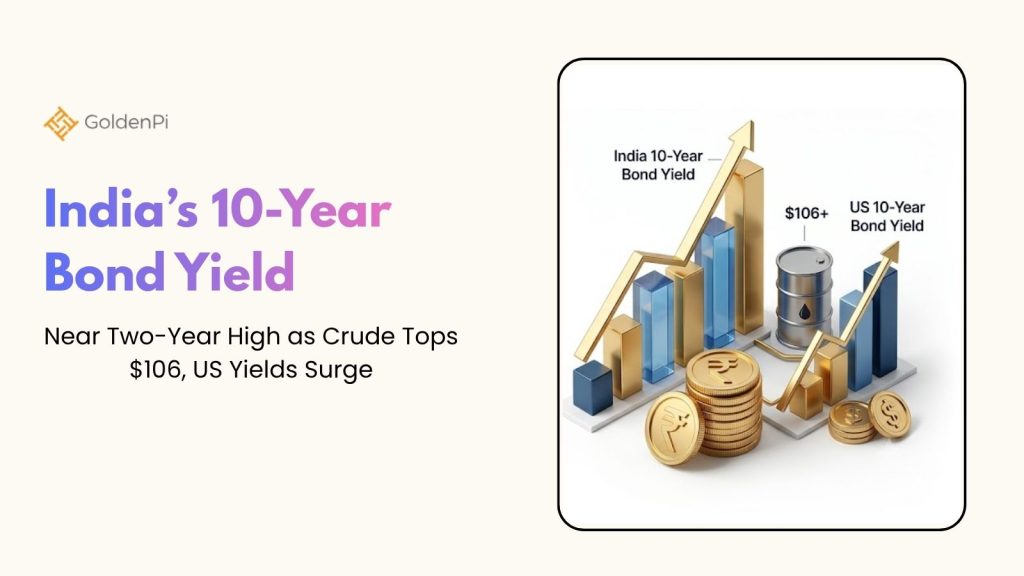
- India’s 10-Year Bond Yield Near Two-Year High as Crude Tops $106, US Yields Surge
- Post Office Schemes vs Corporate Bonds: A Guide for Women Investors in 2026

What Is ESG-Linked Debt?
This is where most investors get mixed up. Green bonds form part of the larger family of ESG debt. While Green bonds concentrate on what the fundraising will be utilized for, some of the ESG debt is based on how a company does in relation to the set sustainability metrics.
In essence, an organization may commit itself to cutting its carbon footprint and water usage and achieving other measurable sustainability goals. The debt terms may then change depending on whether the objectives are met.
In a nutshell:
Green bond = money is designated for specific green projects;
ESG/sustainability-linked debt = the sustainability performance of the company affects the debt terms.
Although the titles may be similar, the underlying objectives differ.
Blue Bonds – Where Do They Fit In?
Blue Bonds belong to a special class of sustainable bonds. While regular sustainable bonds support any kind of environmental projects, Blue Bonds specifically provide funding for ocean-related activities such as fisheries and biodiversity of oceans and coasts, as well as sustainable sources of water.
Internationally, Blue Bonds form a smaller niche than Green Bonds. However, within India, there is an increasing interest in this type of bond along with the development of the blue economy.
What About RBI Green Bonds?
In the year 2023, the RBI issued Sovereign Green Bonds (SGrBs), which can be used to fund green infrastructure projects from public-sector companies.
These can be used in various sectors, including:
- Renewable energy
- Clean transport
- Climate-resilient infrastructure
- Sustainable water management
- Energy efficiency
As opposed to corporate green bonds, these are sovereign bonds issued by the Government of India. These have the same credit rating as other Government Securities (G-Secs), while the proceeds can be used for green projects within the Government’s Sovereign Green Bond Framework.
Green Bonds vs. ESG-Linked Debt: What’s the Difference?
Although these terms are often used interchangeably, they represent different approaches to sustainable finance.
| Feature | Green Bonds | ESG-Linked Debt |
| Primary Focus | Financing eligible green projects | Linking financing to sustainability performance |
| Use of Proceeds | Restricted to green projects | May be used for general corporate purposes, depending on the structure |
| Performance Targets | Generally not linked to issuer performance | Often linked to predefined ESG targets |
| Reporting | Use-of-proceeds reporting | Sustainability performance reporting |
Understanding this distinction helps investors better evaluate the purpose of the instrument.
How Can Retail Investors Access Green Bonds in India?
For retail investors, the opportunity to invest in some listed green bonds is available through the SEBI-registered Online Bond Platform Providers (OBPPs), Stock Exchanges, or intermediaries.
Before investing, one should consider:
- The credit rating of the issuer
- Offer document
- Application of the proceeds
- Tenor of the bond
- Interest payment dates
- Liquidity
- Credit risks
The “green” status should not be a substitute for a proper credit analysis.
Are Green Bonds Riskier?
Not necessarily. A green bond poses the same basic investment risks as any other bond issued by the issuer in question. Such risks may include:
- Credit risk
- Interest rate risk
- Liquidity risk
- Market risk
The environmental focus of the bond does not imply higher returns or lower investment risks.
Frequently Asked Questions (FAQs)
The Green Bond is a debt security whose proceeds are solely allocated towards eligible green sustainable projects as per the relevant framework and disclosures.
Not necessarily. Whereas Green Bonds emphasize the use of proceeds, ESG-linked debt typically ties the terms of financing to the sustainability performance or predefined ESG targets of the issuer.
Yes. Subject to issue-specific conditions, some listed Green Bonds could be purchased via SEBI-registered Online Bond Platform Providers or stock exchanges, among other intermediaries.
Absolutely not. Green Bonds continue to be exposed to credit risk, market risk, liquidity risk, and interest rate risk. It is incumbent upon the investor to perform due diligence in the same way that they would with any other debt security.
Final Thoughts
India’s bond market is seeing the rise of Green Bonds and ESG-linked debt as new ways forward, yet they cannot be considered the same instruments. A Green Bond explains where the proceeds go, whereas ESG-linked debt is concerned about the issuer’s performance in terms of sustainability. In an environment in which initiatives like RBI’s Sovereign Green Bonds and SEBI’s disclosure regime continue to develop, retail investors are offered more opportunities than ever before. Yet the essence of investing remains the same. Before buying any bond, whether green or not, it is vital to do your homework and know the issuer, evaluate risks, read disclosures, and see if it fits your portfolio.
Disclaimer
Fixed returns do not constitute guaranteed or assured returns. Investments in corporate debt securities and municipal debt securities/securitized debt instruments are subject to credit risks, market risks, and default risks, including delay and/or default in payment. Read all the offer-related documents carefully. This blog/article should not be construed as financial advice or as an offer or recommendation to buy or sell any security or any products/services of/on GoldenPi or any product/services of its third-party client(s). For a detailed calculation of YTM, visit our website. T&C’s Apply.