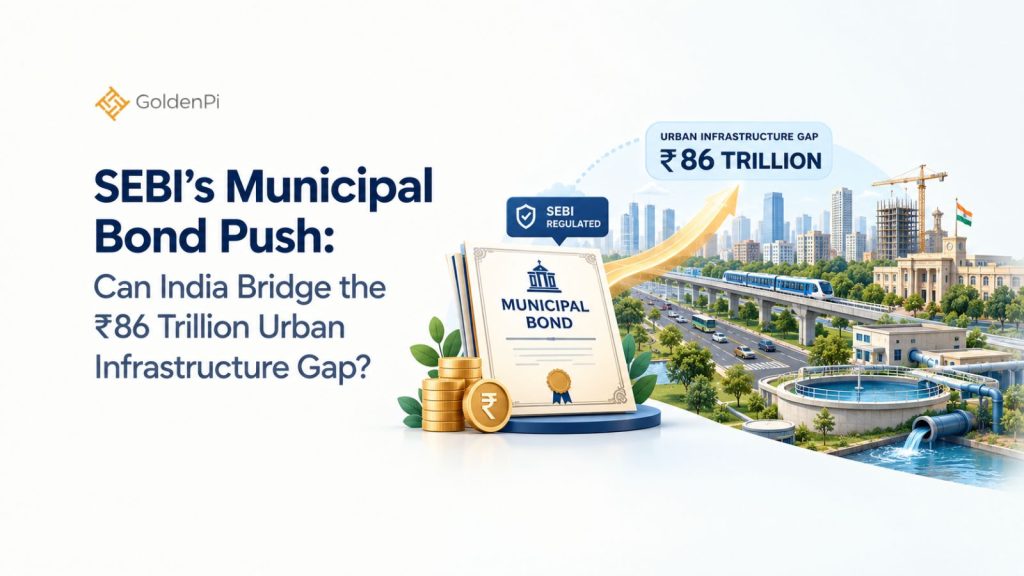
India’s cities are booming, and its infrastructure is struggling to keep pace. The country needs between ₹82 trillion and ₹86 trillion by FY31 just to build the roads, water systems, and sewage networks its urban population requires, according to estimates cited by Rajkiran Rai G., managing director of the National Bank for Financing Infrastructure and Development (NaBFID), India’s biggest infrastructure financier.
To help close that gap, the Securities and Exchange Board of India (SEBI) is pushing for more towns to issue municipal bonds. But here’s the thing: smaller cities have been shut out of the market for years, simply because they’re too small to borrow on their own, and SEBI’s proposing a fix for that very problem.
Start investing with just ₹10K & grow your wealth with fixed return opportunities.
Invest Now

Why Urban Infrastructure Funding Is Suddenly Front and Center
India’s got its sights set on becoming a developed economy by 2047, and that goal is deeply rooted in its cities. Urbanization is accelerating, and initiatives like AMRUT (Atal Mission for Rejuvenation and Urban Transformation) have already nudged municipalities toward capital markets, offering incentives for successful bond issuances. Yet, incentives only go so far; most Indian towns still lean heavily on state grants and bank loans, rather than going straight to investors, mainly because they’re lacking the credit profile, scale, or a solid governance track record to do it with confidence.
What SEBI Is Actually Proposing
SEBI’s consultation paper, released on 13 May 2026, proposes letting multiple municipalities join forces and raise funds together through pooled financing vehicles. Think of it like a bunch of small shopkeepers deciding to take out a joint loan instead of each one doing it alone; suddenly, they’ve got access to way better terms and a scale they could never have managed on their own.
The proposal covers several specific changes:
- Pooled finance vehicles (SPVs): Two or more municipalities can jointly raise funds, with a requirement to maintain reserves equal to one year’s interest obligations
- Refinancing disclosures: Municipalities refinancing existing debt must disclose lender details, interest rates, and repayment schedules
- Working capital cap: No more than 25% of issue proceeds can go toward working capital, keeping funds tied to specific projects
- Standardized face value: Bonds must carry a face value of either ₹10,000 or ₹1 lakh, depending on structure
- ESG bonds: Municipalities can now issue green, social, and sustainability-linked bonds under existing ESG frameworks
- Wider retail access: Proposals include digital advertising for bond issues and additional interest incentives for certain investor categories
SEBI Chairman Tuhin Kanta Pandey has stated that the real heavy lifting ahead isn’t just about regulation; it’s about getting these municipalities to shape up and become genuinely creditworthy with better governance, transparent disclosures, and predictable cash flows. Public comments on the proposal closed on 3 June 2026.
Latest Bond Updates:
- SEBI’s Municipal Bond Push Targets India’s ₹86 Trillion Urban Infrastructure Gap
- FICP: SEBI’s New Plan to Take Corporate Bonds to Every Indian City

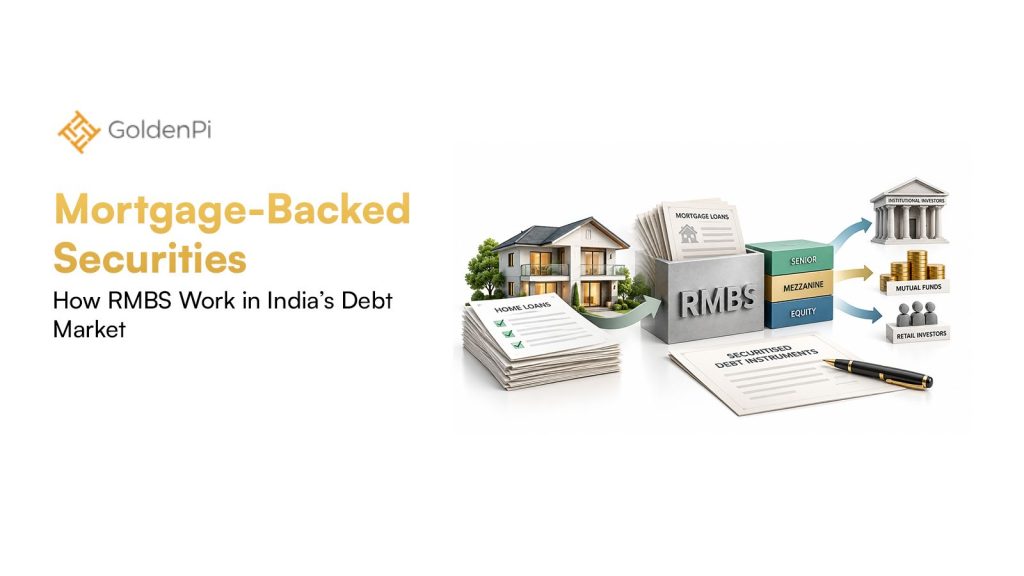
- Mortgage-Backed Securities: How RMBS Work in India’s Debt Market
A Landmark Example: Mumbai Enters the Bond Market
Nothing illustrates the moment better than Mumbai. The Brihanmumbai Municipal Corporation (which is India’s richest civic body) has decided to issue municipal bonds worth ₹9,500 crore in 2026. It will be the largest municipal bond issuance the country’s ever seen.
The BMC was set up back in 1888, under the Bombay Municipal Corporation Act, and this is its first time dipping into the bond market, roughly 138 years later. With an AAA credit rating backing it and plans to use the funds for sewage, flood control, and roads, the BMC’s debut shows that even the most financially stable municipalities in India are just starting to take bonds seriously as a way to raise funds, which, if you think about it, says a lot about how new and untested this market still is.
The Numbers So Far
Progress has been slow but real:
- 22 urban local bodies have issued municipal bonds as of March 2026 [1]
- Together they’ve raised roughly ₹4,540 crore through 31 issuances [1]
- Municipal debt makes up less than 1% of India’s total rupee bond sales [2]
- In the US, municipal bonds account for 7% of the overall bond market [2]
| Metric | India | United States |
| Share of total bond market | <1% | 7% |
| Municipalities that have issued bonds | 22 (as of March 2026) | Thousands |
| Recent landmark issuance | BMC proposed ₹9,500 crore. | N/A |
| Primary use of proceeds | Roads, water, sewage, solar | Broad public infrastructure |
What This Means Going Forward
If SEBI’s proposals go through, expect more mid-sized and smaller towns testing the bond market for the first time, following in the footsteps of cities like Pune, Indore, and Coimbatore, which have already issued bonds for projects ranging from solar power to water supply. Pooled vehicles could be a total game-changer for these smaller towns that don’t have the scale or credit rating to attract institutional investors on their own; they could band together, pool their resources, and tackle a shared water or sanitation project.
That said, real traction will depend on how quickly cities clean up their books and demonstrate stable revenue. With an ₹82-86 trillion funding need looming, the next 12-18 months could determine whether India’s municipal bond market finally breaks out of its multi-decade slump or remains a niche corner of the debt market.
Sources
- SEBI — Consultation Paper on Municipal Debt Securities
- CareEdge Ratings — Municipal Bonds in India: Growth Signals in a High-Potential Market
Disclaimer
Fixed returns do not constitute guaranteed or assured returns. Investments in corporate debt securities and municipal debt securities/securitized debt instruments are subject to credit risks, market risks, and default risks, including delay and/or default in payment. Read all the offer-related documents carefully. This blog/article should not be construed as financial advice or as an offer or recommendation to buy or sell any security or any products/services of/on GoldenPi or any product/services of its third-party client(s). For a detailed calculation of YTM, visit our website. T&C’s Apply.