Ever wonder what happens to your home loan after your bank approves it? It doesn’t always get immediately added to the bank’s books till maturity. In India, like in other countries, a group of home loans of this nature gets pooled and sold to an investor as a bond. This is the foundation of a mortgage-backed security (MBS).
It’s not a new concept globally, but in India, it’s only just starting to find its feet as a proper market instrument, with 2025 marking the country’s first exchange-listed residential mortgage-backed security (RMBS) transaction. This article provides information on MBS and RMBS, the recent regulatory and market changes in India, how the changes have impacted the market, and what an investor evaluating this space ought to know.
Start investing with just ₹10K & grow your wealth with fixed return opportunities.
Invest Now

What Are Mortgage-Backed Securities (MBS)?
At its simplest, an MBS is a bond with mortgage loans as collateral, as opposed to a company’s revenue. A lender (a bank or housing finance company (HFC)) originates home loans, then sells a pool of these loans to a special purpose vehicle (SPV). The SPV then issues securities to investors, and the EMIs borrowers pay every month flow through to those investors as interest and principal.
MBS comes in two broad categories:
- RMBS (Residential Mortgage-Backed Securities): backed by home loans to individual borrowers; typically salaried or self-employed people buying a house.
- CMBS (Commercial Mortgage-Backed Securities): backed by loans against commercial property, such as office buildings or retail spaces.
RMBS is by far the larger and more established category globally, and it’s the one India’s debt market is now trying to build out.
How Do RMBS Work in Practice?
The mechanics follow a fairly standard securitization chain:
- A bank or HFC puts together a pool of home loans of a particular credit quality and maturity.
- The pool is then transferred to a special purpose vehicle (SPV), which is legally and structurally separate from the originator’s balance sheet.
- The SPV then creates and offers for sale pass-through certificates (PTCs) to the investors, which represent an undivided interest in the home loan pool.
- The SPV is in charge of disbursing the EMIs received to PTC holders, usually monthly.
- Credit rating agencies rate the PTCs (often at the highest safety grade, denoted with an “SO” suffix, short for structured obligation) based on the loan pool’s quality and structural protections.
A useful real example: in May 2025, LIC Housing Finance’s home loan pool was securitized into pass-through certificates worth Rs 1,000 crore [1], structured by the RMBS Development Company (RDCL) and listed on the NSE, marking India’s first mortgage-backed PTC issue listed on the exchange and the first such issue to have its coupon discovered through the NSE’s Electronic Book Provider platform. The almost-20-year paper carried a monthly coupon of 7.26% [1] and was rated AAA(SO) by CRISIL [2] and CARE. It’s a good illustration of how a large pool of small, individual home loans gets converted into a single tradable instrument.
India’s RMBS Market: Where Things Stand
RMBS is still a developing part of India’s securitization market, with longer mortgage tenors, transaction structures, and the need to broaden the investor base influencing how quickly the segment develops.
| Metric | Latest figure | Period |
| Total securitization issuance in India | ₹2.55 lakh crore | FY26 |
| Mortgage-backed securitization share | 12% | Q1 FY27 |
| Securitization volume | ~₹60,000 crore | Q1 FY27 |
| First NSE-listed residential mortgage-backed PTC transaction | ₹1,000 crore; 7.26% coupon; maturity in February 2045 | April/May 2025 |
| IFC investment in Grihum Housing Finance RMBS | Up to ₹560 crore (~US$65 million) | December 2025 |
Sources: CRISIL, IFC, NSE
Most of India’s existing RMBS exposure so far has come through bilateral assignments (a bank or HFC directly selling a loan pool to another institution) rather than the PTC route that’s common globally. RDCL’s debut issue should encourage other sponsors to adopt standardized, exchange-listed PTC structures, making it easier to raise capital from a more diverse range of investors, including institutions and possibly even retail-adjacent investors.
Latest Bond Updates:
- Beyond the Rupee: Decoding SEBI’s ‘Second Shelf’ for Global Bonds
- G-Sec STRIPS Explained: Zero-Coupon Sovereign Paper for Retail
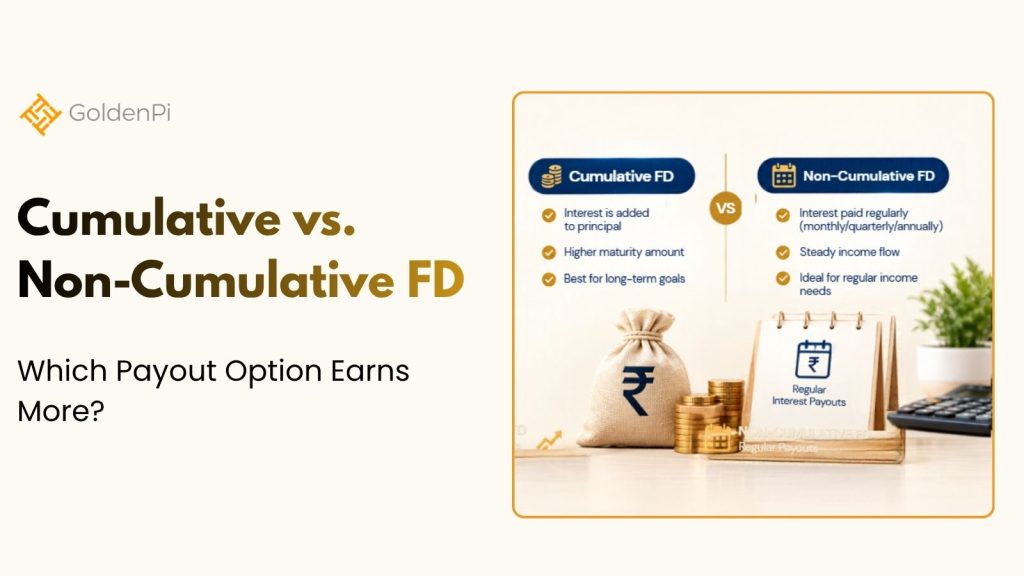
- Cumulative vs Non-Cumulative FD: Which Payout Option Earns More?
In addition to the RDCL-LIC transaction, other developments have emerged in India’s RMBS market. In December 2025, the International Finance Corporation (IFC) invested in residential mortgage-backed securities issued by Grihum Housing Finance, an affordable housing finance company.
IFC’s project disclosure records an investment of up to ₹560 crore [3] (approximately US$65 million) in RMBS backed by individual housing loans, with the investment made on December 15, 2025. IFC described this as its first RMBS investment in India and said the transaction was aligned with efforts to expand affordable housing finance under the Government of India’s Pradhan Mantri Awas Yojana (PMAY).
The Regulatory Backbone: RBI and SEBI
Two regulators matter here. The RBI’s Master Direction – Securitization of Standard Assets mandates, among other provisions, that only standard (non-defaulted) loans be securitized and that the originator retain a minimum risk retention of 5% in the case of loans with a term less than or equal to 2 years and 10% for longer-tenor or bullet-repayment loans, so they have some stake in the deal. There’s also a minimum holding period before a loan can be securitized, so the pool isn’t made up of freshly disbursed, unseasoned loans. SEBI, on its part, governs how these securities are listed, traded, and advertised, including rules around risk disclosures in promotional content.
What Should Investors Weigh Before Considering RMBS?
RMBS carry some historical baggage because of their role in the 2007-09 US financial crisis. In particular, the crisis exposed weaknesses in the underwriting of some subprime mortgages, the structuring and transparency of mortgage-backed securities, and the credit-rating process [4]. India’s regulatory framework was built with that episode in mind. RBI’s rules require originators to retain a minimum stake in every pool they securitize and restrict securitization to seasoned, standard (non-defaulted) loans, precisely to avoid the underwriting and incentive problems that surfaced in 2008. That said, RMBS are typically rated highly, but a rating isn’t the same as risk-free. Some factors worth understanding:
- Prepayment risk: If borrowers prepay their home loans (common when rates fall), investors get their money back earlier than expected, which can affect returns.
- Credit quality of the pool: Loan-to-value ratios, borrower profiles, and geographic concentration all matter.
- Structural protections: Credit enhancement, the originator’s track record, and whether the SPV is genuinely bankruptcy-remote from the originator.
- Liquidity: India’s RMBS secondary market is still thin, so exiting before maturity may not always be easy at a fair price.
The Road Ahead
When RDCL initiated its first transaction in May 2025, leadership at NHB expected up to 10 more such transactions in that financial year, potentially raising ₹10,000-12,000 crore [5] through this route. The expectation, however, was not binding. Actual issuance since has been more gradual: the IFC and Grihum deal has been the only significant one since then.
On the ownership side, RDCL’s shareholder base has also evolved: State Bank of India is set to acquire a 10% stake [6], which would reduce NHB’s holding from 39% to 29%, alongside existing shareholders such as Aditya Birla Housing Finance, Tata Capital Housing Finance, Truhome Finance, Grihum Housing Finance, Hero Housing Finance, and IIFL Home Finance. A broader, more diversified shareholder base is generally a positive signal for an intermediary meant to anchor a growing market, but the pace of actual new RMBS transactions will be the real test of whether India’s RMBS market moves from a single landmark deal to a genuine asset class.
Mortgage-Backed Securities Frequently Asked Questions
A mortgage-backed security (MBS) is a securitized debt instrument backed by a pool of loans secured against property. The cash flows from the underlying loans are used to make payments to investors.
RMBS stands for Residential Mortgage-Backed Securities. In India’s securitization framework, an RMBS is a securitization note issued against underlying exposures that are all secured by residential mortgages.
The originator is the lender that originally created the underlying loans. This could, depending on the transaction, include a bank, housing finance company, or another eligible lending institution.
The special purpose vehicle/entity holds the securitized pool and issues the securitization notes. The structure is intended to separate the cash flows of the underlying pool from the originator’s balance sheet and channel those cash flows towards investors, subject to the transaction documents.
A mortgage pool is a collection of individual home loans grouped together for securitization. The loans can have different borrowers, outstanding balances, interest rates, geographical locations, and repayment characteristics.
Credit enhancement is protection designed to absorb some losses or payment shortfalls in the underlying pool before they reach investors in more senior securities. The exact mechanism can include features such as subordination, cash collateral, or other forms of support specified in the transaction documents.
Yes. Defaults and recoveries in the underlying mortgage pool affect the cash available to the securitization structure. If losses exceed the protection available through credit enhancement and other structural features, investors can suffer losses.
Sources
- PIB – India’s first mortgage-backed PTCs listed on NSE
- CRISIL – India Residential Mortgage Trust 2025 01, Final Rating Rationale
- IFC Project Disclosure — Affordable Housing RMBS Trust-I
- SEC — Examination of Credit Rating Agencies
- Business Standard — India sees maiden RMBS listing; NHB expects firms to raise Rs 10K cr in FY26
- Financial Express — State Bank of India to buy 10% in RDCL
Disclaimer
Fixed returns do not constitute guaranteed or assured returns. Investments in corporate debt securities and municipal debt securities/securitized debt instruments are subject to credit risks, market risks, and default risks, including delay and/or default in payment. Read all the offer-related documents carefully. This blog/article should not be construed as financial advice or as an offer or recommendation to buy or sell any security or any products/services of/on GoldenPi or any product/services of its third-party client(s). For a detailed calculation of YTM, visit our website. T&C’s Apply.