|
Getting your Trinity Audio player ready...
|
Gold has always been one of the trusted forms of investment in India, often purchased during festivals such as Diwali and Akshaya Tritiya. It has remained a form of investment that has been chosen by generations.
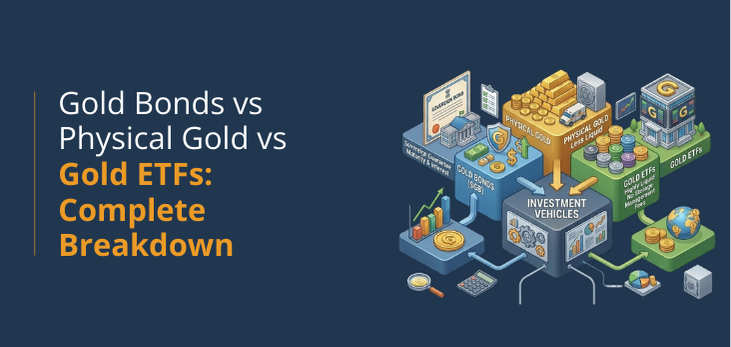
Investors today have different options in which they can choose to invest in gold. This includes Sovereign Gold Bonds (SGBs), Physical Gold, and Gold ETFs. Each of these options come with certain advantages as well as limitations.
Want to know how these options differ? Read this article to learn their key differences, and understand which option might be the right one for you.
What are Sovereign Gold Bonds or SGBs?
Sovereign Gold Bonds (SGBs) were introduced in November 2015 by the Reserve Bank of India, under the Gold Monetisation Scheme, 2015. As an investor, you are allowed to invest in a minimum of 1 gram, and in multiples thereafter.
Some of the advantages of SGBs include:
- A fixed interest rate of 2.50% per annum
- Eligible to be used as collateral for loans
- No storage costs or risk of theft
- Redemption at prevailing market price of gold at maturity
Compared to physical gold, Sovereign Gold Bonds do not come with storage risks or any additional costs.
However, SGBs lack liquidity and come with a 5-year lock-in period during which you cannot redeem them with RBI. Although, you can sell them in the secondary market at the prevailing market price.
What is Physical Gold?
Physical gold can be defined by any tangible form of gold, such as bars, coins, or jewellery. This investment route holds cultural value and is mostly used for the purposes of gifting, wealth transfer, and other traditional purposes.
It comes with the benefit of being a tangible asset, but also has certain drawbacks. These drawbacks include:
- Storage costs
- Making charges + 5% GST
- Risk of theft
Additionally, selling off physical gold may not always be an easy procedure. Its resale value would usually depend on the gold price quoted by local jewellers.
What are Gold ETFs or Exchange Traded Funds?
Gold Exchange Traded Funds or ETFs are an alternative method that allows you as an investor to invest in paper gold. These are financial instruments which trade on stock exchanges, in a similar manner to shares. Gold ETFs are owned by investors in a digital form. These are of course backed by physical gold, which ensures transparency in terms of pricing.
Among the advantages of gold ETFs:
- High liquidity, as they can be traded during market hours
- No storage concerns
- No risk of physical theft
However, there are certain additional costs to consider:
- Fund management charges
- Brokerage fees
Gold ETFs are usually suited for those who are looking at relatively shorter investment horizons, and prefer flexibility in buying and selling.
Key Differences Between Gold Bonds, Physical Gold, and Gold ETFs
It is necessary for you to understand the differences between Sovereign Gold Bonds, physical gold, and gold ETFs to be able to make an informed decision.
| Feature | Sovereign Gold Bonds | Physical Gold | Gold ETFs |
| Form | Government security | Jewellery, coin, bar | Market traded fund |
| Interest Income | 2.5% per annum | No | No |
| Storage Risk | No | Yes | No |
| Lock-in period | 5 years (early exit) | None | None |
| Liquidity | Limited before maturity | Moderate | High |
| GST at Purchase | No | Yes | No |
| Tax Benefit at Maturity | Yes (for individuals) | No | No |
Each of these instruments serve a different investment purpose. Understanding their differences can help you make the best choice based on your financial goals.
Things to Remember
- Sovereign Gold Bonds are suitable for long-term investors because of their guaranteed interest factor and tax benefits.
- Physical Gold is ideal for those who find value in tangible assets for their cultural significance or personal preferences.
- Gold Exchange Traded Funds (ETFs) are suitable for those investors who are looking for flexibility and liquidity at the same time.
Conclusion
When you buy physical gold, you own it in its physical form. When you buy SGBs or gold ETFs, you own it in its digital form. Your choice should be based on your personal preference, investment horizon, and financial goals. Sovereign Gold Bonds have fixed interest rate and tax benefits, but Gold ETFs are more flexible and can be traded easily. On the other hand, physical gold has a cultural and emotional importance, although it comes with certain additional costs and storage risks.
Before you make an investment, think about your financial goals and how much risk you’re willing to take.
Do you plan to make some new investments in 2026? GoldenPi is a SEBI-registered debt broker and OBPP (Online Bond Platform Provider) license holder. You can look into a number of options there. You can look at a lot of different bonds, fixed deposits, and other things. The investment process is 100% digital and can be completed easily online from the safe space of your home.
FAQs
1. Which option provides better returns–Sovereign Gold Bonds, physical gold, or gold ETFs?
The returns depend on how much gold is worth on the market. SGBs and Gold ETFs track gold prices. However, SGBs also pay 2.5% annual interest, which increases overall returns. Physical gold does not generate interest and may involve making charges and storage costs.
2. Which is a good short-term investment in gold?
Gold ETFs are suitable for short-term investors due to their liquidity and flexibility when it comes to buying and selling.
3. Can I redeem SGBs early?
Yes, while Sovereign Gold Bonds have an 8-year maturity period, they can be redeemed after 5 years. However, you can sell them in the secondary market at prevailing market price at any time.
Disclaimer:
This information is for general information purposes only. GoldenPi makes no guarantee on the accuracy of the data provided here; the information displayed is subject to change and is provided on an as-is basis. Nothing contained herein is intended to or shall be deemed to be investment advice, implied or otherwise. Investments in the securities market are subject to market risks. Read all the offer-related documents carefully before investing.
Bonds or non-convertible debentures (NCDs) are regulated by the Securities and Exchange Board of India and other government authorities. GoldenPi Securities Private Limited is a registered debt broker and acts as a distributor and not as a manufacturer of the product.