|
Getting your Trinity Audio player ready...
|
However, a bond rating downgrade can be alarming, particularly if you have already invested with the expectations of receiving stable income. Getting to know about a particular bond rating downgrade may cause you to wonder what to do – sell the asset, keep it, or just wait and see what will happen next.
Fortunately, the downgrade of the bond rating does not necessarily imply that the issuer would fail to pay you its coupons. Downgrading means that there has been a shift in the credit profile of the issuer, and the bond needs to be analyzed more carefully. The optimal actions depend on the reason behind the downgrade and the financial standing of the issuer, as well as your investment goals and risk tolerance.
In the following sections, we will explain how the process works, as well as the criteria investors usually use when making their decisions.
Disclaimer: This article is meant purely for educational purposes and does not provide investment advice or recommend any security. Credit ratings are expert opinions provided by SEBI-registered credit rating agencies and can change over time. Any investments should be made after doing the proper research or consulting your financial advisor.
Start investing with just ₹10K & grow your wealth with fixed return opportunities.
Invest Now

What Is a Bond Rating Downgrade?
A downgrade in the bond rating is one scenario where the credit rating agency reduces its view about the creditworthiness of the company in paying off its obligations. Agencies like CRISIL, ICRA, CARE Ratings, India Ratings & Research, and Acuite Ratings regularly review companies on the basis of their financial performance, leverage, cash flow, and business environment.
This doesn’t imply that the issuer has defaulted on the payment of either interest or principal. This means that there has been an increase in the perception of credit risk with respect to the previous evaluation.
What Happens When a Bond Is Downgraded?
There can be many impacts of a bond downgrade. One way it can impact the bond is by decreasing the market price of the bond due to higher demand for yield from the investor. This may lead to a rise in the yield of the bond. Moreover, some institutions do not invest in bonds that are downgraded below a certain category.
However, if the issuer makes timely payments of its obligations, coupons are paid as per the terms of the bond.
Latest Bond Updates:
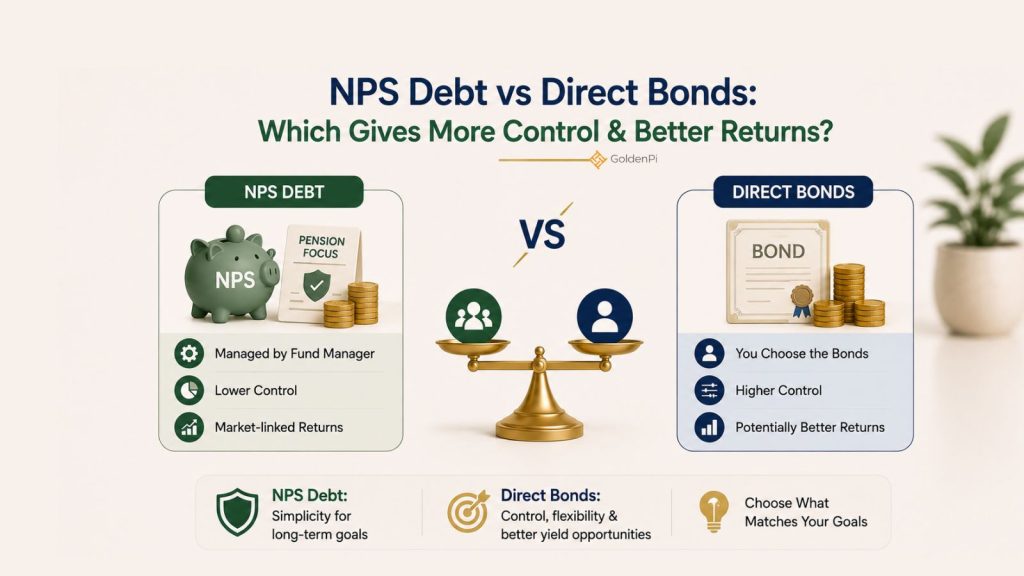
- NPS Debt vs Direct Bonds: Which Gives More Control & Better Returns?
- Gold ETF Expense Ratio 2026: SBI vs Nippon vs HDFC
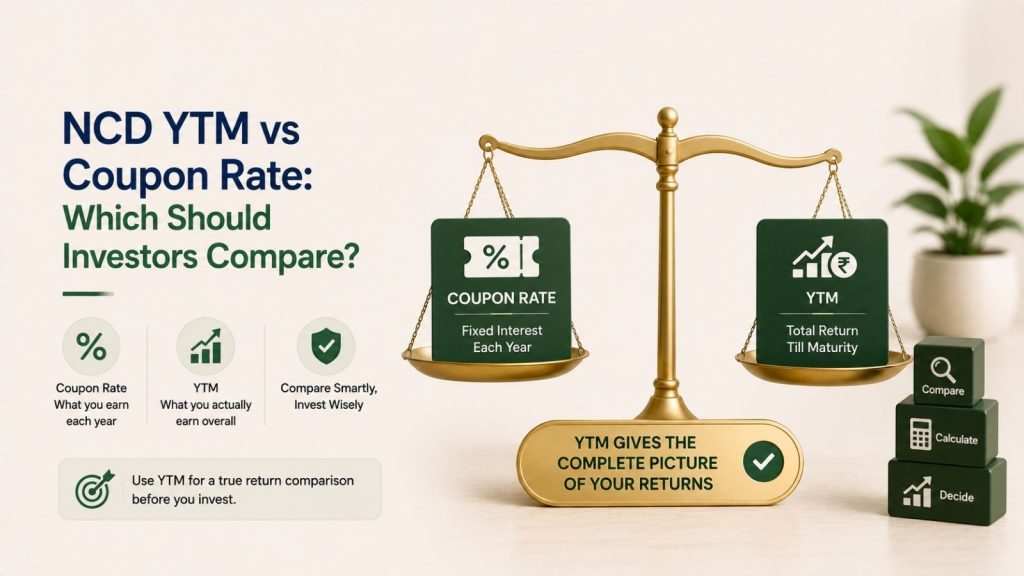
- NCD YTM vs. Coupon Rate: Which Should Investors Compare?
Don’t Panic—Understand Why the Rating Changed
The initial response to a downgrade is normally to liquidate the bond right away. In reality, seasoned investors will normally seek to understand the reason for the downgrade before they act.
Is it a result of current circumstances in the business? Does the firm owe too much money? Do cash flows fall? Is there a problem in the industry?
Examining the rationale behind the downgrade from the credit rating agency can be helpful in understanding what led to the downgrade.
A Realistic Framework For Making a Decision
Rather than responding to the downgrade alone, many investors consider a number of things before deciding on their next move.
| Question to Ask | Why It Matters |
| Why was the bond downgraded? | Helps determine whether the issue is temporary or structural. |
| Is the company still paying interest on time? | Indicates whether debt servicing continues as scheduled. |
| Has the issuer’s financial position changed significantly? | Reviews debt levels, profitability, and cash flows. |
| How much of your portfolio is invested in this issuer? | Helps assess concentration risk. |
| Does the investment still match your risk tolerance? | Your financial goals should guide the decision. |
Looking at these factors together often provides a clearer picture than relying only on the revised rating
When Investors May Consider Reviewing Their Position
A downgrade could be one of the reasons why an investor will consider reviewing his investment rather than selling it outright.
An investor will consider changing his stance in case of several downgrades, a negative cash flow trend, an increase in debt, failure in meeting his obligations, or changes in the business prospects of the issuer. In addition to this, investors would look into whether the investment meets their objectives or not. It all boils down to what each investor wants and how their situation is.
Diversification and Why It Is Important
There are many reasons why diversification of portfolios is recommended, and one of them is that it is hard to foresee credit events.
By having investments from various issuers and various maturities of securities, the investor would be able to minimize the effect that could be caused by the financial problems of one issuer.
How to Monitor a Downgraded Bond
If you decide to keep the downgraded bond, then monitoring becomes more important than ever before.
Things that need to be monitored include:
- Changes in ratings and outlooks.
- Quarterly and annual results.
- Announcements of interest payments and redemptions.
- Releases by the issuer and stock exchanges.
- News concerning the issuer and the issuer’s industry.
It helps investors to know whether the financial condition of the issuer is stabilizing or deteriorating further.
Bond Rating Downgrades: Frequently Asked Questions
“Downgrade” means the creditworthiness of the issuer has deteriorated, as per the opinion of the credit rating agency. But it does not mean that the bond is going to default or that the interest payment has stopped.
The answer depends on the reason for downgrading and many other factors such as the financial standing of the issuer, the investor’s investment goal, and the investor’s risk profile.
Yes, but provided the issuer fulfills its obligations as per the terms of the bond.
Credit rating agencies, which are registered with SEBI, issue a rating rationale for rating upgrade/downgrade or reaffirmation.
Final Thoughts
A credit rating downgrade is a significant event, though it need not lead to any panic among the people investing in the bond. This rating is supposed to change in accordance with the changing financial standing of the issuing organization, and hence a downgrade is a signal that you should reconsider the investment. By examining the reasons for the downgrade, watching the financial standing of the issuing company, and checking whether the bond meets your financial objectives, you can make rational decisions.
Disclaimer
Fixed returns do not constitute guaranteed or assured returns. Investments in corporate debt securities and municipal debt securities/securitized debt instruments are subject to credit risks, market risks, and default risks, including delay and/or default in payment. Read all the offer-related documents carefully. This blog/article should not be construed as financial advice or as an offer or recommendation to buy or sell any security or any products/services of/on GoldenPi or any product/services of its third-party client(s). For a detailed calculation of YTM, visit our website. T&C’s Apply.