If you’re freelancing or running your own practice in India, you already know the real challenge isn’t earning money; it’s earning it unevenly. One month you’re invoicing three clients; the next you’re chasing a payment that’s 45 days overdue. Meanwhile, rent, advance tax, and EMIs don’t care what your cash flow looks like.
This is exactly the kind of problem fixed income is built to solve. Bonds won’t make you rich, but they can turn lumpy freelance income into something closer to a predictable paycheck, provided you pick the right instruments and ladder them sensibly. Here’s how to think about it.
Start investing with just ₹10K & grow your wealth with fixed return opportunities.
Invest Now

Why Freelancers Need a Different Fixed-Income Strategy
Salaried investors can afford to lock money away for years because their next paycheck is guaranteed. Freelancers can’t assume that. Your bond strategy needs to prioritize the following:
- Liquidity, so you’re not forced to sell equity or borrow when a client payment is late
- Predictable payouts, to smooth income across lean and busy months
- Tax efficiency, since freelancers already juggle advance tax and presumptive taxation under Section 44ADA
- Low default risk, because unlike a salaried employee, you don’t have a backup income if an issuer defaults
Where Interest Rates Stand Right Now
At its August 2026 policy review, the RBI’s Monetary Policy Committee kept the repo rate unchanged at 5.25% [1] for the fourth meeting in a row, maintaining a “neutral” stance amid global uncertainty and elevated food inflation.
With the RBI signalling a pause rather than further cuts, bond and T-Bill yields are likely to stay fairly steady over the next few months, which makes now a reasonably good window to lock in rates.
Treasury Bills: The Freelancer’s Best-Kept Secret
T-Bills are short-term, zero-coupon government instruments issued in 91-day, 182-day, and 364-day tenures. They’re sold at a discount and redeemed at face value. In RBI’s April 2026 auction [2], cut-off yields came in at 5.22% (91-day), 5.47% (182-day), and 5.60% (364-day).
For freelancers, this is arguably the most under-used tool available. If you know a large advance tax instalment or GST payment is due in three months, buying a 91-day T-Bill locks in a government-guaranteed return for exactly that window with no credit risk, no fund manager, no guessing. You can buy these directly through the RBI Retail Direct platform with no fees.
RBI Floating Rate Savings Bonds: A Safe Anchor
The RBI Floating Rate Savings Bond (FRSB 2020) is currently paying 8.05% [3] per annum for the July–December 2026 period. The rate resets every six months and is pegged at 0.35% over the then-current National Savings Certificate rate, which stands at 7.70%.
It’s a solid emergency-fund-adjacent option because it’s sovereign-backed, but the 7-year lock-in (with limited premature exit for seniors) makes it unsuitable for your everyday buffer. Think of it as the “set aside and forget” layer of your portfolio, not your rainy-day fund.
Bonds vs Fixed Deposits: Which Wins for Freelancers?
This is the comparison most freelancers commonly want, so let’s be direct about it. SBI’s current retail FD rates for deposits below ₹3 crore [4] are 6.25% for general customers and 6.75% for senior citizens for one year, rising to 6.40% and 6.90%, respectively, for two years. That’s lower than the FRSB’s 8.05% and roughly in line with current T-Bill yields.
| Factor | Fixed Deposit (SBI, 1-yr) | RBI Floating Rate Bond | T-Bills |
| Current yield | ~6.25% | 8.05% | ~5.2–5.6% |
| Taxation | Slab rate | Slab rate | Slab rate (as interest/discount income) |
| Liquidity | Premature withdrawal with penalty | Very low (7-yr lock-in) | High (tradeable, short tenure) |
| Safety | DICGC-insured up to ₹5 lakh only | Sovereign, no cap | Sovereign, no cap |
| Best for | Convenience, small sums | Medium-term parking | Short-term, tax-payment planning |
The safety point matters more than freelancers often realise: FD insurance caps out at ₹5 lakh per bank under DICGC, while government bonds and T-Bills carry no such ceiling.
Latest Bond Updates:
- G-Sec STRIPS Explained: Zero-Coupon Sovereign Paper for Retail
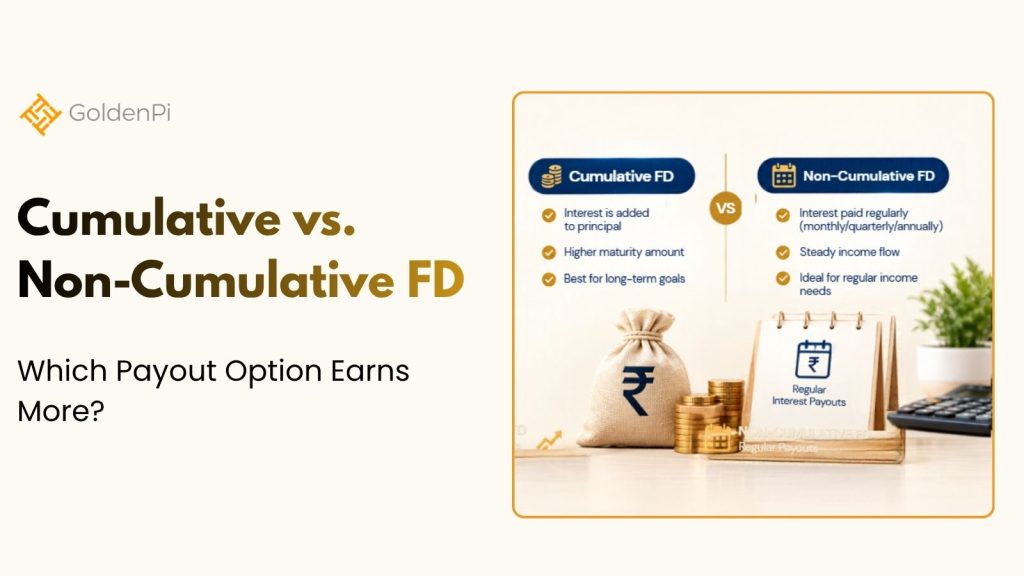
- Cumulative vs Non-Cumulative FD: Which Payout Option Earns More?
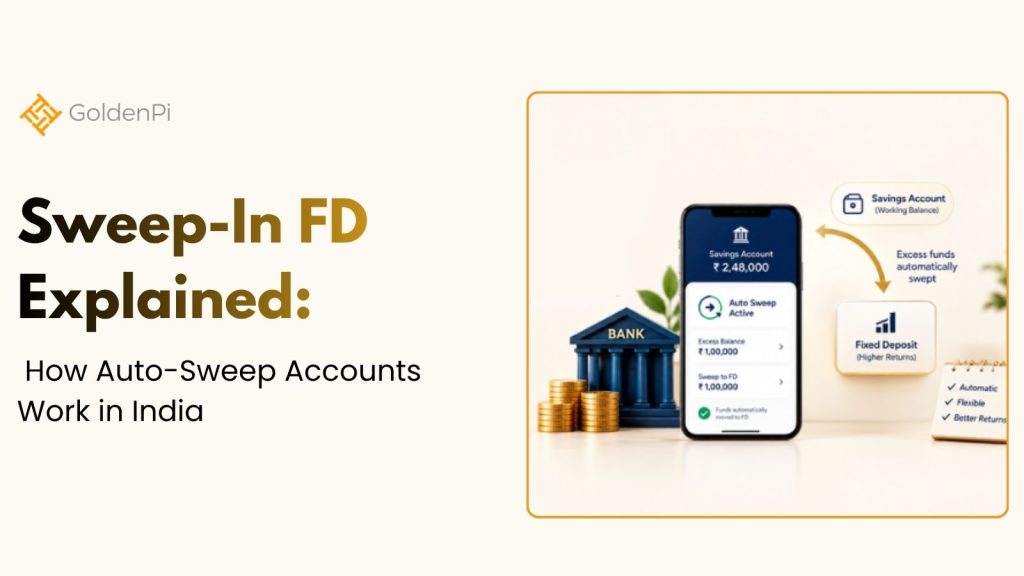
- Sweep-In FD Explained: How Auto-Sweep Accounts Work in India
Listed Bonds and Corporate Debt: Higher Yield, More Homework
For freelancers with a slightly higher risk appetite, AA/AAA-rated corporate bonds and listed NCDs offer better yields than government paper (around 7.2–8% currently). Since Budget 2024, gains on listed bonds held over 12 months are taxed at a flat 12.5% LTCG rate, without indexation.
Platforms like GoldenPi have made these accessible at ticket sizes as small as ₹10,000–₹25,000, so you no longer need a large corpus or a traditional broker. Stick to AAA/AA+ rated issuers, and be cautious with perpetual/AT1 bonds, which carry write-off risk (the Yes Bank AT1 episode is a well-known cautionary example in India).
Building the Habit of Laddering: Practical Tips
- Ladder across instruments and tenures: short T-Bills (91/182-day, matched to GST cycles and reinvested on maturity) for near-term needs, AAA-rated corporate bonds/NCDs for 1–3 year money, and FRSB for long-term lock-away, with a 91-day bill timed just before each advance tax instalment
- Route a fixed percentage of every invoice into your short-tenure bucket, timed to the next T-Bill auction
- Keep a small FD at your primary bank purely as an emergency tap for instant access, not a return generator, and hold off on 7-year lock-ins until income has stayed stable for 12–18 months
- Buy via RBI Retail Direct for T-Bills/G-Secs/SGBs (zero fees), and platforms like GoldenPi for corporate bonds/NCDs
Frequently Asked Questions
Not universally. FDs and debt funds are now taxed similarly. Bonds add value mainly through better yields (corporate bonds) or liquidity (debt funds), so pick based on your specific need, not tax alone.
No. Its 7-year lock-in makes it unsuitable for money you might need on short notice. Use it for medium-term savings instead.
Yes, via the RBI Retail Direct platform, which allows individuals to buy G-Secs, T-bills, and Sovereign Gold Bonds without a broker.
As of August 2026, the RBI has held rates steady for four consecutive meetings and flagged inflation risks from food and fuel prices. There’s no strong signal of an imminent cut, so waiting isn’t necessary. Locking in current yields is reasonable.
Sources
- GoldenPi — RBI MPC August 2026 Meeting
- Business Standard — RBI keeps FRSB rate unchanged
- RBI — April 2026 T-Bill Auction Result
- SBI — Retail Domestic Term Deposit Interest Rates
Disclaimer
Fixed returns do not constitute guaranteed or assured returns. Investments in corporate debt securities and municipal debt securities/securitized debt instruments are subject to credit risks, market risks, and default risks, including delay and/or default in payment. Read all the offer-related documents carefully. This blog/article should not be construed as financial advice or as an offer or recommendation to buy or sell any security or any products/services of/on GoldenPi or any product/services of its third-party client(s). For a detailed calculation of YTM, visit our website. T&C’s Apply.