RBI Floating Rate Savings Bonds are debt instruments with a 7-year tenure. These bonds carry a sovereign guarantee and were introduced in 2020 to replace the earlier 7.75% Savings (Taxable) Bonds.
When you invest, you are lending money to the Government of India. And in return, you receive interest every six months. Okay, but what does “floating rate” mean? In this financial product, the interest rate is not fixed. It is linked to the interest rate of the National Savings Certificate (NSC) and is reset every 6 months.
Want to understand this product in detail? Read this article to learn everything about RBI floating rate savings bonds.
Start investing with just ₹10K & grow your wealth with fixed return opportunities.
Invest Now

Who Can Buy RBI Floating Rate Savings Bonds?
These bonds can be purchased only by Resident individuals and Hindu Undivided Families (HUFs). The following are not allowed to invest:
- NRIs (Non-Resident Indians)
- Persons of Indian Origin (PIOs)
- Indian citizens living abroad for work or business
- Companies
- Trusts
- Partnership firms
Note that even if someone is an Indian citizen, they cannot invest if they are classified as a non-resident under FEMA (Foreign Exchange Management Act) at the time of investment.
However, if a person buys the bonds as a resident and later becomes a non-resident, they are allowed to continue holding the bonds until maturity. They do not need to sell or close the investment.
Furthermore, RBI Floating Rate Savings Bonds can be held in both “single” and “joint” holding. If we talk about the joint holding variant, two sub-options are available:
| I) Joint Holding | II) Either survivor |
|---|---|
|
|
Latest Bond Updates:
- G-Sec STRIPS Explained: Zero-Coupon Sovereign Paper for Retail

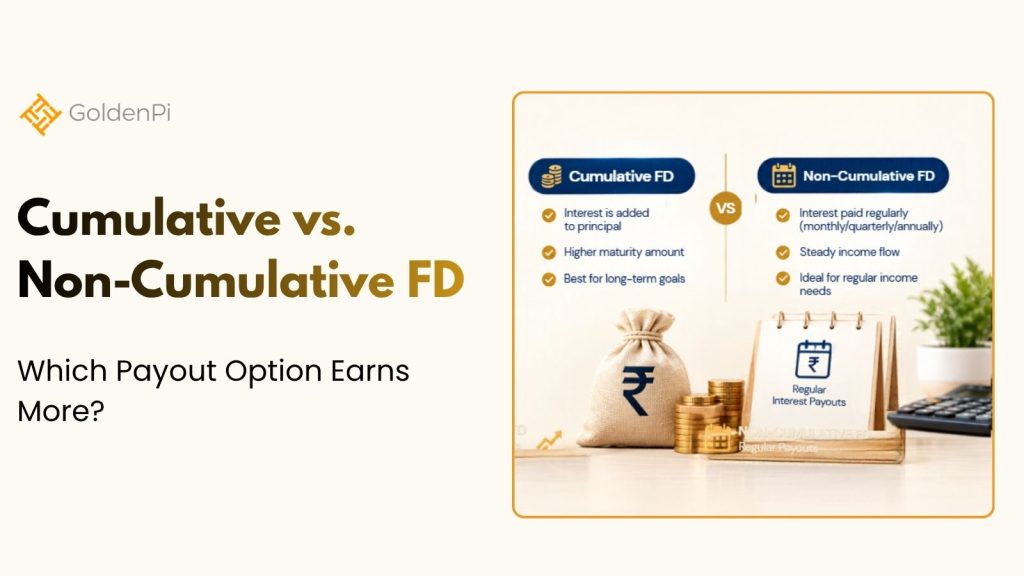
- Cumulative vs Non-Cumulative FD: Which Payout Option Earns More?
- Callable vs Non-Callable FDs: Why Non-Callable Deposits Pay More

What is the Lock-In Period of RBI Floating Rate Savings Bonds?
The lock-in period of these bonds differs and is based on the age of the investor at the time of investing. Let’s check out the lock-in period table for more clarity:
| Age at Time of Investment | Lock-In Period | Is Early Withdrawal Allowed? |
|---|---|---|
| 18 to below 60 years | 7 years | No |
| 60 to below 70 years | 6 years | Yes |
| 70 to below 80 years | 5 years | Yes |
| 80 years and above | 4 years | Yes |
Some Important Points
- Age is considered at the time of investment.
- The early withdrawal option is available only to individual investors.
- HUFs do not get early withdrawal benefits.
- Withdrawal is processed on the next interest payment date (1 January or 1 July).
- When withdrawn early, 50% of the last six months’ interest is deducted.
What are the Taxation Rules of RBI Floating Rate Savings Bonds?
The interest you receive every six months is 100% taxable as per the Income Tax Act, 1961. It is added to your total income for the year under the head “Income from Other Sources.” The tax rate applied depends on your income tax slab.
Furthermore, tax is deducted at source (TDS) on the interest payment at 10% if PAN is provided. Otherwise, the deduction is made at 20%. If your total income is below the taxable limit, you may also submit Form 15G or 15H (subject to eligibility) to avoid TDS. This deducted interest can be claimed at the time of filing your Income Tax Return (ITR).
Note that these bonds do not provide any tax-saving benefit. The amount invested does not qualify for deduction under Section 80C or any other section of the Income Tax Act.
To Conclude, RBI Floating Rate Savings Bonds are Debt Products Offering a “Variable Interest” Linked to the NSC rate.
So now you know what RBI Floating Rate Savings Bonds are. These are debt instruments carrying a sovereign guarantee issued by the RBI on behalf of the Government of India. Only resident individuals and HUFs can invest in them, either in a single name or through joint holding.
The bonds have a 7-year tenure, with limited early withdrawal options available for senior citizens. The interest rate is variable and is set at 0.35% higher than the prevailing NSC rate. It is reset every six months.
If you want to explore other options, such as AAA or AA-rated bonds, fixed deposits, or applying to the latest NCD IPOs, you may consider the GoldenPi platform. Here, you can invest 100% digitally without making any branch visits. All you have to do is complete your KYC (if not registered), browse multiple investment options, and lastly, make the payment.
Citation
- Notifications – Reserve Bank of India
- RBI floating rate savings bonds explained: Returns, eligibility and key rules | Stock Market News
- RBI Retail Direct
RBI Floating Rate Savings Bonds Explained: FAQs
As of February 11, 2026, the RBI floating rate savings bonds offer an interest rate of 8.05% p.a. Note that the interest rate is reset biannually. Also, the interest is paid twice a year on 1 January and 1 July.
The interest rate is 0.35% higher than the prevailing NSC rate. Mathematically, it can be expressed as: Interest on RBI Floating Rate Savings Bond = NSC rate + 0.35%.
There is no cumulative option, and interest payouts are mandatory. You cannot reinvest interest within the bond.
Yes, you can invest in the name of a minor child. The investment must be made by a parent or legal guardian. They manage the bond until the child becomes an adult.
To invest in RBI Floating Rate Savings Bonds, the minimum amount required is ₹1,000 (and in multiples of ₹1,000 thereafter). There is no maximum limit on investment. However, if you are making the payment in cash, the maximum amount allowed is ₹20,000.
No, the bonds are “non-transferable.” You cannot sell them in the market or gift them to anyone. Also, you cannot take a loan against them. Transfer is allowed only to the nominee after death.
No, capital gains do not arise because these bonds are “redeemed at face value.”
Disclaimer
Fixed returns do not constitute guaranteed or assured returns. Investments in corporate debt securities and municipal debt securities/securitized debt instruments are subject to credit risks, market risks, and default risks, including delay and/or default in payment. Read all the offer-related documents carefully. This blog/article should not be construed as financial advice or as an offer or recommendation to buy or sell any security or any products/services of/on GoldenPi or any product/services of its third-party client(s). For a detailed calculation of YTM, visit our website. T&C’s Apply.