Most people get fixated on the proper timing for rebalancing equity mutual funds but are happy to treat their bond holdings as “set it and forget it.” In reality, bond portfolios also “drift” over time due to changes in interest rates and credit spreads or from simple compounding. For example, if you fail to check bond portfolios, you might find out that you have been unknowingly holding a portfolio with more duration or credit risk than you intended.
The RBI’s decision to keep the repo rate steady throughout 2026 and the G-Secs following a stable yield curve means that now is a good time to take a look at your portfolio to see if your fixed-income allocation is still doing its job well: capital preservation and stable income generation.
Start investing with just ₹10K & grow your wealth with fixed return opportunities.
Invest Now

What Does Rebalancing a Bond Portfolio Actually Mean?
Rebalancing means bringing your bond holdings to your targeted allocation across duration (short vs. long maturity), credit quality (AAA vs. lower-rated), and types of instruments (G-Secs, corporate bonds, debt mutual funds, SGBs, etc.). Unlike equities, bonds do not just drift due to price changes. A bond can mature, a fund manager can change their duration call, or a rating can move. It is important to determine if your portfolio risk has changed due to something outside your control.
Latest Bond Updates:
- Beyond the Rupee: Decoding SEBI’s ‘Second Shelf’ for Global Bonds

- G-Sec STRIPS Explained: Zero-Coupon Sovereign Paper for Retail

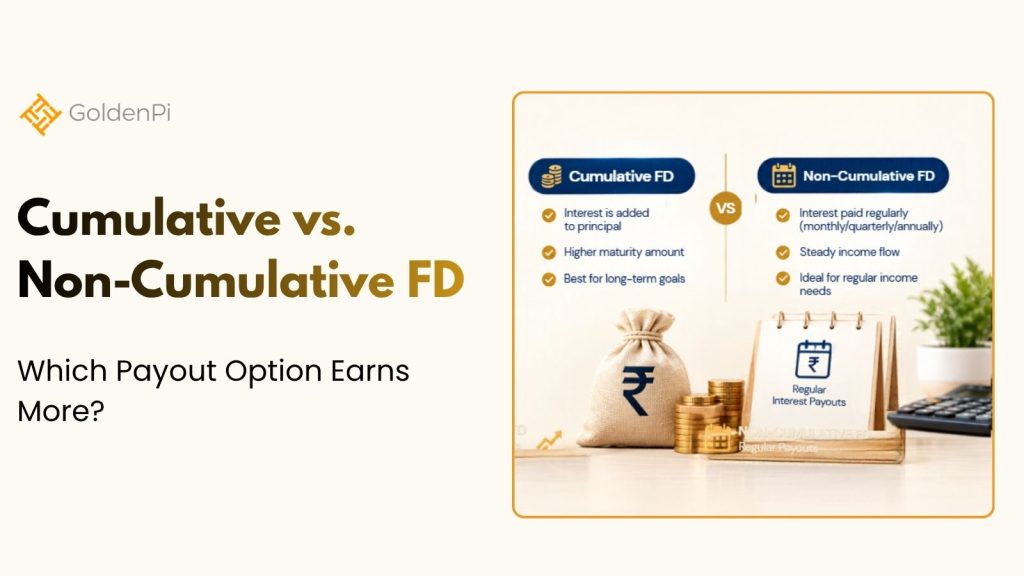
- Cumulative vs Non-Cumulative FD: Which Payout Option Earns More?
Why Bond Portfolios Drift: Duration and Interest Rate Risk
Every bond (or bond fund) has a duration indicating the sensitivity of the bond to changes in interest rates. Bond holdings with longer durations experience greater price swings with interest rate changes compared to holdings with shorter durations. In July 2026, Indian G-Sec yields increased across the curve, with the benchmark 10-year yield increasing 17 basis points, from 6.68% to 6.85% [1]. Such changes are the very reason a portfolio constructed for a falling rate environment can seem misaligned just a few months later.
When Should You Review Your Bond Portfolio?
Rather than reviewing purely by the calendar, watch for these triggers:
- A rate-cycle turn: When the RBI’s stance shifts (from accommodative to neutral, or vice versa), your duration exposure deserves a relook.
- Credit rating changes: A downgrade on any corporate bond or fund holding should trigger an immediate review, not a scheduled one.
- Goal proximity: As you near a financial goal (say, 2–3 years out), shortening duration reduces reinvestment and interest rate risk.
- Yield curve shifts: A flattening or steepening curve changes the relative attractiveness of short vs. long bonds.
- Large cash flows: A lump sum inflow, maturity proceeds, or a big withdrawal is a natural rebalancing checkpoint.
How Often Should You Rebalance Your Bond Portfolio?
There’s no single right answer; it depends on your investment horizon and how actively you manage the portfolio.
| Investor Type | Suggested Review Frequency | What to Check |
| Conservative, long-term (retirement-focused) | Every 6 months | Credit quality, duration drift |
| Balanced investor with mixed debt-equity portfolio | Quarterly | Overall asset allocation, duration vs. rate outlook |
| Active/tactical debt investor | Monthly or on RBI policy dates | Yield curve positioning, fund manager duration calls |
| Goal-based investor (near-term goal) | At each major life/goal milestone | Shift toward shorter duration, capital protection |
A good rule of thumb: review at least twice a year, and always after an RBI Monetary Policy Committee (MPC) meeting, since those are scheduled roughly every two months.
India’s Bond Market in 2026: Rebalancing in the Current Rate Cycle
The Reserve Bank of India (RBI) held its benchmark repo rate at 5.25% at its August 2026 meeting, citing uncertainty in global geopolitical conditions. This marks the fourth consecutive meeting where the RBI has held the repo rate. Additionally, the RBI revised its FY27 GDP growth forecast to 6.7%, and its inflation forecast was revised downward. The 10-year G-Sec yield was trading at 6.78%-6.79% in mid-August [1], driven by the rise in oil prices and firm US Treasury yields.
This “pause with a neutral stance” usually implies that bond investors do not have to rush to shorten or lengthen duration; however, they have to engage in a review of their positions on a periodic basis, as there are risks associated with crude oil, rupee, and global rate movements. Additionally, longer-duration bonds and gilt funds stand to gain if the RBI signals a cut in the future; however, shorter durations and accrual-based funds stand to gain from the RBI’s hold-and-hike exercise.
How to Rebalance Your Bond Portfolio: A 5-Step Guide
- Map your current holdings by duration, credit rating, and issuer type.
- Compare against your target allocation (based on goals and risk appetite).
- Identify drift: is one bucket now over- or underweighted?
- Rebalance using fresh inflows first (avoids exit loads/tax events); sell only if necessary.
- Reassess after every RBI policy meeting or major credit event.
The Bottom Line: Make Bond Rebalancing a Habit, Not an Afterthought
Bond portfolios don’t provide notifications to let you know that they’ve gone unmanaged, which might lead investors to neglect them. But as this article has demonstrated, changes that unfold more gradually (like duration risk and shifts in the RBI’s policy stance) slowly reshape your fixed-income investments if you aren’t watching.
Fortunately, when one needs to manage bond portfolios, the process is rather simple. Determining how often to review is done by setting review triggers such as credit events, rate-cycle turns, goal-based review windows, and the RBI’s bi-monthly meetings. With the current state of the market (rate and yield stability and very limited band movement), there is not much that needs to be done. However, this stability creates the best opportunity to check if your duration, credit quality, and instrument holdings need to be adjusted to meet your predetermined goals.
If you haven’t reviewed your bond holdings in the last six months, this is your cue to start.
Rebalancing your Bond Portfolio: Frequently Asked Questions
Rebalancing means reviewing and adjusting your bond holdings to bring them back in line with your target allocation across maturities, credit quality, issuers, and types of bonds.
A quarterly or semi-annual review can work for many investors. However, you should also review your portfolio when there are major changes in interest rates, credit ratings, financial goals, or an issuer’s financial health.
Not automatically. Interest-rate changes can affect bond prices and yields, but rebalancing should be based on your target allocation and investment objectives rather than short-term rate movements alone.
A downgrade is a reason to reassess the investment, not necessarily an automatic sell signal. Review the extent of the downgrade, the issuer’s financial position, bond security, and your risk tolerance before deciding.
Sources
Disclaimer
Fixed returns do not constitute guaranteed or assured returns. Investments in corporate debt securities and municipal debt securities/securitized debt instruments are subject to credit risks, market risks, and default risks, including delay and/or default in payment. Read all the offer-related documents carefully. This blog/article should not be construed as financial advice or as an offer or recommendation to buy or sell any security or any products/services of/on GoldenPi or any product/services of its third-party client(s). For a detailed calculation of YTM, visit our website. T&C’s Apply.