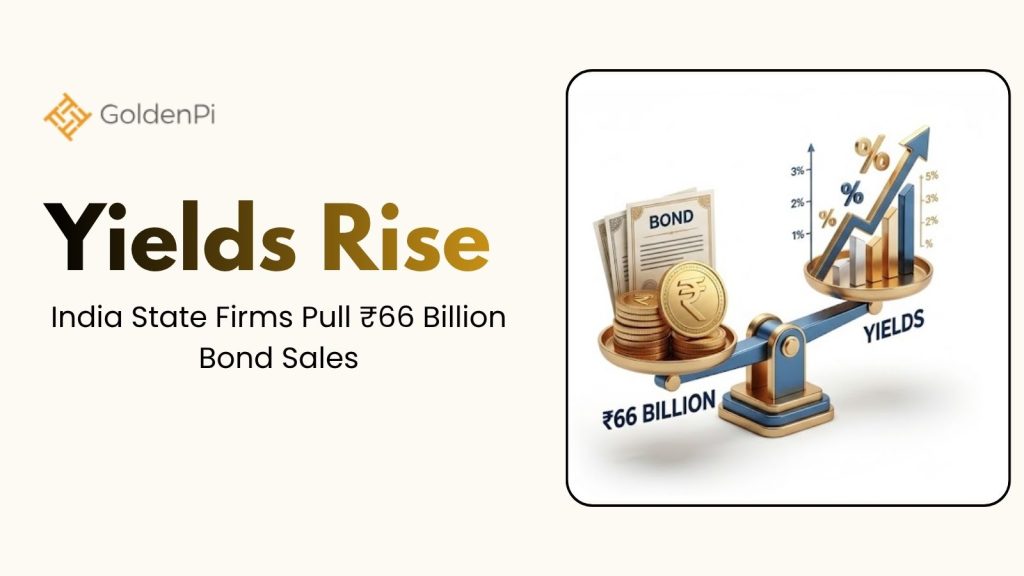
Two state-run Indian companies have withdrawn plans to raise ₹66 billion through rupee bonds, as an expected interest-rate increase and the central bank’s move to drain surplus cash push borrowing costs higher. The cancellations, reported on 28 September 2026, show how quickly India’s corporate debt market is repricing as the Reserve Bank of India (RBI) moves towards tighter policy.
Start investing with just ₹10K & grow your wealth with fixed return opportunities.
Invest Now

Sagarmala Finance Scraps India’s First Blue Bond
Sagarmala Finance Corp, which funds India’s maritime projects, on Monday pulled the country’s first blue bond, worth up to ₹6 billion. Blue bonds are typically linked to water-related sustainability projects. The company expected to price the 10-year paper below 8%, but bids came in at a higher coupon, Managing Director LVS Sudhakar Babu said. The withdrawal is a setback for India’s fledgling sustainable-finance market, where a first-of-its-kind issue was meant to set a benchmark.
SIDBI Also Backs Out
SIDBI dropped its ₹60 billion bond plan after investors demanded returns of 7.6% to 8.1%. The issue made up roughly nine-tenths of the total pulled. SIDBI, the principal financier for India’s micro, small, and medium enterprises, is a regular borrower in the domestic bond market, and it chose to walk away rather than lock in that cost. It has made that call before: in an earlier period of volatility, SIDBI and Power Finance Corp withdrew ₹115 billion of bond sales in a single week.
Yields Are Heading for a Third Monthly Rise
Yields on top-rated 3- and 10-year bonds issued by Indian state-run companies were on track for a third straight monthly increase in September. Several pressures are at work:
- RBI liquidity tightening: Draining surplus cash pushes short-term rates up, and the effect spreads along the yield curve.
- Expected policy hike: The RBI is expected to tighten monetary policy later this year.
- Global factors: A likely US Federal Reserve rate hike is making it harder to raise money affordably.
Latest Bond Updates:
- India State Firms Pull ₹66 Billion Bond Sales as Yields Rise
- India’s 10-Year Bond Yield Near Two-Year High as Crude Tops $106, US Yields Surge
- Post Office Schemes vs Corporate Bonds: A Guide for Women Investors in 2026

What It Means for Issuers and Investors
When even highly rated, government-backed issuers walk away, it signals how sensitive investors have become to interest-rate risk. Pulling an issue is often cheaper than paying above-target coupons for years, and issuers can return once yields settle. Their options in the meantime are to:
- Delay issuance until yields stabilize
- Turn to bank loans
- Accept higher coupons, which squeeze margins
Policy Response to Watch
One report says India is weighing removing key taxes on foreign holders of government bonds to stabilize inflows and ease borrowing costs. This comes from a secondary source and is unconfirmed, so treat it with caution.
Outlook
Corporate issuance is likely to stay subdued while rate-hike expectations remain elevated. Market watchers will focus on the RBI’s next policy decision, US Federal Reserve signals, and the pricing of upcoming issues. Further pulled deals would suggest funding conditions are tightening more broadly.
Disclaimer
Fixed returns do not constitute guaranteed or assured returns. Investments in corporate debt securities and municipal debt securities/securitized debt instruments are subject to credit risks, market risks, and default risks, including delay and/or default in payment. Read all the offer-related documents carefully. This blog/article should not be construed as financial advice or as an offer or recommendation to buy or sell any security or any products/services of/on GoldenPi or any product/services of its third-party client(s). For a detailed calculation of YTM, visit our website. T&C’s Apply.