Equities tend to be the main theme of discussion whenever stock markets are experiencing a rally. However, the truth is, markets don’t always go up. There are times when stock indices stay flat, with stocks moving around in price, but giving very little return for quite some time. Such a condition in the market is referred to as a sideways market.
In such scenarios, investors typically start looking into other classes of assets, which include fixed-income assets such as bonds. That does not mean that bonds make more sense than equities all the time. The fact of the matter is that different asset classes react differently depending on the prevailing market conditions.
Disclaimer: This article has been published for educational purposes only and should not be viewed as a form of investment advice.
Start investing with just ₹10K & grow your wealth with fixed return opportunities.
Invest Now

What is a Sideways Market?
A sideways market is one in which the stock prices oscillate within a tight range without forming any definite trend, either up or down. In such a case, the market may be quite volatile, and the increase in portfolios through equities may be rather minimal during that period.
Sideways markets could be due to uncertainty in economic conditions, weak earnings growth, geopolitics, or interest rate expectations.
Bonds and Equities Differ in Performance
While both are investment tools, the two perform different functions.
With equities, the investor becomes part-owner of the company, and the return is dependent on business growth, profits, and market sentiment. The bonds, being debt instruments, involve lending money to an issuer in return for getting interest income based on the terms of the bond. This is contingent upon the ability of the issuer to fulfill its obligations.
For these reasons, the two do not necessarily move in the same direction at all times.
| Feature | Bonds | Equities |
| Nature | Debt instrument | Ownership in a company |
| Primary Return | Coupon payments and market value | Dividends (if declared) and capital appreciation |
| Market Behaviour | Influenced by interest rates and credit risk | Influenced by earnings, valuations, and market sentiment |
| Volatility | Varies by issuer and tenure | Generally higher than many investment-grade bonds |
Reasons Why Bonds Will Act Differently During the Sideways Market
Bonds will still pay regular coupon income despite the limited appreciation of equities during a sideways market as long as the issuer meets its financial obligations.
Moreover, bonds’ pricing depends on various factors, including interest rate, credit quality, and demand within the bond market, apart from stock market performance. Hence, it implies that stocks and bonds react in different ways during similar market periods.
Nevertheless, bond pricing can vary according to changes in interest rates, credit issues, and other reasons in the market. Thus, it is not right to assume that bonds always perform better than equities during a sideways market.
Latest Bond Updates:
- Beyond the Rupee: Decoding SEBI’s ‘Second Shelf’ for Global Bonds
- G-Sec STRIPS Explained: Zero-Coupon Sovereign Paper for Retail

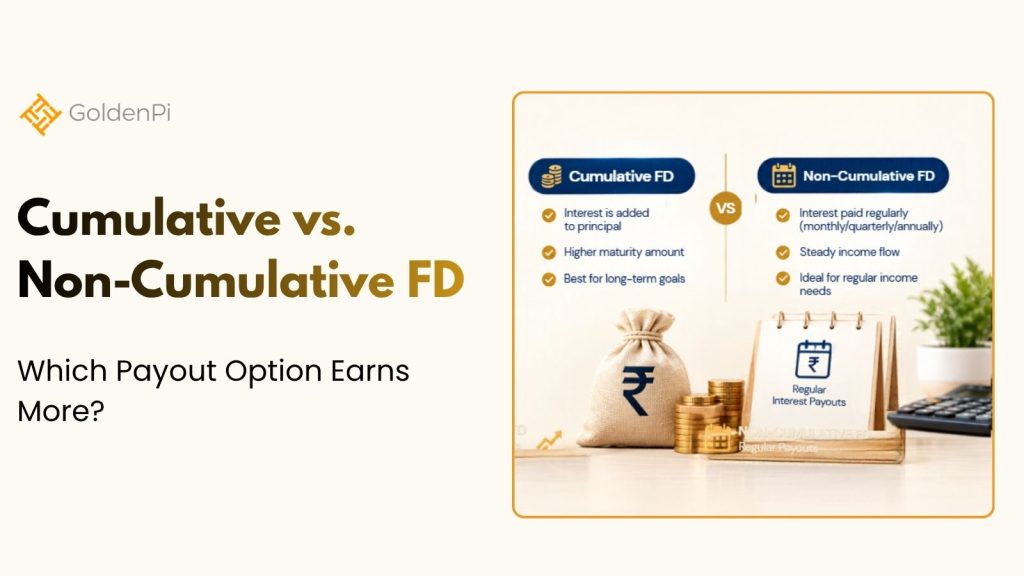
- Cumulative vs Non-Cumulative FD: Which Payout Option Earns More?
Is It the Right Time to Move From Equities to Bonds?
A common question asked in an uncertain market is whether it is time to shift from stocks to bonds.
Unfortunately, there is no one-size-fits-all solution. Rather than making investment choices only based on the market environment, financial planners suggest conducting a portfolio review.
When you have accumulated more equities than intended after a long-term bull market, portfolio rebalancing is necessary. Likewise, a change in investment goals, horizon, or risk tolerance also calls for a portfolio review.
Factors to Consider Before Changing Your Allocation
Before increasing or reducing exposure to any asset class, investors typically evaluate several factors.
| Consideration | Why It Matters |
| Financial Goals | Determines the purpose of the investment. |
| Investment Horizon | Longer horizons may accommodate different levels of market volatility. |
| Risk Tolerance | Helps determine an appropriate asset allocation. |
| Liquidity Needs | Ensures funds are available when required. |
| Diversification | Reduces concentration in a single asset class. |
Rather than asking which asset class is “better,” investors often focus on how different investments work together within a diversified portfolio.
Why Diversity Matters
Diversity continues to be one of the key tenets of investments. Various types of assets react differently to economic cycles, inflation, interest rates, and market moods. A diversified portfolio could lower the risk of being concentrated in certain assets and make the journey easier for investors. However, diversity cannot eliminate the risks involved in investment or guarantee success.
Frequently Asked Questions (FAQs)
No. The performance of bonds can be influenced by interest rates, credit ratings, tenure of the bond, and market conditions. It cannot be said with certainty that bonds will outperform stocks in any sideways market scenario.
The decision regarding investments needs to be made based on your financial objectives and risk appetite and should not be made depending on short-term fluctuations in the market.
Yes. Investors often invest in both types of investments in a diversified portfolio because they have different risk-return profiles.
Diversification of investments involves holding investments in different types of assets or industries, but this does not mean that it reduces risk or guarantees profits.
Conclusion
Side markets will always be a reminder for investors that there’s no guarantee that good portfolio performance will be achieved through stocks alone. In times of low activity in the stock market, bonds and other fixed-income securities may have their own distinct behaviors since they are affected by different factors. Instead of treating bonds and stocks as two separate types of investments, it will be better to see what contribution they can make in one’s portfolio.
Disclaimer
Fixed returns do not constitute guaranteed or assured returns. Investments in corporate debt securities and municipal debt securities/securitized debt instruments are subject to credit risks, market risks, and default risks, including delay and/or default in payment. Read all the offer-related documents carefully. This blog/article should not be construed as financial advice or as an offer or recommendation to buy or sell any security or any products/services of/on GoldenPi or any product/services of its third-party client(s). For a detailed calculation of YTM, visit our website. T&C’s Apply.