Investors have more options than ever when it comes to bond investing. The number of clients for the RBI’s Retail Direct platform increased to 3.6 lakh in April 2026, a 54% increase from the previous year [1]. Primary market subscriptions also experienced a notable increase. The growing number of corporate bond platforms and debt mutual funds shows that bond investing has grown beyond the niche of a “retirement product.”
Bonds have a certain complexity that, for as much experience as an investor may have in equities or mutual funds, can lead them to make fundamental mistakes, especially if this is their first time investing in bonds. Here are the most common mistakes and how to avoid them.
Start investing with just ₹10K & grow your wealth with fixed return opportunities.
Invest Now

Mistake 1: Confusing Coupon Rate with Actual Yield
A bond with a 9% coupon should not be expected to yield 9%. The yield to maturity (YTM) is the yield that would be realized if the bond is sold below its face value; if sold above, the yield would be less than the YTM. The coupon is often what first-time investors consider the most, while overlooking the number that actually reflects what they’d earn if held to maturity.
Mistake 2: Ignoring Interest Rate Risk
The relationship between bond prices and interest rates is negative. With the RBI’s repo rate at 5.25%, a neutral stance, and the 10-year G-Sec yield at approximately 6.85% in July 2026 due to an increase in crude prices and tight liquidity, long-dated bond holders have really experienced price volatility. New investors often don’t realize a “safe” government bond can still show mark-to-market losses if yields rise before maturity.
Mistake 3: Skipping Credit Rating Checks on Corporate Bonds
Many are lured to a higher coupon without checking the rating on the bond (AAA vs. A vs. BBB). A lower-rated bond is not “only slightly riskier”; it is way more “likely to default.” Check ratings from CRISIL/ICRA/CARE and continue to check ratings post-investment.
Latest Bond updates:
- G-Sec STRIPS Explained: Zero-Coupon Sovereign Paper for Retail
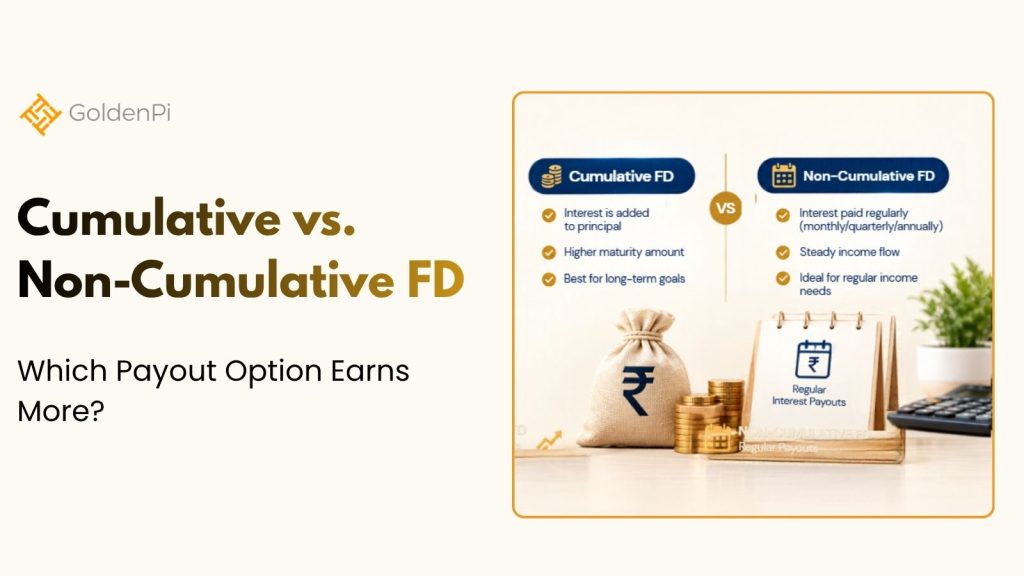
- Cumulative vs Non-Cumulative FD: Which Payout Option Earns More?
- Callable vs Non-Callable FDs: Why Non-Callable Deposits Pay More

Mistake 4: Assuming Government-Backed Instruments Are All Treated the Same
Sovereign Securities (G-Secs), Sovereign Gold Bonds (SGBs), and State Development Loans often get grouped by first-timers. For clarity, SGBs have been stopped for fresh issuance since February 2024 and likely will not have issuance tranches for FY26 and FY27 due to high government borrowing [2]. Also, in Budget 2026, SGB taxation was changed as of April 1, 2026. The tax-free at maturity benefit will be available only to the original subscribers who will hold the bonds for the entire 8-year period. Anyone else, i.e., those who bought SGBs in the secondary market, will have to pay taxes on the bonds: 12.5% LTCG if the bonds are held for more than 12 months, and if held for less, the slab-rate STCG tax applies. Presuming the blanket SGB waiver is still in effect is a costly blunder and very common.
Mistake 5: Overlooking Liquidity
Not every bond can be sold easily before maturity. G-Sec and state bond traded volumes, for example, almost tripled to ₹9,167 crore in April 2026, and retail secondary market trading has increased. However, many, if not most, corporate bonds, especially those that are unlisted and lower-rated, will have very poor liquidity.
Mistake 6: Ignoring Taxation Differences
Taxation varies significantly by instrument and, importantly, by whether a bond is listed or unlisted:
| Instrument | Interest Taxation | Capital Gains Taxation |
| G-Secs / T-Bills (listed) | Slab rate | 12.5% LTCG (no indexation) if held >12 months; slab-rate STCG if less |
| Corporate Bonds — Listed | Slab rate | 12.5% LTCG (no indexation) if held >12 months; slab-rate STCG if less |
| Corporate Bonds — Unlisted / NCDs | Slab rate | Deemed short-term regardless of holding period — always taxed at slab rate |
| SGB — original subscriber, held to 8-yr maturity | Slab rate | Fully tax-free |
| SGB — secondary market purchase or premature exit | Slab rate | 12.5% LTCG (>12 months) or slab-rate STCG (<12 months), effective April 1, 2026 |
The unlisted-bond rule trips up a lot of NCD investors: no matter how long you hold an unlisted bond, gains are taxed as short-term at your income slab rate, meaning there’s no long-term benefit to waiting.
Mistake 7: No Laddering or Diversification Strategy
Investing in only one maturity or one issuer exposes you to both interest and credit risk. A simple laddering practice where you invest in 1-year, 3-year, and 5-year+ bonds helps balance reinvestment risk and minimizes risk exposure to a single interest rate cycle.
Conclusion: Getting Bond Investing Right the First Time
Bonds are rewarding to those who are patient, but punishing to those who are not. The issues referenced above are not about going to the “wrong” bond; they are issues related to not even taking 5 minutes to look at a bond and checking the YTM and credit rating, determining if the bond is listed, and determining what will happen to your investment if you need to sell the bond early. With interest rates being lower and more and more Indians going to the RBI Retail Direct and OBPPs to build their own bond portfolios, now is the time to invest and open your bond portfolios. With the right risk, tax, and liquidity management, bonds will be one of the safer and more predictable parts of your portfolio.
First-Time Bond Investors’ Common Mistakes Frequently Asked Questions
Focusing only on the bond’s coupon or advertised return. Investors should also evaluate the issuer’s credit quality, yield to maturity, maturity, security, liquidity, and risks.
No. A higher yield often comes with higher credit, liquidity, or interest-rate risk. Investors should understand why a bond offers a higher yield before investing.
No. Credit ratings are useful indicators but do not guarantee repayment. Investors should also review the issuer’s financial health, rating outlook, bond structure, and other relevant risks.
Yield to maturity (YTM) estimates the annualized return from a bond if it is held until maturity, assuming the issuer makes all scheduled payments. It provides a more useful comparison than looking at the coupon alone.
Review the issuer’s financial health, credit rating and outlook, YTM, maturity, security, covenants, liquidity, taxation, and minimum investment amount. Reading the bond’s offer or information documents can also help you understand its terms.
Sources
- https://www.outlookmoney.com/invest/investors-take-to-rbi-retail-direct-platform-in-search-of-better-fixed-returns
- https://goldenpi.com/blog/bond-news/sovereign-gold-bond-scheme-discontinued-for-new-issues/
Disclaimer
Fixed returns do not constitute guaranteed or assured returns. Investments in corporate debt securities and municipal debt securities/securitized debt instruments are subject to credit risks, market risks, and default risks, including delay and/or default in payment. Read all the offer-related documents carefully. This blog/article should not be construed as financial advice or as an offer or recommendation to buy or sell any security or any products/services of/on GoldenPi or any product/services of its third-party client(s). For a detailed calculation of YTM, visit our website. T&C’s Apply.