Bank bonds are debt instruments issued by financial institutions to raise capital, where you act as the lender in exchange for periodic interest payments and the return of your principal at maturity. They offer a fixed-income avenue to diversify your portfolio while carrying varying levels of risk depending on the bank’s credit rating.
While most investors consider fixed deposits, savings, and stocks as options to invest in a bank, there is one more investment option provided by banks that might remain overlooked by some investors. This alternative is a bank bond.
To put it plainly, bank bonds are debt securities that help banks to generate finance from investors. By investing in a bank bond, you basically lend money to a bank. In turn, the bank agrees to pay back your investment with accrued interest over the period stated in the bond terms.
Investing in bank bonds has been getting increasingly popular as a way to diversify fixed-income investments and earn profits.
What Are Bank Bonds?
Bank bond is a debt instrument floated by a bank for raising funds either for the working of its business or its lending activities or expansion or regulatory purposes.
Consider that a bank desires to raise funds of ₹1,000 crores for future lending operations and business growth. The bank may choose to raise funds through issuance of bonds rather than depending upon deposits.
The investors who acquire such bonds lend money to the bank for a definite period. In turn, the bank makes interest payments at regular intervals called coupon payments and repayment of principal at the maturity date of the bond.
Simply put, the concept of a bank bond works like a loan taken from the investors by the bank issuing bonds.
Start investing with just ₹10K & grow your wealth with fixed return opportunities.
Invest Now

How Do Bank Bonds Work?
When you buy a bank bond, you are essentially issuing an IOU to the bank. The mechanics rely on three main pillars:
Bank issues a bond that has the following:
- Face Value (Principal): The initial amount you lend, which is repaid when the bond reaches its Maturity Date.
- Coupon Rate: The predetermined interest rate (e.g., 7%) the bank pays you, usually semi-annually or annually.
- Credit Ratings: Agencies assess the bank’s financial health; higher-rated bonds are safer but pay less, while lower-rated ones carry higher default risk but pay higher yields
After the issue of the bond to investors, the bank gets the money from the issuance of the bond.
Throughout the tenure of the bond, the investors get interest payments periodically, depending on how the bond is structured. When the bond matures, the bank pays back the face value of the bond.
For instance, let us consider a case where a bank issues a 5-year bond having a face value of ₹100,000 and an 8% coupon rate.
Recent Bond News:
- Beyond the Rupee: Decoding SEBI’s ‘Second Shelf’ for Global Bonds
- G-Sec STRIPS Explained: Zero-Coupon Sovereign Paper for Retail

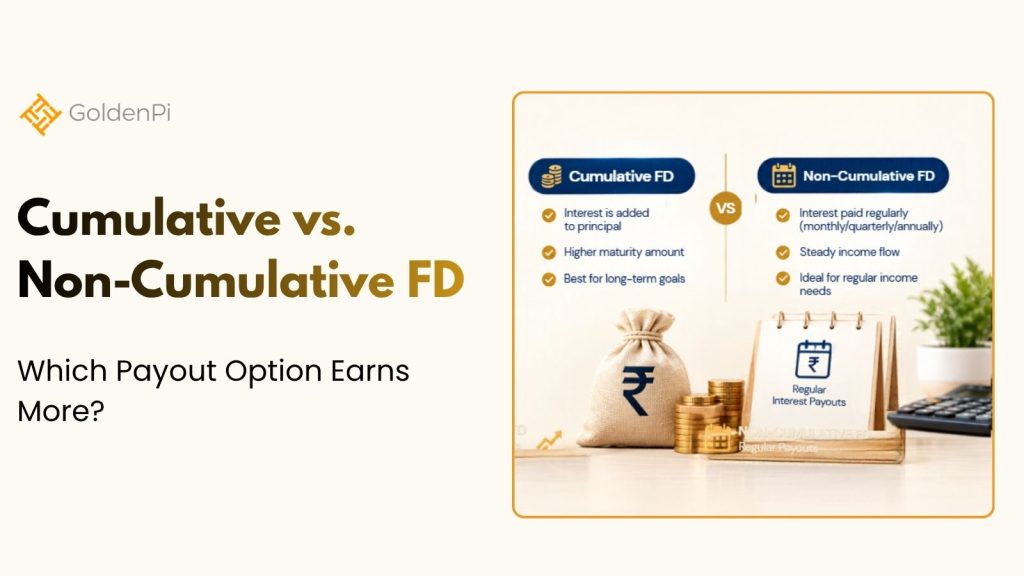
- Cumulative vs Non-Cumulative FD: Which Payout Option Earns More?
Why Do Banks Issue Bonds?
There are various purposes for which bonds are issued by the bank.
The primary purpose is that of obtaining long-term finance. Bonds give banks relatively more stable finance than the deposits made by customers since the depositors have the option of withdrawing their money.
The bank can also obtain bonds for:
- Lending activities
- Meeting the capital requirements set by regulators
- Business expansion
- Strengthening capital structure
Issuance of bonds helps banks to diversify their financing other than through customer deposits.
Types of Bank Bonds in India
Bank bonds are not all the same, as different banks can choose to issue different kinds of bonds depending on their need for funds.
- Senior Unsecured Bonds: Standard debt backed only by the bank’s creditworthiness. In a default, these rank higher in repayment priority than equity or subordinated debt.
- Subordinated Bonds: Sit lower in priority than senior debt. They carry more risk but offer higher interest rates to compensate.
- Infrastructure Bonds: Specifically issued by banks to fund long-term infrastructure and affordable housing projects
Bonds from Banks for Infrastructure Purposes
Some banks might be issuing bonds with the specific purpose of providing funds for infrastructure and developmental projects.
These types of bonds have traditionally been used for funding sectors like transportation, energy, and public infrastructural facilities.
Compliant Bonds under Basel Norms
It is possible for banks to issue bonds compliant with the international standards of banking capital requirements.
These bonds are created in an effort to increase the financial stability of banks.
Such types of bonds need careful study by potential investors as they might possess some unique characteristics.
Advantages of Investing in Bonds by Banks
Bonds issued by banks can have various benefits for investors interested in fixed-income investments.
Regular Income Potential
A number of bank bonds make interest payments on a regular basis and therefore can be good income investments.
The interval and size of interest payments are determined by the bond’s terms and conditions.
Diversification of the Investment Portfolio
Investment in bank bonds can help in diversifying the investor’s portfolio.
Rather than investing exclusively in stocks or deposits, part of the money can be invested in fixed-income securities like bonds.
Different Tenures for Bank Bonds
There is an option for obtaining bank bonds with various tenure structures, including short-term and even long-term investments.
Investors will have the freedom to select the duration that fits into their investment objectives.
Fixed-Income Investments Opportunity Through Bank Bonds
In case investors want to consider other fixed-income securities apart from the deposits, bank bonds offer another opportunity.
Risks Linked With Bank Bonds
Like other types of investments, bank bonds also involve certain risks that must be considered by the investors.
Credit Risk
While banks are regulated entities, there will always be some risk involved in any kind of debt instrument issuance.
The financial strength and the creditworthiness of the issuer will matter.
Interest Rate Risk
There exists an inverse relationship between bond prices and interest rates.
With the increase in market interest rates, the value of bonds in the market may decrease, especially those having long tenure periods.
Liquidity Risk
Bank bonds could either be actively traded in the market or may have low liquidity in the market.
Regulatory and Structural Risks
Certain bank bonds, particularly regulatory capital bonds, may contain specific features that investors should fully understand before investing.
Reading the offer document and understanding the bond structure is important.
Bonds Update:
- Post Office Schemes vs Corporate Bonds: A Guide for Women Investors in 2026

- India’s First Tokenised Bond Issue: What It Means for Investors
- Post Office MIS vs Bonds in 2026: Which Is Better for Monthly Income?
Bank Bonds vs. Fixed Deposits: What’s the Difference?
Many investors compare bank bonds with fixed deposits because both are associated with banks.
However, they are different investment products.
| Feature | Bank Bonds | Fixed Deposits |
| Nature | Debt Security | Deposit Product |
| Tenure | Fixed Maturity Period | Fixed Maturity Period |
| Tradability | May be Tradable in Secondary Market | Generally Not Tradable |
| Market Price Fluctuation | Can Vary Before Maturity | Not Market Linked |
| Interest Payments | Based on Bond Terms | Based on FD Terms |
Fixed Deposits (FDs): Typically insured up to specific limits (such as up to ₹5 lakhs per depositor per bank via the DICGC in India) and held directly with the bank.
Bank Bonds: Traded on the secondary market, meaning their market price fluctuates inversely with interest rates. They usually do not carry the same deposit insurance protections as FDs.
Both products serve different purposes, and suitability depends on an investor’s goals and preferences.
Who Should Think About Bank Bonds?
Bank bonds can be considered by individuals who:
- Require diversification of their fixed-income securities
- Want to explore income-generating possibilities
- Have an investment horizon in mind
- Know the risks associated with bonds
- Would like exposure to instruments of the debt market
Nevertheless, all investment choices must be made according to personal objectives and requirements.
Frequently Asked Questions Regarding Bank Bonds
Bank bonds are issued by regulatory bodies, but all investments come with inherent risks such as credit risk and interest rate risk.
Bank bonds earn returns through coupon payments and payment of face value at the time of maturity, depending on the terms and conditions of the bond.
Most listed bank bonds can be bought and sold in the secondary market before the time of maturity, depending on the liquidity and the price of the market.
It is not true. There may be some fixed coupons in bonds, but it depends on the bond itself.
Conclusion
Bonds issued by banks have a special significance within the fixed-income securities space as they help banks acquire their much-needed long-term capital. From the perspective of investors, these provide a chance to invest in the debt market and make periodic returns in the form of interest.
Nevertheless, as with all kinds of investments, one should never judge bonds based upon the interest rate alone. Credit worthiness, tenor, liquidity, and many other factors matter just as much.
It is best to thoroughly analyze the characteristics of the bond before making a final decision.
Ready to Invest?
Visit GoldenPi to explore current bond options. Compare yields, ratings, and tenures in one place and invest online with as little as ₹10,000.
Disclaimer:
Fixed returns do not constitute guaranteed or assured returns. Investments in corporate debt securities and municipal debt securities/securitized debt instruments are subject to credit risks, market risks, and default risks, including delay and/or default in payment. Read all the offer-related documents carefully. This blog/article should not be construed as financial advice or as an offer or recommendation to buy or sell any security or any products/services of/on GoldenPi or any product/services of its third-party client(s). For a detailed calculation of YTM, visit our website. T&C’s Apply.