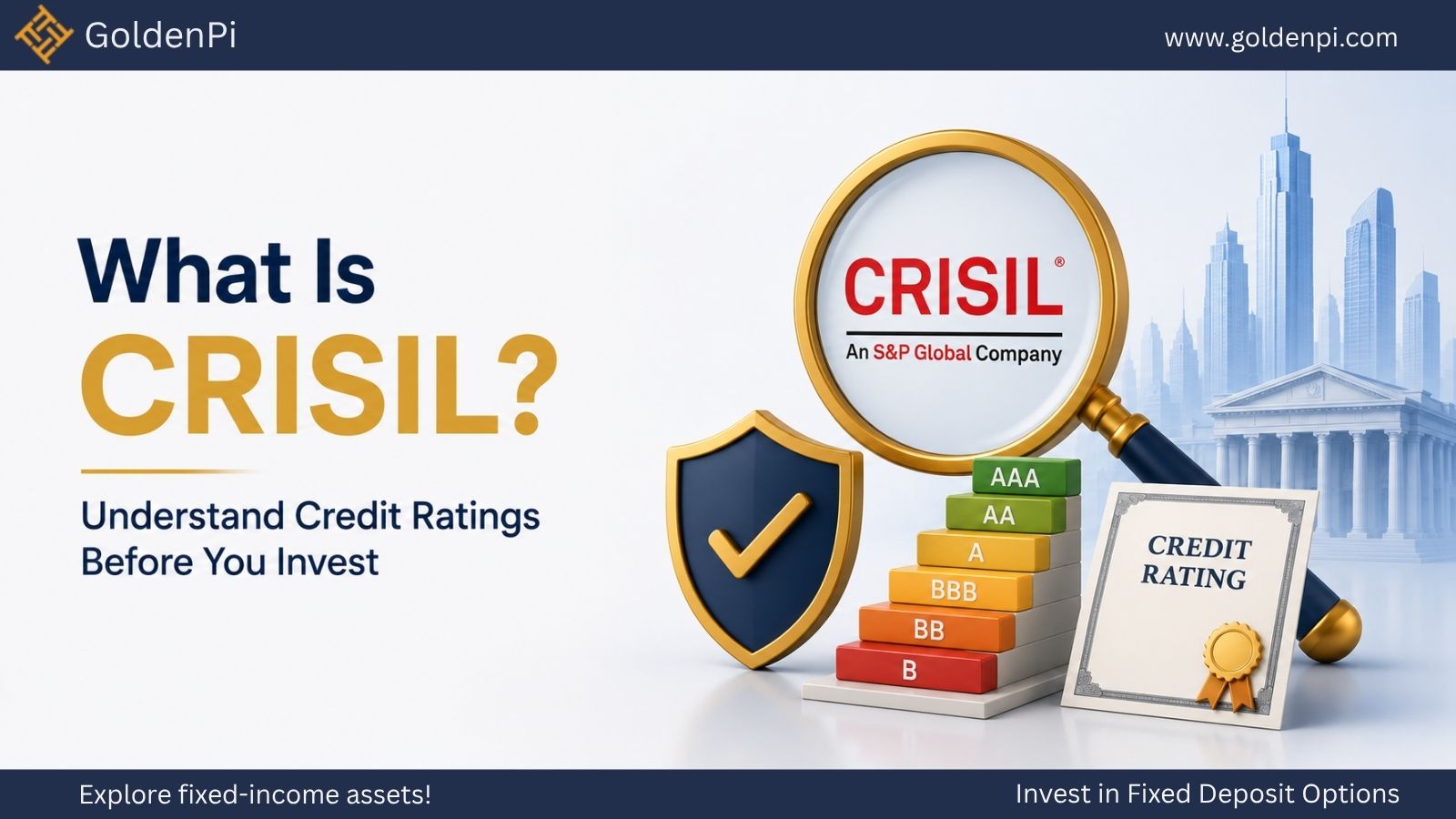
While investing in bond, debenture, fixed-income, or other debt securities, one of the first things you will come across is the credit rating of the security. Credit ratings are basically designed to help an investor know the creditworthiness of the issuer and the degree of credit risk of the security.
CRISIL is one of the best known credit rating agencies in India.
Yet, there is an immense misunderstanding about CRISIL ratings amongst many investors who think that a good rating ensures returns and no risks at all. This is not true. The whole concept of credit rating is to provide an opinion about credit risk and use it as one of many criteria for investment decision-making.
What Is CRISIL and What Does It Do?
CRISIL is an acronym for Credit Rating Information Services of India Limited. Founded in 1987, it was India’s first credit rating agency, and now it ranks among the top agencies in India for providing services related to credit ratings, research, risk assessments, and analytics. Mainly, CRISIL focuses on the capacity of companies, financial institutions, banks, and others who issue debt securities to fulfill their financial commitments. After assessing the capacity, CRISIL gives credit ratings to various debt securities.
In simpler words, CRISIL helps investors to understand the credit rating of a particular issuer before making investments in the respective company or business.
Apart from the credit ratings, the services provided by CRISIL include:
- Research and insights into market and economy
- Risk and advisory services
- Solutions to data and analytics problems
- Credit assessments of financial institutions and businesses
As far as retail investors are concerned, CRISIL ratings can be mainly seen on bonds and fixed-income securities.
It must be noted that CRISIL ratings are opinions regarding the creditworthiness of a business or company.
Start investing with just ₹10K & grow your wealth with fixed return opportunities.
Invest Now

CRISIL Rating Scale
It uses a rating scale to indicate its opinion regarding an issuer’s ability to meet its financial commitments.
Generally, higher ratings indicate lower perceived credit risk, while lower ratings indicate relatively higher credit risk.
Here is a simplified overview of the CRISIL long-term rating scale:
| CRISIL Rating | General Interpretation |
| AAA | Highest degree of safety regarding timely servicing of financial obligations |
| AA | High degree of safety regarding financial obligations |
| A | Adequate degree of safety |
| BBB | Moderate degree of safety |
| BB | Moderate risk of default compared with higher-rated instruments |
| B | Higher degree of credit risk |
| C | High risk regarding timely servicing of obligations |
| D | Instrument is in default or expected to be in default |
CRISIL may also use “+” or “-” symbols within certain rating categories to indicate relative standing within that category.
For example:
- AA+ ranks higher than AA
- AA ranks higher than AA⁻
Investors should remember that credit ratings are dynamic and can be upgraded, downgraded, reaffirmed, or placed under review depending on changes in the issuer’s financial condition and business environment.
Must Read: Indian Clearing Corporation Limited (ICCL)
How CRISIL Works
The credit rating assignment requires a thorough analysis rather than just a review of financial documents.
It appears that CRISIL takes into account several elements prior to the final opinion being formulated.
Financial Performance
An analysis of an issuer’s financial performance is one of the key areas of evaluation.
- Such aspects as:
- Revenue and earnings trends
- Cash flow dynamics
- Debt payments
- Interest coverage
- Capital structure
are analyzed by CRISIL.
Generally speaking, the issuer with strong financial indicators will be considered as having higher capacity to meet obligations.
Business Profile
Also, the analysis of a company’s business model is performed.
Market share, industry prospects, operational efficiency, and diversification may influence the final opinion.
Management & Corporate Governance
Sometimes, the quality of the management and corporate governance practices of a company plays an essential role.
High-quality corporate governance practices usually positively impact the financial performance of a business.
Industry & Economic Environment
Besides, certain external factors should be taken into account.
Any changes in economic environment, regulations, industry trends, or market disturbances may influence the issuer’s capacity to perform.
Based on the above-mentioned factors, CRISIL provides a rating opinion.
Recent Bond Update:
- Beyond the Rupee: Decoding SEBI’s ‘Second Shelf’ for Global Bonds
- G-Sec STRIPS Explained: Zero-Coupon Sovereign Paper for Retail
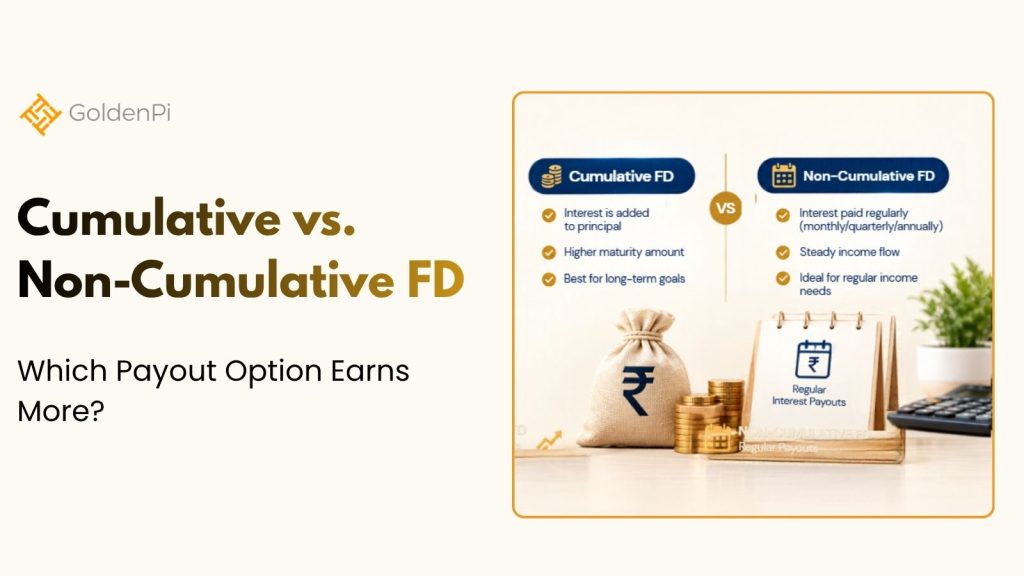
- Cumulative vs Non-Cumulative FD: Which Payout Option Earns More?
Why CRISIL Ratings Matter to Investors
For investors who are evaluating bonds and other fixed income investments, CRISIL ratings are quite useful for making sense of the credit risk involved.
The rating tells us how investors can compare issuers and how risky the debt instrument is. For instance, when two bonds have similar features but different ratings, then investors might use the ratings as part of the many factors they consider while making the decision. Nevertheless, ratings must never be considered by themselves.
Some things a CRISIL rating doesn’t do include the following:
- Gives guarantee of repayment
- Gives guarantee of returns
- Foretells the future price of the bond
- Removes all risks from investing
It only tells us an independent evaluation of the issuer’s ability to meet financial commitments.
Other factors that investors could consider include the following:
- Objective of investing
- Ability to take on risk
- Requirement of liquidity
- Duration of the bond
- Interest rates scenario
- Diversification of portfolio
Common Misconception: Higher Rating Means Higher Returns
New investors tend to assume that the more highly rated a bond, the greater its return.
However, ratings and returns are completely different.
Highly rated bonds have low credit risks, but low ratings usually go with high interest because of higher risks that investors need to cover. Thus, one should concentrate on risk-adjusted decisions.
Frequently Asked Questions About CRISIL
CRISIL stands for Credit Rating Information Services of India Limited. It is one of India’s leading credit rating agencies.
A CRISIL rating is the agency’s opinion regarding the creditworthiness of an issuer or debt instrument and its ability to meet financial obligations.
No. A AAA rating indicates a very strong capacity to meet financial obligations, but it is not a guarantee of repayment or investment performance.
Yes. Ratings can be upgraded, downgraded, reaffirmed, or reviewed based on changes in an issuer’s financial condition, business performance, or market environment.
No. Credit ratings are opinions on credit risk and should not be considered recommendations to buy, sell, or hold any security.
No. Investors should consider ratings alongside factors such as financial goals, risk appetite, investment horizon, liquidity requirements, and portfolio diversification.
Conclusion
CRISIL is vital in the debt market of India since it offers investors the credit analysis of the issuer and the debt securities. The rating provided by CRISIL gives an independent credit risk opinion, which is valuable for evaluation of the bond and other debt securities.
It is imperative to know that credit ratings are not an assurance of safety or return. Credit ratings are only opinions about the creditworthiness and should thus be used in combination with other factors.
Investors need to look at their financial goals, risk tolerance, and investment objectives before they invest in any debt instrument and not just the credit rating.
Ready to Invest?
Visit GoldenPi to explore current bond options. Compare yields, ratings, and tenures in one place and invest online with as little as ₹10,000.
Disclaimer:
Fixed returns do not constitute guaranteed or assured returns. Investments in corporate debt securities and municipal debt securities/securitized debt instruments are subject to credit risks, market risks, and default risks, including delay and/or default in payment. Read all the offer-related documents carefully. This blog/article should not be construed as financial advice or as an offer or recommendation to buy or sell any security or any products/services of/on GoldenPi or any product/services of its third-party client(s). For a detailed calculation of YTM, visit our website. T&C’s Apply.