Every January, HR departments send an email urging Indian employees to send their investment proofs to their company’s HR. Once upon a time, finding the ideal spot to park money within the next two months was a race to beat the deadline for the ₹1.5 lakh Section 80C limit. However, the new tax regime is now the default, meaning the Section 123 deduction (the successor to the old Section 80C framework) isn’t available under that regime. So, it is worth asking whether the Section 123 deduction is still worth using for you, and if the answer is yes, which instrument actually earns its place: a Tax-Saving FD, NSC, ELSS, or bonds? Here’s a practical, numbers-first comparison for FY 2026-27.
Start investing with just ₹10K & grow your wealth with fixed return opportunities.
Invest Now

Does Section 123 Still Matter in FY 2026-27?
The Income Tax Act of 2025, into effect from April 1, 2026, has moved the Section 80C deduction framework to Section 123, with the eligible investments and payments now listed in Schedule XV. The limit of ₹1.5 lakh on deductions has not changed, and the eligible instruments remain substantially unchanged in substance. However, this deduction is only applicable under the old tax regime. Since the new tax regime is the default option, with Section 156 (the new-law equivalent of Section 87A) providing a higher income threshold (income up to ₹12 lakh can qualify for a rebate that results in nil tax, subject to the applicable conditions) and a standard deduction of ₹75,000 available for salaried individuals, many taxpayers will end up paying less tax in the new regime, without making any investments under Section 123. So the real first decision isn’t which Section 123 instrument to pick; it’s whether the old regime is worth it for you at all. Once that’s settled, the comparison below applies.
Tax-Saving FD Explained: Interest Rates and Tax Rules for 2026
A 5-year tax-saving FD is the most common choice. You lock in your money, get a fixed rate, and then claim the tax benefit. Right now, SBI offers 6.05% [1] for general customers and 7.05% for senior citizens, whereas ICICI Bank’s tax-saver FD stands at 6.50% [2] (general) and 7.10% (senior) as of mid-2026. The catch: the interest earned is fully taxable at your slab rate, and there’s no premature withdrawal or loan facility during the 5-year lock-in. It suits investors who want zero market risk and don’t mind a modest, fixed return.
NSC Explained: Current Rate, Maturity & Section 123 Benefits
The NSC provides a current rate of 7.7% p.a. [3], with interest compounded annually and payable only at the end of the 5-year tenor. It is a government-backed investment sold via post offices. The rate is reviewed quarterly; it has been held constant in several of the last few quarters, including July-September 2026. Like the tax-saving FD, NSC interest is taxable, though there’s a small silver lining: except in the final year, the accrued (but unpaid) interest each year is itself treated as a fresh Section 123 investment, which helps you use the limit more efficiently.
ELSS: The Only Equity Option Under Section 123
Equity Linked Savings Schemes are mutual funds that invest primarily in stocks, and they carry the shortest lock-in of any Section 123 instrument: just 3 years, versus 5 years for FDs and NSC. Returns aren’t guaranteed and fluctuate with the market. The trade-off is volatility: your capital isn’t guaranteed, year-to-year returns can swing sharply, and a fund that’s up double digits one year can be flat or negative the next.
Latest Bond Updates:
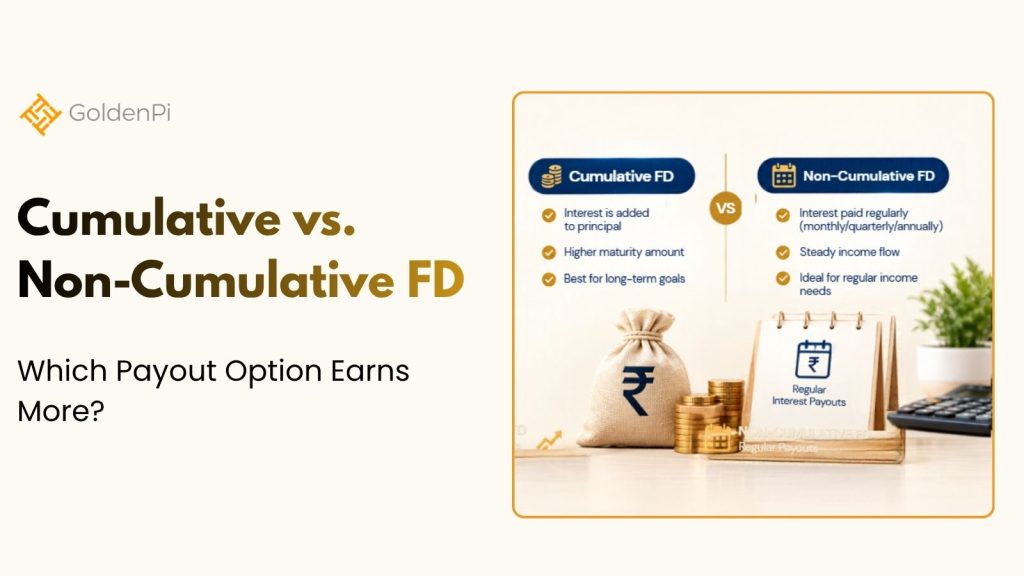
- Cumulative vs Non-Cumulative FD: Which Payout Option Earns More?
- Sweep-In FD Explained: How Auto-Sweep Accounts Work in India

- SBI FD Interest Rates in Oct 2026: Latest Rates, Features, and Things Investors Should Know
Tax-Saving Bonds Explained: What’s Still Eligible Under Section 123
This is where expectations often don’t match reality. The infrastructure bonds that once offered an extra ₹20,000 deduction under Section 80CCF were discontinued after FY 2011-12 and haven’t returned. There is currently no actively issued bond offering a fresh Section 123 deduction. What people often call “80C bonds” today is usually NSC itself (technically a government savings certificate), or unrelated products like 54EC capital gains bonds and tax-free bonds, both governed by different sections and unable to reduce your Section 123 liability. If a bond is marketed to you as a Section 123 option, check the exact section it qualifies under before investing.
Quick Comparison Table
| Instrument | Current Return | Lock-in | Risk | Interest Taxable? |
| Tax-Saving FD | ~6.05%–7.10% (bank-dependent) | 5 years | Very low | Yes |
| NSC | 7.7% (Jul–Sep 2026) | 5 years | Very low (govt-backed) | Yes |
| ELSS | Market-linked; historically higher than fixed-income options over 5+ years | 3 years | Market-linked | Gains taxed as LTCG/STCG |
| Bonds | No fresh Section 123-eligible bonds currently issued | — | — | — |
What Should Guide Your Choice?
A few practical filters before you invest:
- Check your math. If your regime change results in a better tax situation, tax benefits on a Section 123 investment might not be worth the hassle.
- Invest according to your goals. If you need money in the next 3-4 years, ELSS will allow you to lock your money for 3 years, as opposed to the 5-year lock-in for FDs and NSC.
- Don’t chase returns blindly. ELSS has outperformed historically, but it’s not a fixed-deposit substitute. Invest only what you can leave untouched through market swings.
- Watch post-tax returns, not headline rates. A 7% FD taxed at 30% gets you roughly 4.9%; often barely ahead of inflation, meaning your real (inflation-adjusted) return can be close to zero.
- Verify before you buy “bonds” for Section 123. Confirm the exact section on the offer document; most bond products no longer qualify.
Frequently Asked Questions
Eligible investments include tax-saving fixed deposits, NSC and ELSS, among other specified investments and payments. The combined deduction limit under Section 123 and certain related provisions is ₹1.5 lakh.
No. Ordinary government and corporate bonds generally do not qualify for the Section 123 deduction. Only bonds specifically covered by the tax provisions can provide a deduction, so investors should check the terms and applicable law rather than assuming every bond is tax-saving.
Yes. Investment in a National Savings Certificate (NSC) is an eligible Section 123 investment, subject to the overall ₹1.5 lakh limit.
Yes. Equity Linked Savings Schemes (ELSS) qualify for Section 123, subject to the overall deduction limit. Unlike FDs and NSCs, ELSS invests primarily in equities, so its returns are market-linked and not guaranteed.
No. The deduction is only one part of the calculation. Compare post-tax returns, risk, lock-in, liquidity, and how well the investment fits your financial goal before choosing an instrument.
Sources
- SBI — Retail Domestic Term Deposit Interest Rates
- PolicyBazaar — ICICI Bank FD Interest Rates 2026
- Department of Economic Affairs — Small Savings Interest Rates
Disclaimer
Fixed returns do not constitute guaranteed or assured returns. Investments in corporate debt securities and municipal debt securities/securitized debt instruments are subject to credit risks, market risks, and default risks, including delay and/or default in payment. Read all the offer-related documents carefully. This blog/article should not be construed as financial advice or as an offer or recommendation to buy or sell any security or any products/services of/on GoldenPi or any product/services of its third-party client(s). For a detailed calculation of YTM, visit our website. T&C’s Apply.