
Bond coupons feel like the simplest income in your portfolio. They arrive on schedule, the amount is fixed, and the issuer deducts tax before you see a rupee. That is exactly why they are easy to overlook at the time of filing returns. If the TDS on your coupons doesn’t show up correctly in your tax records, you could pay tax twice on the same income or miss a refund you are owed.
Reconciling coupon TDS with AIS and Form 26AS is the habit that prevents this. It matters more now, because the Income-tax Act, 2025, has been in force since 1 April 2026 and has changed section numbers and form names. Pre-filled returns also lean heavily on these statements, so errors flow straight into your filing.
In this article, you’ll see how coupon TDS works today, why the numbers often differ, and what to do about it before you file.
Start investing with just ₹10K & grow your wealth with fixed return opportunities.
Invest Now

Form 26AS vs Form 168: Which One Do You Open?
The statement you need depends on the year. Under the Income-tax Rules, 2026, Form 26AS is now Form 168; Form 15G and 15H are merged into Form 121, and for FY 2025-26 and earlier, the old forms continue to apply. The TDS certificate for non-salary income, earlier Form 16A, is now Form 131.
In practice, returns filed now are for FY 2025-26, so you will mostly work with 26AS and Form 16A. Coupons received from April 2026 onwards will appear under Form 168 and Form 131 as the year progresses.
AIS vs Form 26AS: The Ledger and the Diary
Think of Form 26AS as your tax credit ledger and AIS as your income diary. The ledger records one thing: TDS deducted and deposited against your PAN. The diary is broader. It captures interest, dividends, securities transactions, and more, as reported by deductors, banks, depositories, and others. The first is the anchor for claiming TDS credit, while detailed transaction-level income data sits in AIS.
You need both because they answer different questions. The ledger tells you how much tax you can claim. The diary tells you whether the department’s view of your income matches yours.
L(earn) More:
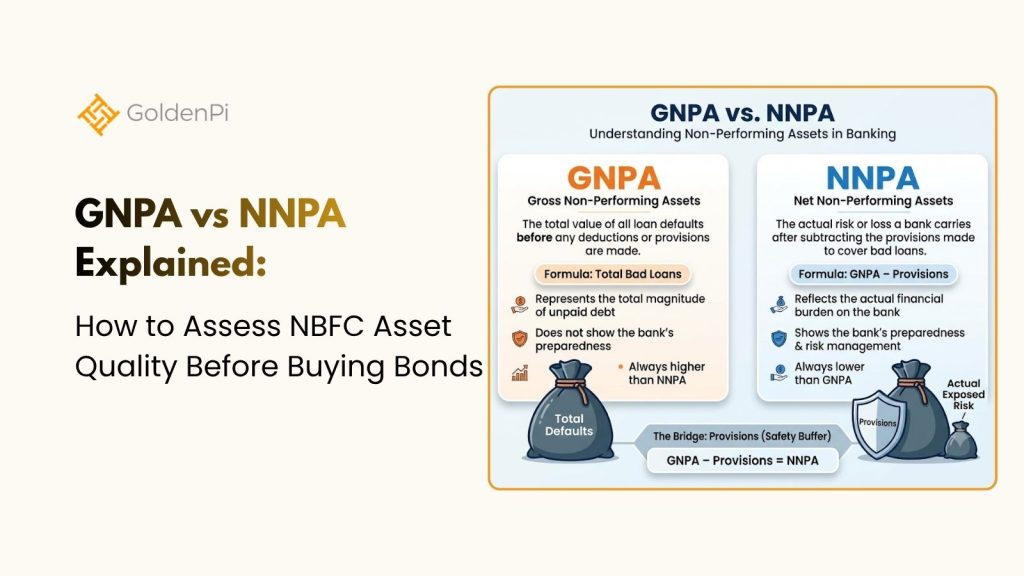
- GNPA vs. NNPA: How to Read Asset Quality Before Buying NBFC Bonds
- Asset-Liability Mismatch in NBFCs: Hidden Liquidity Risks for Bond Investors

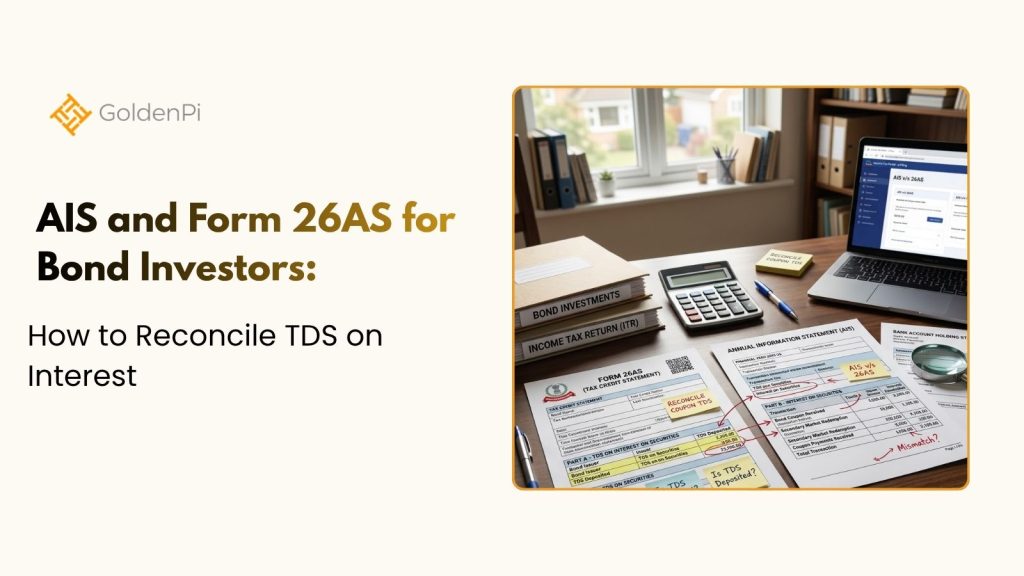
- AIS and Form 26AS for Bond Investors: How to Reconcile Coupon TDS
Why Coupon Income and TDS Often Don’t Match
Here is a typical case. A bond pays a ₹60,000 coupon on 15 March. The issuer deducts ₹6,000 and credits ₹54,000 to your bank account. Your records say ₹60,000, yet your statements may show a different amount or nothing at all.
The reason is that the statements are built from other people’s filings, not from your bank account. The issuer reports TDS quarterly, so a coupon paid in the last weeks of March may surface late. If the issuer’s records carry a wrong or outdated PAN, the credit lands in someone else’s ledger. And if you bought the bond mid-cycle, the department sees the full coupon against whoever held it on the record date, even though part of it compensated the seller.
How TDS on Bond Coupons Works in 2026
TDS on interest on securities, earlier Section 193, now sits under Section 393(1) of the 2025 Act and carries a 10% rate. Three things trip up bond investors in particular.
First, “listed” does not mean “TDS-free.” Interest on listed, demat-form debentures was once exempt, but that exemption was removed from 1 April 2023. Some websites still carry the old rule, so check the date on anything you read.
Second, the ₹10,000 figure you often hear about is a deduction threshold, not an exemption. TDS generally applies once interest from one issuer crosses ₹10,000 in a year, and interest below that is still fully taxable. It doesn’t apply uniformly to every instrument, so confirm with your issuer.
Third, some bonds work differently. Tax-free bonds carry no TDS because their interest is exempt, and government securities follow their own rules.
If your tax for the year will be nil, you can submit Form 121 to the payer to avoid TDS. It doesn’t make the income tax-free, and it has to be filed every year.
How to Reconcile Coupon TDS Step by Step
- Download AIS and your tax credit statement (26AS for FY 2025-26) from the income tax portal.
- Gather your bank statements, demat statements, and TDS certificates from each issuer.
- Build a simple sheet with date, issuer, gross coupon, and TDS deducted for every payment.
- Match each row to your tax credit statement for TDS and to AIS for reported interest.
- Mark the entries that are missing, different, or duplicated, then fix them using the table below.
Common Mismatches and How to Fix Them
| What you see | Likely reason | What to do |
| TDS on your certificate, but missing in 26AS | The issuer filed its TDS return late or used the wrong PAN. | Ask the issuer or registrar for the return status and a corrected filing. |
| AIS shows more interest than you earned. | You bought mid-cycle, and AIS reports the full coupon. | Give AIS feedback as “partially correct,” and keep your contract note as proof. |
| The same coupon appears twice in AIS. | Reported by both the issuer and another source | Mark it as a duplicate in AIS feedback. |
| TDS deducted despite a Form 121 | The declaration reached the issuer after the payment date. | Claim the amount through your ITR once the credit shows (deducted tax can be claimed back while filing the return). |
| Late-March coupon not yet in the statement | TDS return for that quarter not yet filed | Wait for the statement to update before filing, then claim in the year the coupon was received. |
Before You File
Your ITR is pre-filled from AIS and the TDS statement, so anything wrong there flows into your return. Report your gross coupon income, not the net amount in your bank, and claim the TDS credit separately. Raise AIS feedback early, because corrections can take time to reflect.
Final Thoughts
Reconciling coupon TDS gets easy once it becomes a routine. Keep a running sheet through the year, check your tax credit statement after each quarterly filing window, and review AIS one last time before you file. Since the new Act has changed form numbers and some references, confirm specifics with a chartered accountant if your bond portfolio is large.
AIS for bond investors FAQs
The Annual Information Statement (AIS) provides a broader view of financial information reported to the Income Tax Department. For bond investors, it can help identify reported interest income and other relevant transactions before filing an income tax return.
Form 26AS is the annual tax statement used to verify tax deducted or collected at source (TDS/TCS) and related tax information. Investors can use it to check whether tax deducted from their bond interest has been reported against their PAN.
Reconciliation helps identify missing interest income, incorrect TDS amounts, duplicate entries, or tax credits that have not been reported correctly. Resolving discrepancies before filing a return can reduce the risk of claiming an incorrect credit or reporting inconsistent income.
Compare the coupon statement or payment advice with the bank entry, AIS, and Form 26AS. Record the gross interest, TDS deducted, net amount received, payment date, and deductor. Investigate differences in the gross income or tax credit before filing your return.
Keep the bond holding or transaction statement, coupon payment advice, bank statement, TDS certificate in Form 16A where applicable, AIS, Form 26AS, and relevant issuer or intermediary communications. These records help establish the gross income received and tax deducted.
First, check whether TDS was actually deducted. AIS may report interest income even when no TDS applies. If tax was deducted but the corresponding credit is missing from Form 26AS, contact the issuer or other deductor and request verification of its TDS filing.
Check the coupon payment records and the deductor’s TDS certificate. A difference may arise from reporting timing or the way information is displayed. Confirm the gross interest amount and ensure that the income is correctly reported in your tax return, even if it is absent from AIS.
Disclaimer
Fixed returns do not constitute guaranteed or assured returns. Investments in corporate debt securities and municipal debt securities/securitized debt instruments are subject to credit risks, market risks, and default risks, including delay and/or default in payment. Read all the offer-related documents carefully. This blog/article should not be construed as financial advice or as an offer or recommendation to buy or sell any security or any products/services of/on GoldenPi or any product/services of its third-party client(s). For a detailed calculation of YTM, visit our website. T&C’s Apply.


