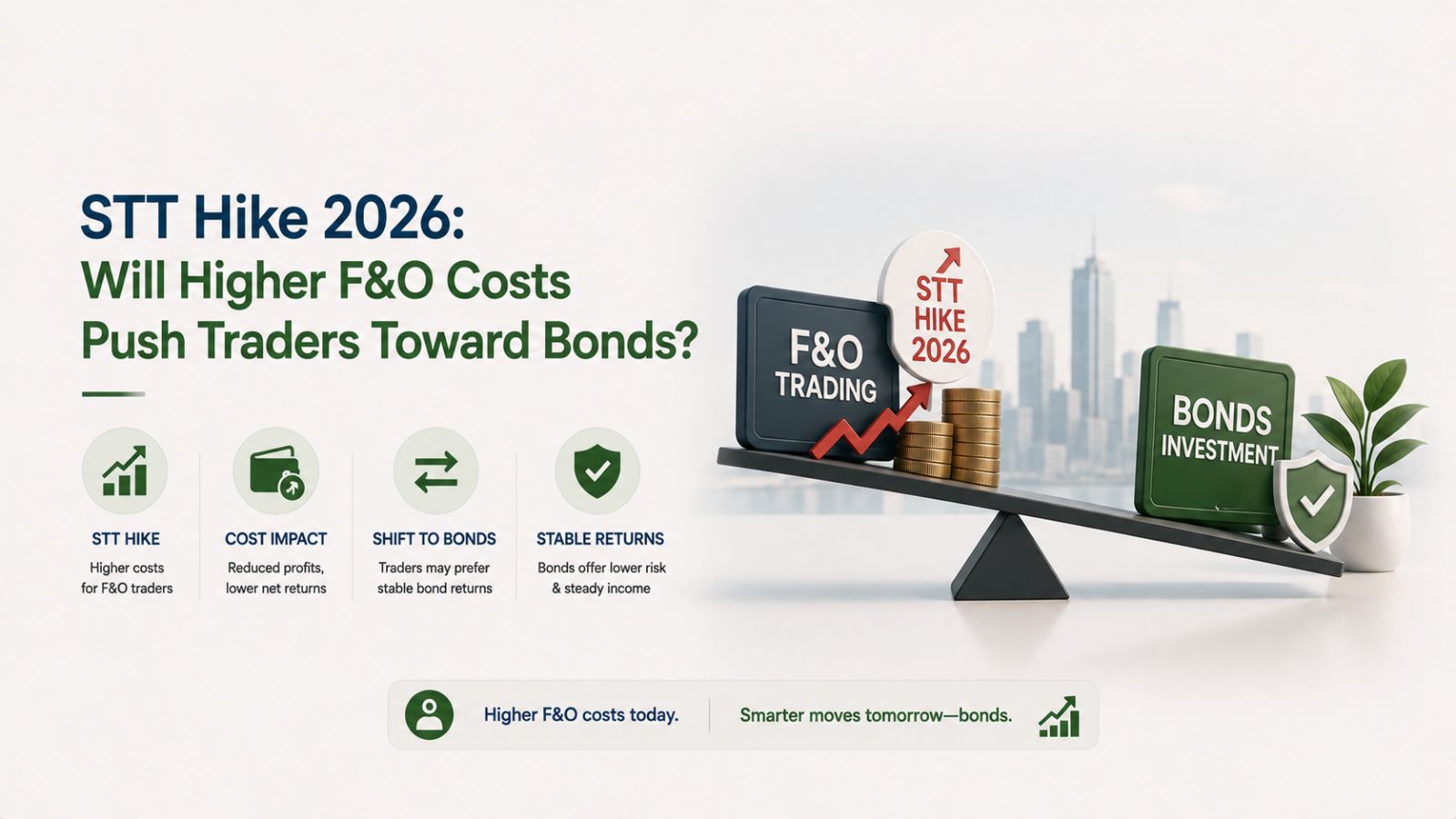
Every time you buy or sell a listed security in India, a small tax called the Securities Transaction Tax, or STT, is charged. You pay it whether you make money or lose money, because it is charged on the value of the trade, not on your profit.
For a long-term investor who trades rarely, STT is tiny. For an active futures and options trader who trades many times a day, it adds up fast. That is exactly the group the STT increase falls on hardest in 2026.
The question this raises is a real one. If frequent trading just got more expensive, do some traders start looking at fixed income instead? Here is the honest answer.
Start investing with just ₹10K & grow your wealth with fixed return opportunities.
Invest Now

What the STT Increase Impact Actually Is
The STT increase came in Budget 2026 and took effect on 1 April 2026. It raised the tax on derivatives trades and left equity delivery and intraday share trading untouched.
Under the STT increase, futures STT rose from 0.02% to 0.05% of the traded price and options STT from 0.10% to 0.15% of the premium [1]. The full impact lands on the F&O (Futures and Options) segment, where the government worried markets were overheating [2].
These numbers look small, but they are charged on turnover, which is large. A futures trader running ten contracts a day could pay a few thousand rupees more daily, tens of thousands a month, purely in STT [3]. The STT increase is therefore heaviest on high-frequency traders and barely noticeable for a buy-and-hold investor.
That difference is the whole story. The heavier the trading, the bigger the impact on your returns.
Why the F&O STT vs Fixed Income Comparison Matters
Here is where bonds enter the picture. This comparison is worth making because the two are taxed very differently on the way in and out.
When you buy or sell a bond or NCD, there is no securities transaction tax applicable like on shares and derivatives. That absent securities transaction tax on bonds never paid is a real cost saved. STT simply does not apply to debt instruments. So in this F&O STT vs. fixed income comparison, one side pays a transaction tax on every trade and the other does not.
That being said, bonds and F&O aren’t the same kind of product. One is a leveraged bet on price direction, the other a loan that pays fixed interest. But for a trader weighing costs, the gap is now wider than before, and the absence of a securities transaction tax on the bonds side is part of that.
Latest Bond Updates:
- RBI October MPC Meeting Minutes: Inflation Spreading, and More Rate Hikes Possible
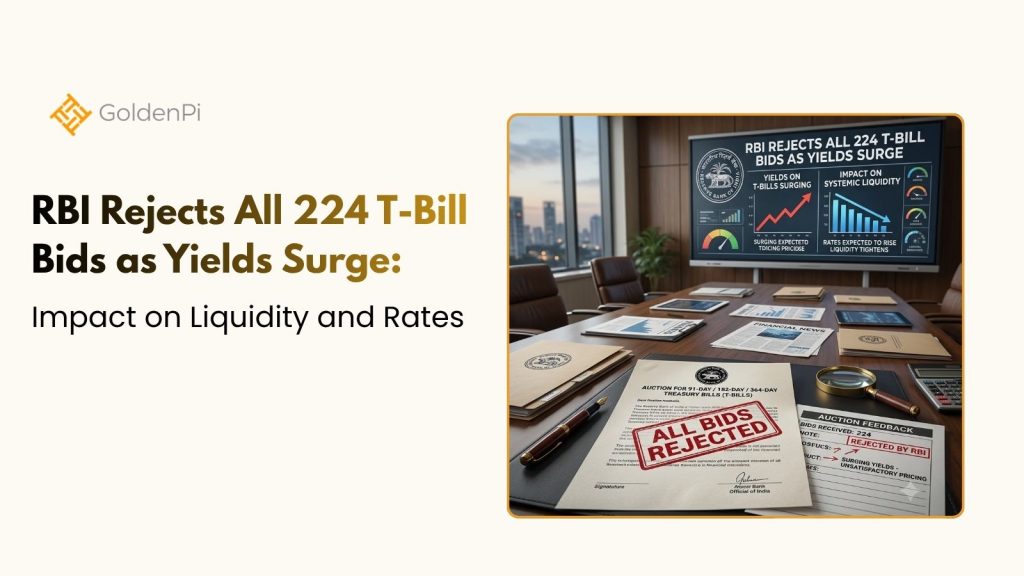
- RBI Rejects All 224 T-Bill Bids as Yields Surge: Impact on Liquidity and Rates
- Surety Bonds in India: Meaning, Types, Benefits & How They Work

Why Traders Shifting to NCDs Is a Real, Limited Trend
So does the STT increase actually drive a move to bonds? The idea of traders shifting to NCDs contains some truth, and a lot of overstatement.
The truth is that many retail F&O traders lose money, and the STT increase makes a losing activity harder to justify. For someone already questioning whether active trading works for them, the STT increase can be the nudge toward something calmer. Traders shifting to NCDs, where returns are fixed and no STT applies, is a natural response.
The overstatement is treating the STT increase as a flood into bonds. A committed derivatives trader chasing quick gains will not become a bond investor merely because of a fraction of a percent. The move to NCDs is small so far and mostly among traders who were already stepping back from F&O. It’s happening, just not in a big way.
What a Trader Should Actually Take From This
If you trade F&O, the practical lesson from the STT increase is not “switch to bonds.” It is “count your costs honestly.”
The STT increase makes an already thin edge thinner. If your F&O trading was marginally profitable before, the STT increase may tip it into loss. That is worth calculating rather than feeling. Work out your monthly STT under the new rates and see what it does to your net result.
If that calculation is discouraging, the F&O STT vs. fixed income question becomes personal rather than theoretical. Bonds will not thrill anyone, but they pay a steady return, carry no securities transaction tax, and do not demand daily attention. For the right person, that is not a downgrade but a saner use of capital.
Frequently Asked Questions
On futures, STT rose from 0.02% to 0.05% of the traded price. On options, it rose from 0.10% to 0.15% of the premium. Both took effect on 1 April 2026, and together they are the core of the STT increase for derivatives traders.
Futures are taxed at 0.05% of the traded price on sale, and options at 0.15% of the premium on sale. Equity delivery and intraday share trading were not changed, so the F&O STT vs fixed income and equity gap widened only for derivatives.
Yes. Because STT is charged on turnover, not profit, the 2026 STT increase raises the cost of every option trade, win or lose. For frequent traders, that is a meaningful addition to annual costs.
For some, at the margin. Traders shifting to NCDs, where no securities transaction tax applies and returns are fixed, is a real but small trend. It mostly affects traders who were already doubting whether active F&O trading paid off.
No. There is no securities transaction tax that bonds or NCDs attract. STT applies to shares and equity derivatives, not to debt instruments, which is one reason the F&O STT vs fixed income comparison might favor bonds on cost.
Intraday equity share trading STT was not raised. But intraday derivatives traders feel the full STT increase, since they trade often and pay STT on every leg regardless of outcome.
Conclusion
The STT increase is real, targeted, and deliberately aimed at cooling speculative F&O trading. It raises the cost of frequent derivatives trades while leaving long-term investing untouched.
Does it push traders toward bonds? A little, and for the right people. The F&O STT vs fixed income comparison has genuinely shifted since bonds carry no securities transaction tax and F&O now costs more to trade. But traders shifting to NCDs are a modest, sensible minority, not a wave. The real message is quieter: if the higher tax makes your trading unprofitable, that is information worth acting on, and fixed income is one calm place that information can lead.
Sources
- Budget 2026 raised STT on futures from 0.02% to 0.05% and on options from 0.10% to 0.15% of premium, effective 1 April 2026 (ClearTax)
- The STT hike targets excessive speculation in the F&O segment; equity delivery and intraday share trading were left unchanged (HDFC Bank)
- Worked example: a futures trader doing ~10 contracts a day pays roughly ₹3,000 more per day (~₹75,000 a month) after the hike; STT is charged on turnover, not profit (Business Standard)
Disclaimer
Fixed returns do not constitute guaranteed or assured returns. Investments in corporate debt securities and municipal debt securities/securitized debt instruments are subject to credit risks, market risks, and default risks, including delay and/or default in payment. Read all the offer-related documents carefully. This blog/article should not be construed as financial advice or as an offer or recommendation to buy or sell any security or any products/services of/on GoldenPi or any product/services of its third-party client(s). For a detailed calculation of YTM, visit our website. T&C’s Apply.