
Two bonds can appear to be quite similar in an advertisement: similar coupons, tenures, and security. The differences sit in the details, and they decide whether you earn what you expect and get your money back when you need it.
This checklist walks you through ten questions to answer for each bond, organized into four categories:
- Returns (points 1 to 3): What you will actually earn, after tax and accounting for when cash arrives.
- Safety (points 4 to 6): How likely you are to be paid in full and on time depending on the company’s financials, and what protects you if the issuer struggles.
- Exit (points 7 and 8): How easily you can get your money out before maturity and whether the issuer can end the deal early.
- Final Questions (points 9 and 10): Tax treatment and entry terms that affect your net outcome.
Start investing with just ₹10K & grow your wealth with fixed return opportunities.
Invest Now

Comparing Bonds on Returns
1. What’s my post-tax XIRR (Extended Internal Rate of Return)?
XIRR is your annualized return, accounting for when cash actually arrives. Don’t stop at the headline yield; review cash flows for each bond: the price you pay (your investment amount), the frequency of each interest payment, and the final redemption amount. To come to a more accurate number, make a spreadsheet with all the necessary details and use the XIRR function.
2. How often is interest paid?
Find the payout schedule in the issue terms: monthly, quarterly, annual, or cumulative at maturity. Note it for both bonds and match the schedule to your needs. Regular payouts suit income seekers; cumulative suits those who don’t need cash now. Your XIRR already captures the timing, so use this step to check it.
3. Is the rate fixed, or can it change?
Check whether the coupon is fixed or floating, or whether the bond is a market-linked debenture (MLD). Fixed rates give certainty, while floating rates move with the prevailing rates.
Comparing Bonds on Safety
4. What’s the credit rating and outlook?
Find the rating rationale published by the agency. Note the grade, but don’t stop there. AAA or AA+ is stronger, while lower-rated bonds compensate with higher yields. Bonds get lower ratings when a company has weak profits, too much debt, or faces tough industry challenges, as well as when the issuer is a brand-new company without a financial track record to prove it can reliably pay investors back. Check the outlook (stable, positive, or negative) and the date of the last review. If more than one agency rated the issue, compare them. A stale rating or a negative outlook matters as much as the grade itself.
5. Is it secured, and by what?
Look on the listing page to see whether the bond is secured or unsecured. Secured bonds are backed by specific assets or collateral that can be claimed in case of a default. The top of the chain looks like this: Senior secured > secured > unsecured, and so on. Also check the asset cover ratio and what the collateral actually is. A lender’s receivables are very different from fixed property, so a secured label alone isn’t enough to compare on.
6. How healthy is the issuer?
Turn to the company financials on the listing page. Look for steady profits, stable asset quality, source of funding, and other figures you can find on the page. Put the two issuers’ numbers next to each other. One will usually look clearly stronger.
L(earn) More:
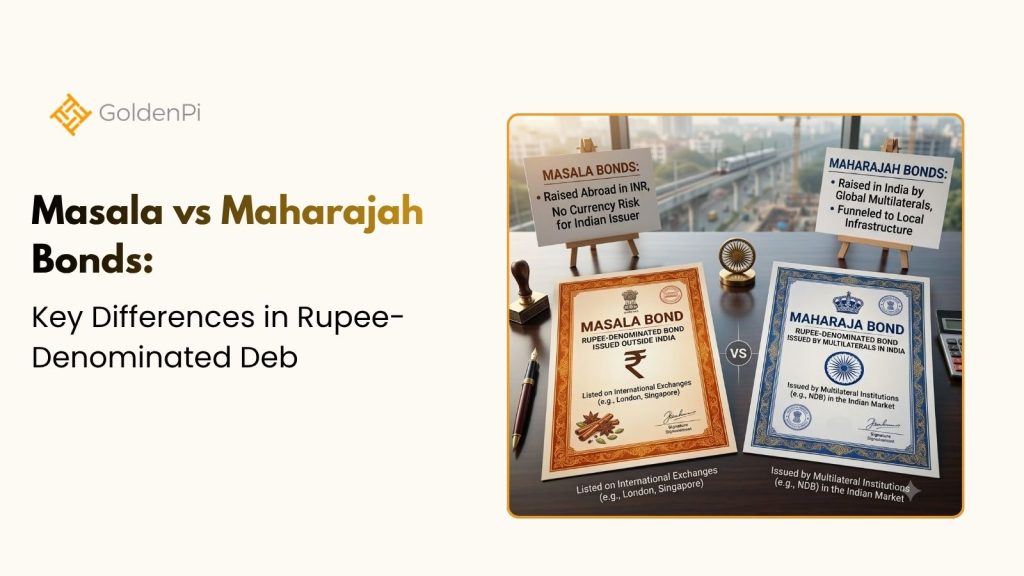
- Masala vs Maharajah Bonds: Clearing the Confusion Around Rupee-Denominated Debt
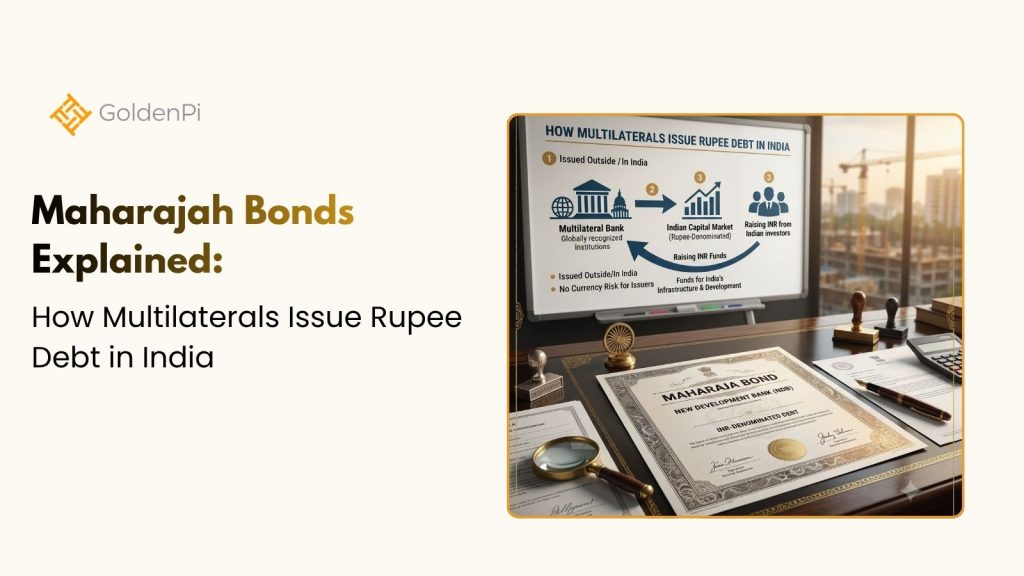
- Maharajah Bonds Explained: How Multilaterals Issue Rupee Debt in India
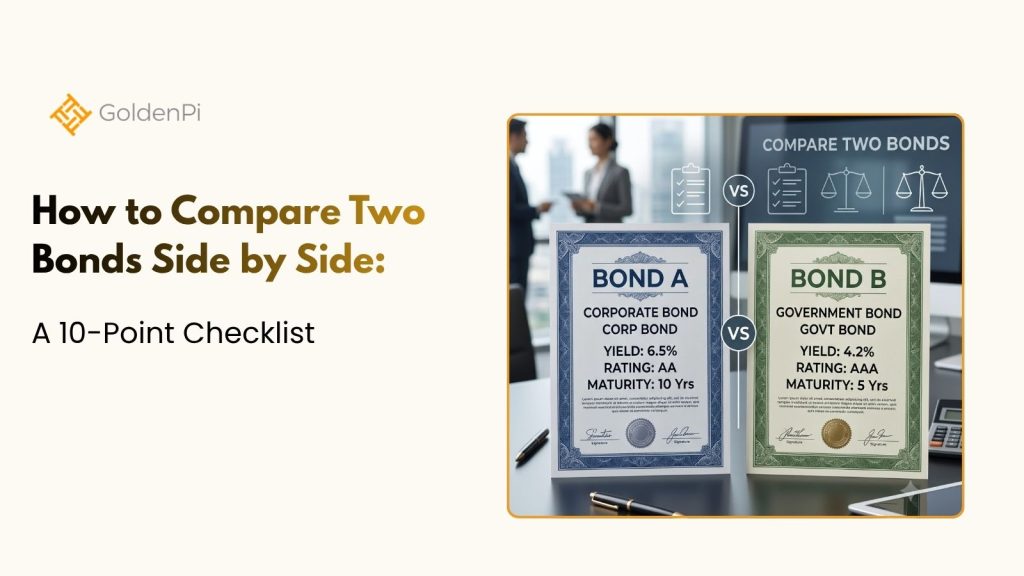
- How to Compare Two Bonds Side by Side: A 10-Point Checklist
Comparing Bonds on Ease of Exit
7. Can I actually sell it?
Check whether each bond is listed. Listed bonds can be sold on the secondary market; unlisted cannot. Look up recent traded volumes on the exchange for the bonds. If volumes are thin, assume you’ll hold to maturity and judge the yield on that basis. If you might need the money earlier, give the more liquid bond extra credit.
8. Are there call or put options?
Find the redemption terms. A call option lets the issuer repay early; a put option lets you exit early. Early repayment can end a good rate sooner than you planned, so work out your yield to call as well as your yield to maturity, and note who holds the option. A bond that looks better at maturity can look worse if it is likely to be called.
Final Questions
9. How will it be taxed?
Tax can change which bond comes out ahead, so work through four items for each:
- Interest: Taxed at your slab rate, so higher-bracket investors keep less of the same coupon.
- TDS: The issuer deducts 10% once interest from it exceeds ₹10,000 in a year. This now applies to listed NCDs in demat form too. TDS is only an advance payment, so you still report the full interest.
- Listed NCDs sold early: Gains are long-term after 12 months, taxed at a flat 12.5% without indexation. Within 12 months, they’re taxed at the slab rate.
- Unlisted NCDs: Gains are treated as short-term regardless of the holding period, taxed at the slab rate.
Feed these into the post-tax XIRR from point 1, since listed versus unlisted can swing your net return. Rules now sit under the Income-tax Act, 2025, and change often, so verify current provisions.
10. How well does the bond fit in your portfolio?
Check the maturity date, the payout frequency, and the issuer’s profile. Concentration risk comes into play when you invest too much in a single issuer. Diversifying your investments into companies from differing fields not only helps you invest in something you want to, but also helps minimize your losses if the whole sector is facing turbulence or is at risk of defaulting. Also align the redemption with your financial goals so that you have a source of income to count on when the time comes.
Conclusion
There is no universal answer for whether a bond suits you or not. Going through the fine print helps determine how well it fits in your portfolio; consider factors such as your investment horizon, risk appetite, post-tax returns, and your goals. A major financial decision becomes easy to make when you do your due diligence.
Compare Two Bonds Frequently Asked Questions
A secured bond is backed by specific assets that can be claimed if the issuer fails to pay. An unsecured bond has no such backing, so holders rank lower in repayment. Unsecured bonds usually offer higher interest to compensate.
AAA and AA+ indicate a stronger ability to pay. Lower ratings are not automatically bad, but they should come with a clear reason for the higher yield. Check the outlook and the date of the last review, as well as the grade.
Both measure your annualized return across all cash flows. Yield to maturity is the figure most bond platforms display, while XIRR is the spreadsheet function that gives the same kind of answer from your actual dates and amounts. Either works for comparison, as long as you use the same one for both bonds.
If it’s listed, you can sell it on the exchange, but listing doesn’t guarantee a buyer. Many bonds trade in low volumes, so check recent traded volumes and plan to hold to maturity if you can.
Interest is added to your income and taxed at your slab rate. The issuer deducts 10% TDS once interest from it exceeds ₹10,000 in a year, and this applies to listed bonds in demat form too. Capital gains from selling early are taxed differently for listed and unlisted bonds (see point 9). Tax rules change, so verify current provisions.
There isn’t one, but the post-tax return and the credit rating matter most. A higher yield only means something if the issuer is likely to pay it, so read the two together rather than chasing the highest coupon.
No. A higher rate often reflects higher risk, such as a lower credit rating, weaker security, or thinner liquidity. Compare what you earn after tax against what you’re risking to earn it.
In the offer document (also called the prospectus or key information document) and the credit rating rationale published by the rating agency. Both are usually available on the issuer’s website and the stock exchange websites.
Disclaimer
Fixed returns do not constitute guaranteed or assured returns. Investments in corporate debt securities and municipal debt securities/securitized debt instruments are subject to credit risks, market risks, and default risks, including delay and/or default in payment. Read all the offer-related documents carefully. This blog/article should not be construed as financial advice or as an offer or recommendation to buy or sell any security or any products/services of/on GoldenPi or any product/services of its third-party client(s). For a detailed calculation of YTM, visit our website. T&C’s Apply.


