A 5-Year Fixed Deposit (FD) can be considered by investors who want to lock in a fixed interest rate for a longer period. Whether it is for planned future expenses or a preference for fixed returns, a 5-year FD allows you to keep money in a bank deposit for a defined period.
However, not all banks offer the same interest rate on a 5-year FD. Rates vary depending on the bank, customer segment, deposit amount and prevailing interest-rate environment. Before opening an FD, consider factors such as interest rates, liquidity, premature withdrawal terms, deposit insurance and taxation.
Disclaimer: The information presented here is meant for educational purposes only and should not be considered investment advice or a recommendation to invest in any financial product. The interest rates can change from time to time, as per different banks.
5-Year Fixed Deposit Interest Rates in October 2026
The interest rate on 5-year fixed deposits in October 2026 differs from one bank to another. Public and private sector banks generally offer rates in the 6%–7% range, while some Small Finance Banks offer higher rates on five-year deposits. Senior citizens may receive an additional interest rate depending on the bank and applicable tenure.
| Bank Category | Indicative 5-Year FD Interest Rate* |
|---|---|
| Public Sector Banks | Approximately 6.0%–6.7% p.a. |
| Private Sector Banks | Approximately 6.1%–6.5% p.a. |
| Small Finance Banks | Up to 8.25% p.a. |
| Senior Citizens | Additional interest varies by bank and tenure |
*Rates vary by bank, deposit amount, tenure and customer category and are subject to change.
Start investing with just ₹10K & grow your wealth with fixed return opportunities.
Invest Now

Why Do Investors Choose a 5-Year Fixed Deposit?
It is common for investors who want assured returns without needing funds until the end of the FD tenure to go for 5 year FD. Returns are not dependent on any change in the interest rates since the rate of interest is fixed while booking the FD.
Some investors consider a five-year tenure because eligible tax-saving bank deposits can qualify for a deduction of up to ₹1.5 lakh under Section 123 read with Schedule XV of the Income Tax Act, 2025, subject to the applicable conditions. The deduction is not available under the new concessional tax regime.
Points That You Should Keep in Mind While Opening a 5-Year FD
While the interest rate is indeed important, it is not the only point to consider.
Other points to take into account before investing are:
- Interest rate offered for the desired tenure.
- Penalty for premature closure.
- Interest payment options (monthly/quarterly/cumulative).
- Taxability of interest earned.
- Whether the deposit is eligible for DICGC deposit insurance cover.
- Does a five-year commitment of your money meet your financial objectives?
The FD’s tenure should be consistent with when you expect to need the money, rather than being based solely on the highest available interest rate.
Latest Fixed Deposit News:
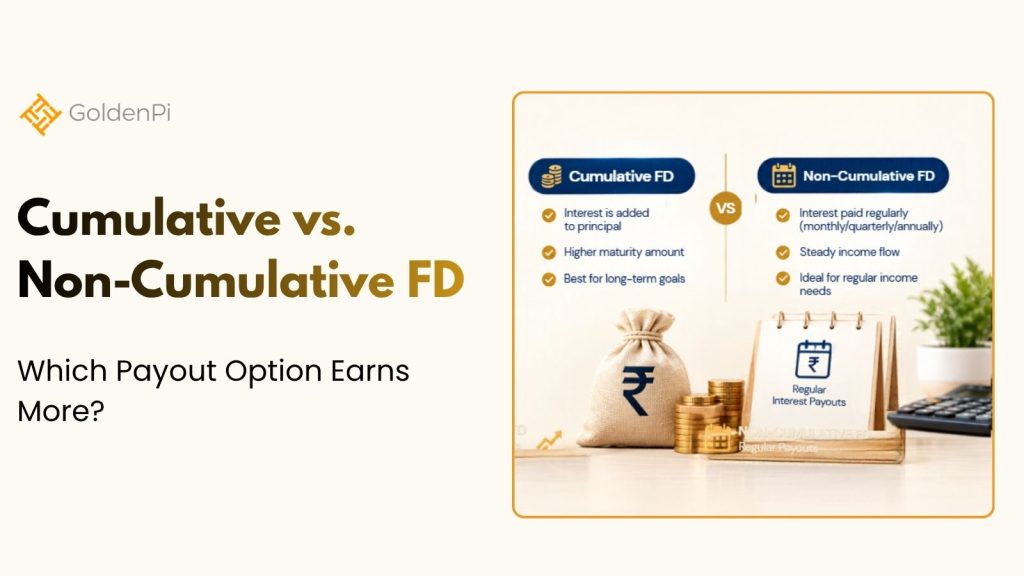
- Cumulative vs Non-Cumulative FD: Which Payout Option Earns More?
- Callable vs Non-Callable FDs: Why Non-Callable Deposits Pay More

- Sweep-In FD Explained: How Auto-Sweep Accounts Work in India

5-Year Fixed Deposits and Other Fixed-Income Investments
The 5-year fixed deposit is one of many fixed-income investment products that can be considered by investors. In line with their investment objectives, level of risk aversion, liquidity needs, and investment horizon, they may find other fixed income investment products worth considering, such as bonds and government securities, among others.
Their differences lie in the issuers of the products, liquidity, taxes, market pricing, and risk profile. The better thing for investors is not to think of one product as superior to the other but to learn about their characteristics first.
| Feature | 5-Yr Bank FD | 5-Yr POTD | 5-Yr NSC | SCSS | 5-Yr Corporate FD |
|---|---|---|---|---|---|
| Issuer | Bank | India Post | India Post | Government-backed scheme | NBFC/Corporate |
| Indicative Rate | Bank-specific | 7.5% | 7.7% | 8.2% | Varies by issuer |
| Tax Benefit | Only eligible tax-saving FD variant | Yes, subject to applicable provisions | Yes, subject to applicable provisions | Yes, subject to applicable provisions | Generally No |
| Premature Withdrawal | Allowed, subject to bank terms and applicable penalty | Allowed, subject to scheme rules | Generally not permitted except in specified circumstances | Allowed, subject to scheme rules and penalty | Varies by issuer |
| Risk/Insurance | DICGC up to ₹5 lakh, subject to rules | Government-backed | Government-backed | Government-backed | No DICGC cover; issuer credit risk |
Note: The above comparison is for educational purposes only and should not be interpreted as a recommendation of one product over another.
Frequently Asked Questions (FAQs)
Interest rates vary across banks and can change periodically. In October 2026, some Small Finance Banks offer higher five-year FD rates than many larger banks. For example, Suryoday Small Finance Bank lists 8.25% p.a. for its five-year tax-saving FD for regular customers. Investors should check the latest rate published by the individual bank before opening an FD.
Only eligible 5-year tax-saving bank deposits can qualify for a deduction of up to ₹1.5 lakh under Section 123 read with Schedule XV of the Income Tax Act, 2025, subject to the applicable conditions. The deduction is not available under the new concessional tax regime.
Many banks permit premature withdrawal of regular FDs, although it may be subject to a penalty or reduced interest and the bank’s applicable terms. Tax-saving FDs generally have a five-year lock-in and do not permit premature withdrawal except in specified circumstances.
No. Fixed deposits are bank deposit products, whereas bonds are debt securities issued by governments or companies. They have different features, risks, liquidity, and return structures.
Closing Thoughts
A 5-year fixed deposit can suit investors who want to lock in a fixed interest rate for a defined period. However, the interest rate is only one factor to consider. Premature withdrawal rules, liquidity, taxation, deposit insurance and whether the five-year tenure matches your financial needs are also important. Comparing these features across different fixed-income products can help investors understand how each option works before making a decision.
Disclaimer
Fixed returns do not constitute guaranteed or assured returns. Investments in corporate debt securities and municipal debt securities/securitized debt instruments are subject to credit risks, market risks, and default risks, including delay and/or default in payment. Read all the offer-related documents carefully. This blog/article should not be construed as financial advice or as an offer or recommendation to buy or sell any security or any products/services of/on GoldenPi or any product/services of its third-party client(s). For a detailed calculation of YTM, visit our website. T&C’s Apply.