
Now if you have started researching about investing in other instruments apart from FDs and equities, you would certainly have come across bonds. Bonds have gained a lot of traction among individual investors in India owing to their availability on online investment portals and digital bond markets.
However, if you are relatively new to investing in bonds, you must be thinking, How exactly are bonds purchased?
Don’t worry, buying bonds is now very easy as compared to a few years back. Here is everything you need to know.
Start investing with just ₹10K & grow your wealth with fixed return opportunities.
Invest Now

What are Bonds?
Let us first get familiar with what bonds are before going ahead with knowing how bonds can be bought.
Bonds are fixed-income instruments wherein the investor lends money to the issuer, who could be a corporation, financial institution, public sector undertaking, or Government entity.
In turn, the issuer commits to making interest payments (called coupon payments) and returning the principal amount as per the terms of the bond.
In essence, when buying a bond, one lends money rather than becoming a shareholder.
Where Can You Buy Bonds in India?
In today’s world, there are many ways to invest in bonds for retail investors.
There are many ways, such as the following:
- Investing in a bond on online platform
- Stock brokers
- Bond marketplaces
- Direct bond issuance
- Securities bought via stock exchanges
The majority of bonds that get listed can be easily invested in Demat accounts.
Latest Bond News:
- Asset Cover Ratio Explained: How Much Security Really Backs Your NCD?
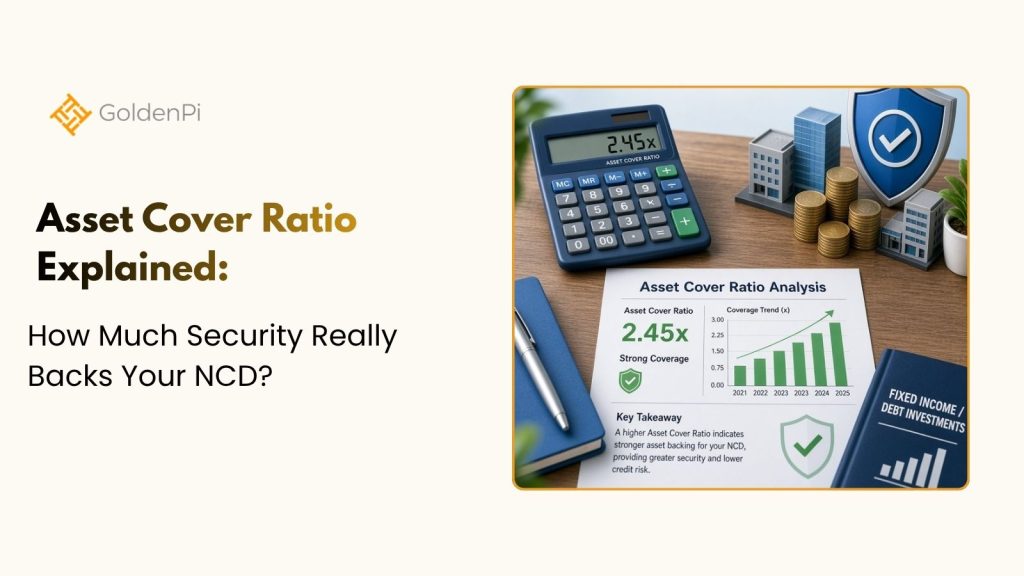
- JSW Paints Plans 4- and 5-Year Bonds to Refinance Akzo Acquisition Debt

- YES Bank AT1 Bond Verdict: Bondholders Seek Clarity on Coupon Payments

Steps Involved in Buying of Bonds
Step 1: Opening of Demat and Trading Account
While purchasing any listed bond, one will have to maintain a Demat account.
The Demat account is used for keeping your investments in electronic form while a trading account helps in buying and selling of the investment.
These accounts are usually maintained by many people via stock brokers or investment platforms.
Step 2: Finish your KYC
Before you start making investments, you must complete the Know Your Customer (KYC) procedure.
These documents will be required:
- PAN card
- Aadhaar card or other identity proof
- Proof of address
- Bank account details
The completion of the KYC procedure is mandatory for investment in securities.
Step 3: Explore Available Bonds
Once your account is active, you can browse available bond options.
While evaluating bonds, investors often review:
| Factor | What It Means |
| Issuer | The company or institution issuing the bond |
| Credit Rating | Assessment of the issuer’s creditworthiness |
| Maturity Date | When the bond is scheduled to mature |
| Coupon Rate | Interest payable as per bond terms |
| Investment Horizon | Time period you plan to stay invested |
It’s important to understand that a credit rating is an opinion on credit risk and should not be treated as a guarantee of repayment or returns.
Step 4: Place Your Order for Investments
Having chosen the desired bond, an investor may now place the order via the investment platform. Amount to be invested, price, and quantity are available for viewing prior to the execution of the deal.
Post completion of the transaction, the bond is normally credited to the Demat account of the investor after the settlement process.
Step 5: Track Your Bond Investments
Once settled, bonds may normally be tracked in the holdings area of the investment platform or Demat account.
Investors need to ensure that they monitor their
- Bond investments
- Maturity dates
- Coupon payment dates
- Portfolio composition
Things to Consider Before Buying Bonds
Before buying any bond, it is essential to assess whether it suits your objectives and profile. Here are some important aspects to consider:
Credit Rating
The credit rating of the issuer is one of the most important factors in evaluating bond investments. Investors generally take into consideration the ratings of the issuer while investing in bonds.
Investment Tenure
Various bonds come with different maturities. Selection of appropriate investment tenure based on objectives can prevent liquidity problems later.
Liquidity
Liquidity varies among various bonds. The liquidity of a bond is one of the important factors that determine whether an investor can sell it prior to maturity.
Risk and Return Expectations
Every investment carries some degree of risk. Investors should avoid making decisions based solely on coupon rates and instead evaluate the overall risk-return profile.
Frequently Asked Questions About Buying Bonds
Yes. Retail investors can purchase various types of bonds through approved investment platforms, brokers, and stock exchanges, subject to applicable regulations and platform requirements.
For most listed bonds, a Demat account is generally required to hold securities electronically.
The minimum investment amount varies depending on the bond issue, issuer, and platform.
Many listed bonds can be bought and sold in the secondary market before maturity, subject to market liquidity and prevailing prices.
No. Bonds may carry risks such as credit risk, interest rate risk, and liquidity risk. Investors should carefully review the features and risks of a bond before investing.
Final Thoughts
It is now much simpler to buy bonds in India due to the presence of various digital investment platforms and online bond trading platforms. Bonds can play a very important role for an investor in terms of portfolio management, fixed-income investments, or knowledge about debt markets.
It is necessary to analyze certain things like credit, maturity, liquidity, and your investment objective before investing in bonds. It should be understood that a sound investment decision regarding a bond depends on many aspects of the bond and not only on one aspect, say, coupon rate or credit rating.
Disclaimer
Fixed returns do not constitute guaranteed or assured returns. Investments in corporate debt securities and municipal debt securities/securitized debt instruments are subject to credit risks, market risks, and default risks, including delay and/or default in payment. Read all the offer-related documents carefully. This blog/article should not be construed as financial advice or as an offer or recommendation to buy or sell any security or any products/services of/on GoldenPi or any product/services of its third-party client(s). For a detailed calculation of YTM, visit our website. T&C’s Apply.


