Summary: A clear guide to India’s sovereign debt instruments—G-Secs, SDLs, and T-Bills—covering how each works, key differences, current yields, and how retail investors can access them.
If you’re building a fixed-income portfolio, chances are, you’ve come across terms like G-Secs, T-Bills, and SDLs. They’re all government-backed debt instruments and are considered super safe, but they’ve got different purposes, tenors, and yields. With the RBI repo rate sitting at 5.25% as of June 2026, and the benchmark 10-year G-Sec yield hovering around 6.8%, knowing what sets them apart is crucial. Whether you’re a debt investing pro or just venturing beyond mutual funds, here’s a breakdown of how these instruments work and how to pick the right one for your portfolio.
What Are Government Securities (G-Secs) and How Do They Work?
Government Securities, or G-Secs, are basically debt instruments the Central Government of India issues to cover its expenses, like funding infrastructure projects, defense, and sorting out the fiscal deficit. It’s kind of like the government borrowing cash from the market, with the RBI overseeing the whole process.
These dated G-Secs come with a fixed or floating interest rate, paid out twice a year on the face value, and they usually have a term that ranges from 5 to 40 years. Since they’re backed by a sovereign guarantee, they’re considered one of the safest investments in India, similar to US Treasuries or UK Gilts.
Think of it like this: If you invest in a 10-year G-Sec with a 6.8% annual coupon, the government will pay you 3.4% of the face value every six months, and then, at the end of the 10 years, you’ll get your principal back.
Start investing with just ₹10K & grow your wealth with fixed return opportunities.
Invest Now

What Are T-Bills? India’s Short-Term Sovereign Instrument
Treasury Bills, or T-Bills, are basically the government’s way of borrowing money in the short term. The RBI holds auctions for these T-Bills, and they come in three varieties: 91-day, 182-day, and 364-day tenors. The 91-day bills are issued every week, while the 182-day and 364-day ones are issued every other week.
This is what makes T-Bills structurally different: They’re zero-coupon securities, which means they don’t pay out any interest. Instead, they’re issued at a discounted price and then redeemed at face value when they mature. Imagine you buy a 91-day T-Bill with a face value of ₹100, but you only pay ₹98.20 for it. When it matures, you get ₹100 back; the return is just the difference between the two.
As of mid-June 2026, the yield on 91-day T-Bills was around 5.26%, while the 364-day ones were yielding about 5.78%. These rates are super useful for managing liquidity in the short term and for investors who don’t want to tie up their money for years.
T-Bills are also a favorite among institutions for parking surplus funds; they’re a safe bet, after all. And because they’re essentially risk-free, they can be used as collateral in market operations. For regular investors, T-Bills are a decent alternative to short-term fixed deposits, with the added comfort of knowing you won’t default.
Latest Bond Updates:
- Beyond the Rupee: Decoding SEBI’s ‘Second Shelf’ for Global Bonds
- G-Sec STRIPS Explained: Zero-Coupon Sovereign Paper for Retail
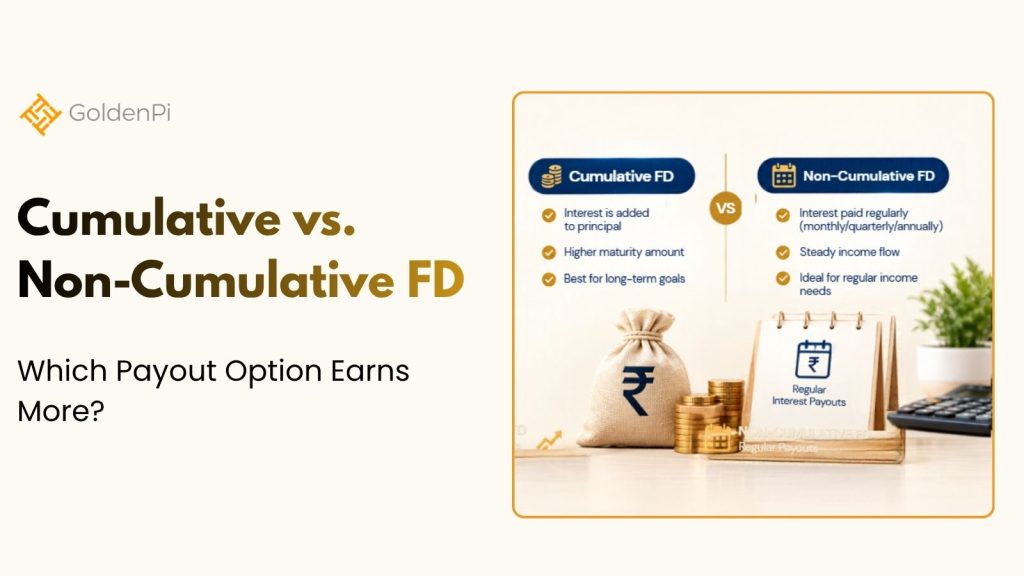
- Cumulative vs Non-Cumulative FD: Which Payout Option Earns More?
What Are State Development Loans (SDL)?
SDLs are where things get interesting, especially for investors on the hunt for yields. State Development Loans are basically securities issued by state governments in India to fund their projects, and they work pretty much like central government bonds, with regular interest payments and a fixed maturity date.
The big difference, though, is that it’s a state government issuing them, not the central government. And state governments use SDLs to borrow from the market because these loans qualify for the Statutory Liquidity Ratio (SLR) and can be used as collateral for repo borrowing or even for borrowing from the RBI under the Liquidity Adjustment Facility (LAF).
In the fiscal year 2025-26, Indian states were expected to raise ₹12.5 trillion through SDLs — almost on par with what the central government borrows. We’re talking about nearly ₹12.5 trillion in SDL issuances versus the Centre’s ₹14.6 trillion.
Because SDLs aren’t quite as liquid as G-Secs, they usually offer a slightly higher yield. Typically, SDL yields are around 20-60 basis points higher than comparable G-Secs, so you’re looking at an extra return premium. And right now, SDL yields are hovering between 7.40% and 7.60%, depending on the state’s financial health.
G-Sec vs SDL vs T-Bill: Side-by-Side Comparison
| Feature | G-Sec | SDL | T-Bill |
| Issuer | Central Government | State Governments | Central Government |
| Tenor | 5-40 years | Typically 10 years (can vary) | 91, 182, or 364 days |
| Coupon | Fixed/floating, paid semi-annually | Fixed, paid semi-annually | Zero-coupon (discount instrument) |
| Yield (approx., June 2026) | ~6.8% (10-year benchmark) | ~7.40-7.60% | 5.26-5.77% |
| Liquidity | Highest | Moderate | High |
| Credit Risk | Sovereign (Centre) | Sovereign (State, RBI-managed) | Sovereign (Centre) |
| Best suited for | Long-term, stable income | Higher yield with sovereign safety | Short-term liquidity parking |
Sources: Trading Economics, CEIC, Stashfin
Why SDLs Offer Higher Yields and What That Means For You
The yield premium on SDLs is not related to higher credit risk; it’s mostly a liquidity premium. G-Secs, especially that 10-year benchmark, are the most actively traded instruments in India’s debt market. On the other hand, SDLs have always been split across dozens of state issuances with different tenors, which makes them a real pain to trade in the secondary market.
The RBI is trying to change that. They’ve introduced a pilot Benchmark Issuance Strategy (BIS) for SDLs, starting from Q1 FY27, and nine states are on board: Andhra Pradesh, Bihar, Chhattisgarh, Kerala, Madhya Pradesh, Maharashtra, Rajasthan, Telangana, and Uttar Pradesh. The idea is to reduce market fragmentation, boost liquidity, and get better price discovery for state bonds. This could be a really meaningful structural reform that could narrow the SDL-G-Sec spread over time, making SDLs more attractive as they become easier to trade.
How Retail Investors Can Access These Instruments
All three instruments are now within reach for retail investors, as opposed to just a few years back.
- RBI Retail Direct Portal: Launched in November 2021, it lets individuals buy and sell G-Secs, T-Bills, and SDLs directly with the central bank, no broker or intermediary needed. The minimum investment for these is ₹10,000, plus opening a Retail Direct Gilt account with the RBI is totally free.
- Stock Exchanges (NSE/BSE): You can use your existing demat account and buy G-Secs and SDLs on stock exchanges like you would shares.
- Debt Mutual Funds: Gilt funds and SDL-focused funds offer indirect exposure, with professionals managing the funds and higher liquidity, which is great if you don’t want to deal with auctions directly.
- SEBI-Registered Online Bond Platform Providers (OBPPs): OBPPs are SEBI-regulated platforms that facilitate the buying and selling of listed bonds online. They’ve made it more accessible by lowering the minimum face value for debt securities to ₹10,000. They’re very useful for G-Secs and SDLs because they aggregate inventory, show live yields, and let you compare easily—features the RBI Retail Direct portal currently lacks. Just remember, investors should always check if the platform is SEBI-registered and if the bond matches their risk appetite, keeping in mind that platform regulation doesn’t eliminate issuer credit risk.
One thing to keep in mind on taxation: interest income from all three instruments is taxable as per your applicable income tax slab. There is no special exemption, unlike some other fixed-income products.
Frequently Asked Questions
The primary differences lie in who issues them and their maturity periods:
G-Secs (Government Securities): Long-term bonds (1 to 40+ years) issued by the Central Government.
SDLs (State Development Loans): Long-term bonds issued by State Governments to fund regional development.
T-Bills (Treasury Bills): Short-term debt instruments (91, 182, or 364 days) issued exclusively by the Central Government.
SDLs typically offer a slightly higher interest rate (yield spread) than G-Secs due to lower liquidity in the secondary market and the varying fiscal health of different states. Investors are essentially rewarded with a premium for holding an asset that is less actively traded than central debt.
No, there is no TDS deducted on interest payments from G-Secs, SDLs, or T-Bills for resident individual investors. However, do not mistake “no TDS” for “tax-free.” You are still legally required to declare this interest under Income from Other Sources and pay tax according to your regular income tax slab rate when filing your ITR.
While Treasury Bills (T-Bills) have fixed, predictable tenures (91, 182, or 364 days), Cash Management Bills (CMBs) are highly flexible, ultra-short-term debt instruments issued by the Central Government to meet temporary mismatches in its cash flow.
CMBs always have a maturity period of less than 91 days (often just 14 to 70 days).
Like T-Bills, they are zero-coupon bonds issued at a discount and redeemed at face value.
While the vast majority of G-Secs offer a fixed coupon rate for their entire tenure, the government also issues Floating Rate Bonds (FRBs). With an FRB, the interest rate does not stay the same. Instead, it is reset at predetermined intervals (usually every six months) and is explicitly linked to a benchmark rate, such as the prevailing yields of short-term Treasury Bills. This protects investors from getting locked into low yields during a rising interest rate cycle.
Ready to Invest?
Visit GoldenPi to explore current bond options. Compare yields, ratings, and tenures in one place and invest online with as little as ₹10,000.
Disclaimer:
Fixed returns do not constitute guaranteed or assured returns. Investments in corporate debt securities and municipal debt securities/securitized debt instruments are subject to credit risks, market risks, and default risks, including delay and/or default in payment. Read all the offer-related documents carefully. This blog/article should not be construed as financial advice or as an offer or recommendation to buy or sell any security or any products/services of/on GoldenPi or any product/services of its third-party client(s). For a detailed calculation of YTM, visit our website. T&C’s Apply.