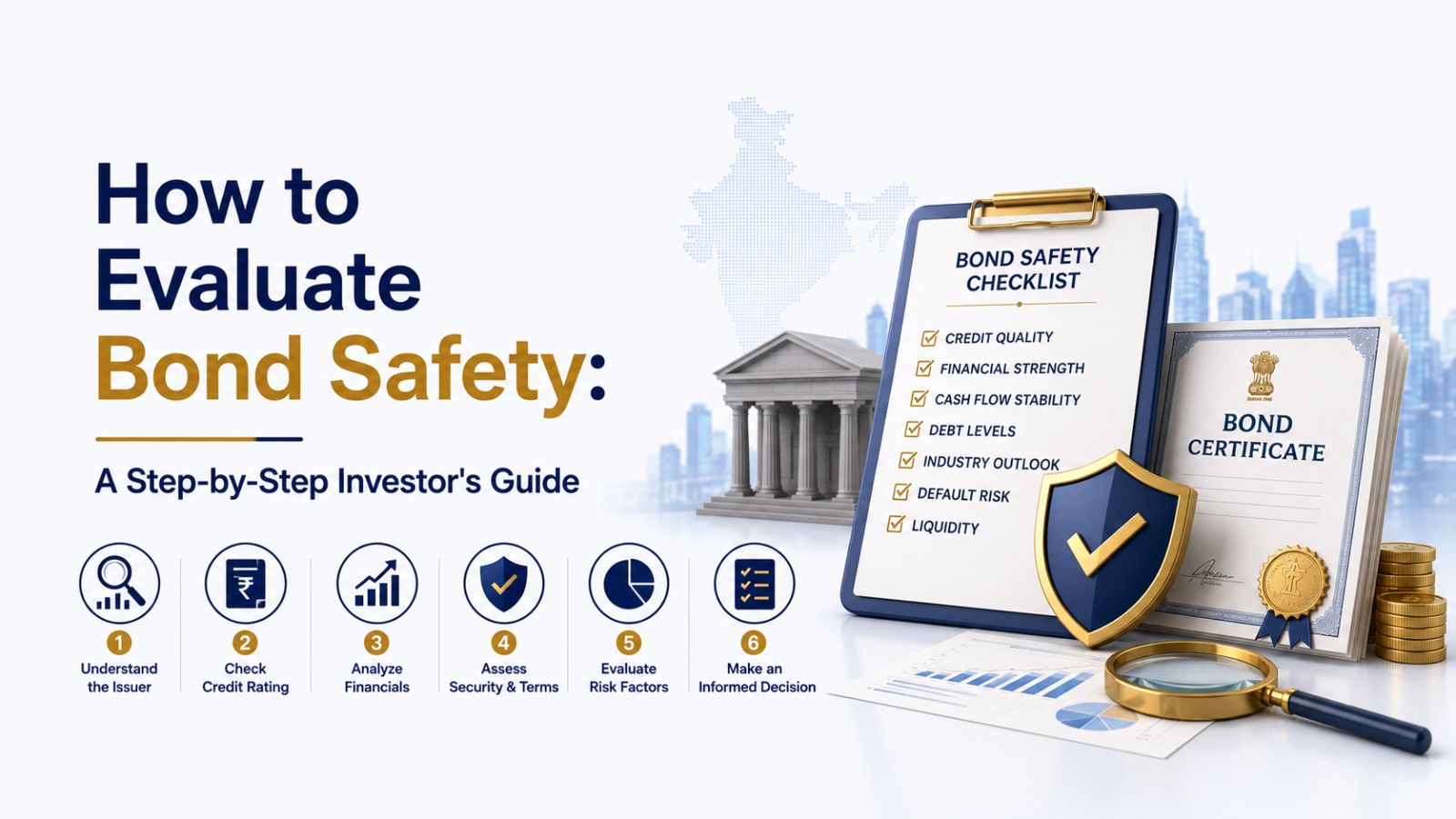
So, bonds are widely considered a safe haven, right? And for good reason: Essentially, you’re lending money to some entity, like a government or company, and they promise to pay you back with some interest payouts along the way. But bond safety is not just a “yes” or “no” affair. It’s more like a sliding scale. A G-Sec and some BB-rated NBFC bond might both be classified as “bonds,” but they’re worlds apart in terms of risk. If you’re planning to put some serious cash into bonds, you need a framework to differentiate between them.
India’s bond market has been blowing up: It was worth around ₹240 lakh crores [1] as of March 3, 2026, which is more than four times what it was around a decade ago ($812 billion [2] as of March 2014). And with more and more retail investors getting in, the need for people to actually understand how to assess the safety of a bond is growing as well. But how do you figure out if a bond is really as safe as it seems?
Start investing with just ₹10K & grow your wealth with fixed return opportunities.
Invest Now

Step 1: Understand What Credit Ratings (AAA, BBB, etc.) Tell You
Basically, a credit rating is like a report card for a bond’s health. You’ve got agencies in India — CRISIL, ICRA, CARE Ratings, and India Ratings & Research (or Ind-Ra for short) — all of which are overseen by SEBI. Now, the credit rating scale usually spans from ‘AAA’ to ‘D,’ with ‘AAA’ being the lowest risk and ‘D’ for bonds that are either in default or just on the edge.
Here’s a quick reference for how ratings translate to risk in India:
| Rating | Risk Level | Typical Issuer Examples | Approx. Yield Range |
| AAA | Lowest | HDFC, NHAI, NTPC | 7.5-8.5% |
| AA/AA+ | Low-Moderate | Large NBFCs, Blue-chip companies | 8.5-10% |
| A/BBB | Moderate | Mid-size Corporates | 10-12% |
| BB and below | High (speculative) | Stressed Corporates | 12%+ |
| D | In Default | Defaulted Issuers | N/A |
You can find bonds in India that offer yields of 12% to 15% per year. But the reason for such high yields is the possibility that the company could default on those bonds. Make sure you go a bit deeper and check the issuer’s financial health before locking in.
One major thing to keep in mind: Credit ratings can sometimes be a bit behind as an indicator of a bond’s safety. So, while ratings are a good place to start, they don’t tell the whole story.
Where to check: CRISIL (crisil.com), ICRA (icra.in), CARE Ratings (careratings.com), Ind-Ra (indiaratings.co.in).
Step 2: Assess the Default Risk of the Issuer
Default risk is the likelihood that the bond issuer might fail to pay back either the interest, the principal, or, worst-case scenario, both. Now, India’s market regulator, SEBI, has a pretty strict definition of a bond default: if the issuer is even a day late with a payment, even a single Rupee, whether it’s principal or interest, that’s considered a default, as outlined in their Master Circular from May 2024.
When evaluating default risk, look at:
- Debt-to-equity ratio: Is the company already up to its neck in debt?
- Interest coverage ratio: Can the company’s operating income cover its interest payments comfortably? If that ratio is below 1.5x, it’s a major red flag.
- Cash flow consistency: If a company’s operating cash flows are consistently negative, that’s a warning sign.
- Promoter quality and governance: Especially applicable in India, where related-party transactions and promoter pledging have been known to precede some major corporate defaults.
- Sector headwinds: Some sectors (infrastructure, real estate, power) carry structurally higher default rates in India.
As of April 2025, 86% of India Ratings’ overall cooperative ratings were in the investment-grade category, which is a big jump from 46% back in April 2016. That suggests overall credit quality is improving, even if there are still some sub-investment-grade issuers present.
Recent Bond News:
- Beyond the Rupee: Decoding SEBI’s ‘Second Shelf’ for Global Bonds
- G-Sec STRIPS Explained: Zero-Coupon Sovereign Paper for Retail
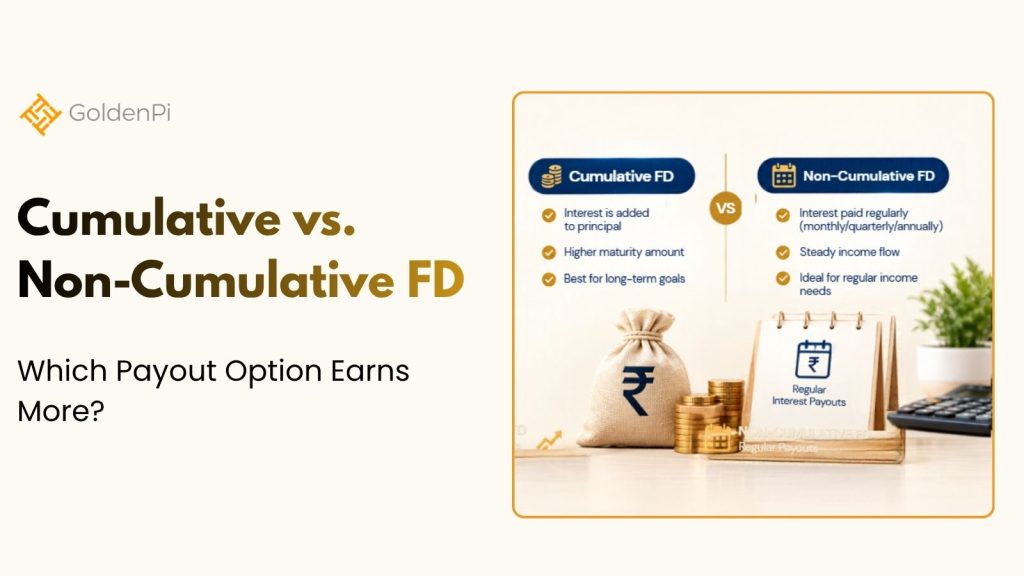
- Cumulative vs Non-Cumulative FD: Which Payout Option Earns More?
Step 3: Factor In Interest Rate Risk
A lot of bond investors in India don’t realize this until they’re hit with a loss: Even a super “safe” government bond can take a hit if interest rates go up. That’s what’s called interest rate risk, and it’s a concern for everyone.
Bond prices and interest rates are inversely related; when one goes up, the other goes down. So, let’s say you buy a 10-year G-Sec at 6.7%, and then the RBI decides to hike rates. The market value of your bond is going to fall, even if you’re guaranteed to get your money back from the government eventually. The longer the bond’s duration, the more it’s going to be affected by rate changes. For instance, if yields rise by 1%, a 10-year bond’s price could drop by around 7-8%. On the other hand, shorter-duration bonds are way less sensitive to these changes.
Looking back, since the RBI started cutting rates in early 2025, we’ve seen a pretty sharp decline in Indian government bond 10-year yields. It’s a great example of how rate changes can really move bond prices around. And more recently, the RBI has kept things steady, leaving the repo rate at 5.25% in its June 2026 meeting, taking a neutral stance to balance out inflation risks and growth concerns.
A rough guide for Indian investors: if you’re only investing for a short period (under 3 years), it’s probably safer to stick with shorter-duration bonds. But if you think rate cuts are on the horizon, long-duration bonds might actually benefit. And if rates are rising, it’s usually better to play it safe with shorter-duration bonds.
Step 4: Sovereign vs. Corporate Bonds — Know What You’re Buying
This is perhaps the most foundational distinction in bond safety.
Sovereign bonds (G-Secs) are backed by the Government of India, making them near-zero risk. As of June 23, 2026, the 10-year G-Sec yield was hovering around 6.8%. Retail investors can jump in directly through multiple options, both from the primary and secondary markets.
Corporate bonds are a different story altogether: They offer comparatively better yields, but they also come with more credit risk, which means the issuers have a higher chance of defaulting.
PSU bonds, issued by entities like NHAI, REC, and NTPC, occupy a middle ground: No formal sovereign guarantee, but they’re still government-backed and generally considered very low risk.
Step 5: Check Liquidity Before You Commit
A bond can be creditworthy but still trap your money if there’s no secondary market for it. The Indian bond market remains largely illiquid. Practically speaking:
- Listed bonds on NSE/BSE offer better exit options, though smaller issues may still have thin trading volumes.
- Unlisted bonds often promise higher yields but can be nearly impossible to sell before maturity.
If you can’t afford to hold a bond to maturity, liquidity should be a primary criterion, not an afterthought.
A Quick Safety Checklist Before You Invest
Before putting money into any bond, run through these questions:
- Is the credit rating investment grade (BBB and above), and when was it last reviewed?
- What is the issuer’s debt-to-equity and interest coverage ratio?
- What is the bond’s duration, and what is your view on interest rates?
- Is this a sovereign, PSU, or corporate bond, and does the risk-return trade-off make sense for you?
- Is the bond listed, and can you exit if needed?
- Are the promised yields abnormally high (above 12%+)? If so, why?
Bond Safety Frequently Asked Questions
Secured bonds are backed by specified assets of the issuer that can be sold off to pay bondholders if the company defaults. Unsecured bonds, on the other hand, have no safety net. As a general rule, if you’re investing in some lower-rated issuers, secured bonds are the way to go, as they offer way better chances of getting your money back in a default scenario.
Interest income from bonds is added to your total income and taxed at your applicable slab rate. Capital gains from selling a bond before maturity are taxed as short-term (if held under 24 months, taxed at slab rate) or long-term (if held over 24 months, taxed at 12.5% without indexation, post the Finance Act 2024 amendments). Sovereign Gold Bonds and some government instruments have specific exemptions — always check the specific bond’s tax treatment before investing.
Only invest through SEBI-registered Online Bond Platform Providers (OBPPs). SEBI maintains a current list of registered OBPPs on its website at sebi.gov.in. Platforms like GoldenPi, Jiraaf, Wint Wealth, and BondBazaar are registered examples, but always verify registration status independently before investing.
Sources
- https://www.stashfin.com/blogs/size-of-bond-market
- https://www.careratings.com/upload/NewsFiles/Studies/Indian%20Bond%20Market-%20Striking%20a%20Chord%20with%20Asian%20Peers.pdf
Ready to Invest?
Visit GoldenPi to explore current bond options. Compare yields, ratings, and tenures in one place and invest online with as little as ₹10,000.
Disclaimer:
Fixed returns do not constitute guaranteed or assured returns. Investments in corporate debt securities and municipal debt securities/securitized debt instruments are subject to credit risks, market risks, and default risks, including delay and/or default in payment. Read all the offer-related documents carefully. This blog/article should not be construed as financial advice or as an offer or recommendation to buy or sell any security or any products/services of/on GoldenPi or any product/services of its third-party client(s). For a detailed calculation of YTM, visit our website. T&C’s Apply.