
When looking for a high-interest fixed deposit in 2026, you may find that some Small Finance Banks offer rates of 8% p.a. or more on selected tenures. These rates can be higher than those offered by many larger banks, making SFB deposits an option worth comparing for investors seeking fixed-income returns.
However, the headline interest rate should not be the only consideration. You should also compare the deposit tenure, premature withdrawal conditions, liquidity requirements, taxation and deposit insurance before choosing an FD.
Which Banks Offer FD Interest Rates Above 8% in 2026?
As of 3 November 2026, several Small Finance Banks offer general-customer FD rates of 8% p.a. or more on selected tenures. These headline rates are available only for specific maturity periods, and senior citizens may be eligible for an additional interest rate.
| Bank | Highest General Rate | Highest Senior-Citizen Rate | Tenure for Highest General Rate |
|---|---|---|---|
| Suryoday Small Finance Bank | 8.25% | 8.60% | 5 years |
| Utkarsh Small Finance Bank | 8.10% | 8.25% | 666 days |
| Jana Small Finance Bank | 8.00% | 8.30% | Above 2 years–3 years |
| Shivalik Small Finance Bank | 8.00% | 8.25% | 23 months 1 day–27 months |
| Equitas Small Finance Bank | 8.00% | 8.50% | 3 years 1 day (Maxima FD) |
| ESAF Small Finance Bank | 8.00% | 8.50% | 800 days |
Rates are for eligible retail deposits below ₹3 crore. Effective dates differ across banks. Suryoday’s quoted rate is part of a festive-period offer available from 30 October to 16 November 2026. Shivalik’s 8.00% rate is for a callable FD; its non-callable FD offers 8.05% for the same tenure. Senior-citizen rates are subject to each bank’s eligibility conditions.
Start investing with just ₹30K & grow your wealth with fixed return opportunities.
Invest Now

Should You Choose an FD Only Because It Offers 8%?
While a higher interest rate can increase the maturity value of an FD, it should not be the only factor influencing your decision.
Before investing, consider the deposit tenure, premature withdrawal conditions, interest payout options, taxation and your liquidity requirements. Also check whether the advertised rate applies to a standard callable FD, a non-callable deposit or a limited-period offer.
Eligible deposits with DICGC-insured banks are covered up to ₹5 lakh per depositor per bank, including principal and accrued interest. Deposits across branches of the same bank are aggregated when calculating this limit, subject to applicable conditions.
It is important to choose a fixed deposit based on your financial needs and investment horizon rather than simply selecting the bank offering the highest headline rate.
Latest Fixed Deposit Updates:
- FD for Minors in India: Account Rules, Taxation & Required Documents
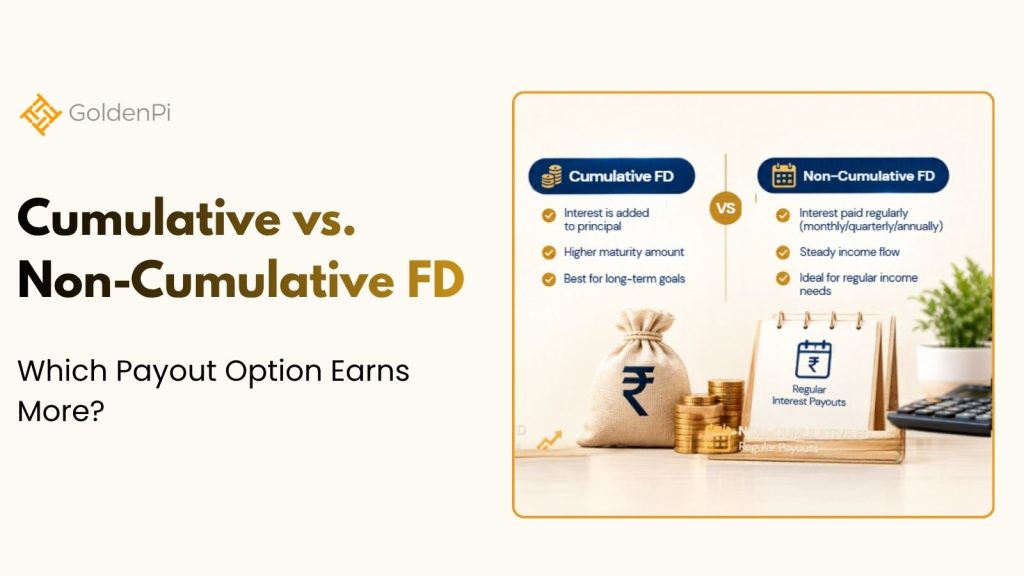
- Cumulative vs Non-Cumulative FD: Which Payout Option Earns More?
- Callable vs Non-Callable FDs: Why Non-Callable Deposits Pay More

Other Fixed-Income Instruments that Investors Can Consider
There are plenty of other fixed-income investment instruments apart from the traditional fixed deposits in India. Depending on his/her financial requirements, the investor might even choose other instruments like listed corporate bonds, G-securities, PSU Bonds, and Non-Convertible Debentures (NCD).
While certain bonds might offer a yield that is higher/lower than the FD rates. But unlike fixed deposits in banks, these investment instruments have some different characteristics.
| Feature | Fixed Deposit | Listed Bonds |
|---|---|---|
| Issuer | Banks | Government entities, PSUs and corporate issuers |
| Return | Interest rate agreed with the bank | Depends on coupon, purchase price, cash flows and yield |
| Tradability | Generally not exchange-traded | Listed bonds may be traded on stock exchanges, subject to liquidity |
| Risk Profile | Depends on the bank; eligible deposits have DICGC cover within the prescribed limit | Depends on issuer credit quality, security, maturity and market conditions |
| Suitable For | Investors seeking bank deposit products with defined terms | Investors evaluating market-traded fixed-income securities |
Unlike eligible bank deposits, listed bonds and NCDs are not covered by DICGC deposit insurance. Their market prices may also fluctuate before maturity, and investors may face credit and liquidity risks.
Frequently Asked Questions (FAQs)
Suryoday, Utkarsh, Jana, Shivalik, Equitas and ESAF Small Finance Banks offer general-customer FD rates of 8% p.a. or more on selected tenures, based on their latest available rate information. The applicable tenure and rate conditions differ by bank.
Not necessarily. Consider the tenure, premature withdrawal conditions, taxation, liquidity requirements and DICGC coverage before choosing an FD.
Yes. Some listed bonds may offer higher yields than bank FDs, but returns depend on the purchase price, coupon, maturity and issuer’s ability to meet its payment obligations.
Eligible deposits with DICGC-insured Small Finance Banks are covered up to ₹5 lakh per depositor per bank, including principal and interest, subject to applicable conditions.
Conclusion
FDs offering 8% or more can provide higher interest than many conventional bank FDs, but these headline rates apply only to specific banks and tenures. Before opening an FD, compare the applicable interest rate, tenure, premature-withdrawal terms, taxation and DICGC coverage. Understanding the features and risks of other fixed-income products can also help investors evaluate their options.
Disclaimer
Fixed returns do not constitute guaranteed or assured returns. Investments in corporate debt securities and municipal debt securities/securitized debt instruments are subject to credit risks, market risks, and default risks, including delay and/or default in payment. Read all the offer-related documents carefully. This blog/article should not be construed as financial advice or as an offer or recommendation to buy or sell any security or any products/services of/on GoldenPi or any product/services of its third-party client(s). For a detailed calculation of YTM, visit our website. T&C’s Apply.


