Opening a fixed deposit in your child’s name is one of the most common ways Indian parents start building a corpus for education or future goals. But an FD for a minor comes with its own account rules, a tax trap that catches many first-time investors, and a specific paperwork list. This guide explains how a minor’s FD works in India, how its interest is taxed under the Income-tax Act, 2025, and which documents you need to open one.
Start investing with just ₹10K & grow your wealth with fixed return opportunities.
Invest Now

Key Features of Minors FD
- Account Holder: The minor is the primary account holder, while the parent or legal guardian operates it until the child turns 18.
- Tenure: Ranging typically from 7 days up to 10 years.
- Safety: Insured up to ₹5 lakh per bank through the Deposit Insurance and Credit Guarantee Corporation (DICGC).
- Interest Rates: Many banks offer similar or slightly higher interest rates (ranging roughly from 6% to 8.2% p.a.) compared to regular FDs.
- Control at Majority: When the minor turns 18, operational control shifts to them after submitting updated KYC documents (like PAN and Aadhaar)
How Does an FD for a Minor Work?
A minor’s FD works like any regular deposit, except that the child is the depositor and a guardian acts on their behalf. Banks and post offices generally allow deposits in a minor’s name, with the parent or legal guardian managing them. Tenure, payout options (cumulative or periodic), and premature withdrawal terms are broadly similar to adult FDs, but policies differ by bank, so confirm before you commit.
The money legally belongs to the child, so you can’t treat it as your own savings later. Once the child turns 18, the deposit is treated as theirs. Expect fresh KYC, the child’s own signature, and a bank that will no longer take instructions from the guardian.
Who Can Open and Operate a Minor’s FD?
A natural guardian (usually a parent) or a court-appointed legal guardian can open and run the FD. RBI rules let minors above 10 operate savings accounts independently, subject to the bank’s conditions, but FD practices vary. Many banks still insist on guardian operation for deposits, so check with your branch.
Tax Rules on Minor FDs
This is where most parents get surprised. The clubbing of a minor child’s income, earlier covered by Section 64(1A) of the Income-tax Act, 1961, now falls under Section 99 of the Income Tax Act, 2025 [1]. In plain terms, the child’s income is added to the income of the parent who earns more and taxed at that parent’s slab rate. The child’s own basic exemption limit doesn’t apply because the child isn’t treated as a separate taxpayer. If parents are divorced, the income is generally clubbed with the custodial parent.
Latest Fixed Deposit Updates:
- FD for Minors in India: Account Rules, Taxation & Required Documents
- Cumulative vs Non-Cumulative FD: Which Payout Option Earns More?
- Callable vs Non-Callable FDs: Why Non-Callable Deposits Pay More

A quick example: You invest ₹5 lakh in your daughter’s name at 7%, which earns ₹35,000 a year. Under the old regime in the 30% slab, you’d be taxed on about ₹33,500 after the ₹1,500 exemption, which comes to roughly ₹10,450 with cess. Had the FD been in your own name, the tax would be around ₹10,900. The saving is negligible.
| Aspect | What the rule says |
| Whose income? | Higher-earning parent (custodial parent if divorced) |
| Tax rate | Parent’s slab rate |
| Exemption | ₹1,500 per child, or the clubbed amount if smaller, on the old regime only |
| Disabled child | Income of a child with a specified disability is not clubbed |
| Child’s own skill or talent income | Not clubbed; taxed in the child’s hands |
| Where to report | Parent’s ITR, under “Income from Other Sources” |
Some practical points follow. If you’ve opted for the new tax regime, the ₹1,500 relief is generally not available, so the whole interest is added to your income. The bank reports interest and TDS against the child’s PAN, so it shows up in the child’s AIS, but you must still declare it in your own return. A mismatch can invite a notice.
Interest on cumulative FDs is taxable every year as it accrues, even though you receive it only at maturity. Gifts don’t help either: even if a grandparent funds the FD, the interest is still clubbed with the parent.
On TDS, banks deduct tax once interest crosses the threshold, currently ₹50,000 a year per bank for non-senior depositors. If no PAN is on record, TDS is deducted at a higher rate regardless of the amount.
Latest Bond Updates:
- FD for Minors in India: Account Rules, Taxation & Required Documents
- Issuer Not Cooperating (INC): What It Means for Bond Investors
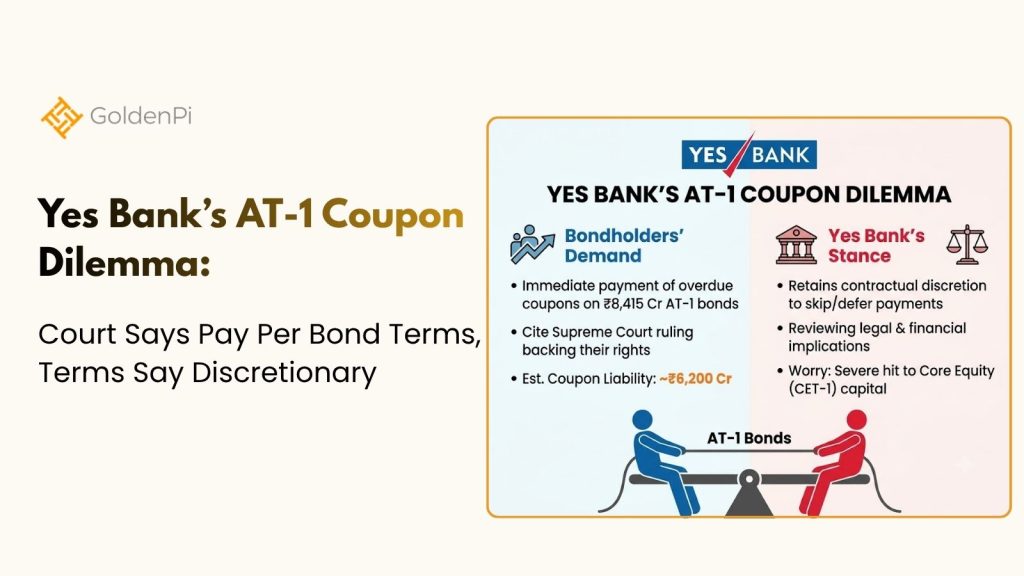
- Yes Bank’s AT-1 Coupon Dilemma: Court Says Pay Per Bond Terms, Terms Say Discretionary
Documents Required to Open an FD in a Minor’s Name
Requirements vary slightly by bank, but you can usually expect the following.
For the minor:
- Birth certificate or school ID/Aadhaar as age proof
- Aadhaar card (if available)
- PAN (optional, but many banks use the guardian’s PAN if the child has none)
- Recent passport-size photograph
For the guardian:
- PAN card (mandatory)
- Aadhaar or another officially valid proof of identity and address
- Proof of relationship with the child (the birth certificate usually covers this)
- Court order, if you’re a legal guardian other than a parent
- Signed FD application form and nomination details
Keep self-attested copies ready. If the child already has a linked savings account, many banks let you open the FD through net banking and skip the branch visit.
Smart Ways to Manage the Tax Impact
You can’t avoid clubbing, but you can plan around it. Tax-free options such as Sukanya Samriddhi Yojana (for a girl child) or PPF in the child’s name offer exempt interest, though contribution limits apply. Before choosing an FD, compare post-tax returns across options, remembering that gains from mutual funds or other assets in the child’s name are clubbed too. Also avoid moving money to your spouse just to save tax, as gifts between spouses have their own clubbing rules and can backfire.
Conclusion
An FD in your child’s name is simple and safe, but it isn’t a tax shortcut. The interest is yours to report, the exemption is small, and the new regime may remove even that. Check your bank’s minor-account policy, gather your KYC documents in advance, and decide which tax regime suits you before investing. If your situation is complex, a quick word with a chartered accountant is worth it.
FD For Minors FAQs
Yes. A minor can hold a bank fixed deposit, generally through a natural or legally appointed guardian. Banks may also allow eligible minors to open and operate term deposit accounts independently under their own policies and applicable RBI guidelines.
There is no universal minimum age for a minor FD operated through a guardian. A guardian can open a term deposit for a child of any age, subject to the bank’s requirements.
Yes. A parent can generally open an FD for a minor child as the child’s natural guardian. The bank will verify the child’s identity, the guardian’s identity and the relationship between them, according to its KYC and account-opening requirements.
Some banks allow minors above a specified age to open and operate term deposits independently, subject to age, amount and operating limits. Under the RBI framework, banks can set the minimum age for independent operation at 10 years or above.
Some banks permit deposits in a minor’s name with a parent or guardian, while others may offer different account structures. Eligibility, ownership records, operation and maturity instructions depend on the bank’s product terms.
The bank generally requires the account holder to complete the necessary KYC and provide fresh operating instructions and specimen signatures. If a guardian operated the account, the bank may also ask the now-adult depositor to confirm the balance.
Sources
Disclaimer
Fixed returns do not constitute guaranteed or assured returns. Investments in corporate debt securities and municipal debt securities/securitized debt instruments are subject to credit risks, market risks, and default risks, including delay and/or default in payment. Read all the offer-related documents carefully. This blog/article should not be construed as financial advice or as an offer or recommendation to buy or sell any security or any products/services of/on GoldenPi or any product/services of its third-party client(s). For a detailed calculation of YTM, visit our website. T&C’s Apply.


