India’s stuck in this weird loop: they pour a ton of cash into social programs, yet the results are always unsatisfactory. Millions of kids are still grappling with basic reading and writing skills. Youth unemployment? Still super high. And public health in rural areas? Patchy at best. What can be understood from this situation is that it’s not just about throwing more money at the problem; it’s about being accountable for what you’re actually achieving.
That’s where Social Impact Bonds come in, and quietly, they’re starting to gain some serious traction in India. If you’re an investor who cares about what your money is doing, then SIBs are definitely worth a closer look. They might just be the thing that helps bridge the gap between spending and results.
What Exactly is a Social Impact Bond?
It’s a financing contract that’s all about outcomes, not just throwing money at a problem and hoping for the best. Unlike your typical bonds, where you lend cash and get a fixed interest rate in return, an SIB flips the script: private investors fund a social program upfront, and then the government (or some philanthropic foundation) pays them back, with interest, but only if the program actually delivers on its pre-defined, independently verified goals. Think of it like this: you’re paying for real results, not just activity for its own sake.
The three main players involved are:
- The investor, who puts up the initial capital and takes on the risk of things not quite working out,
- The service provider (usually an NGO or a social enterprise) that’s actually on the ground, making the programme happen,
- The outcome payer, which is typically the government or some big philanthropic fund, only pays if the program can prove it has met its targets.
And then, outside of all this, you’ve got an independent evaluator who checks whether the program has actually hit its marks. If it hasn’t, investors might have to bear partial or full loss of returns, but if it has, everyone gets their payday, and you can see the social program has done its job.
If the outcome payer’s not a government but rather some development finance institution or international donor, the whole thing’s often called a Development Impact Bond, or DIB for short. The basics are the same. It’s just a matter of who’s signing the check at the end of the day.
Start investing with just ₹10K & grow your wealth with fixed return opportunities.
Invest Now

How India Has Used SIBs So Far
India’s experience with impact bonds is still in the early stages, but the initial pilots have yielded some pretty remarkable results:
The Educate Girls DIB (2015–2018)
The NGO Educate Girls teamed up with the UBS Optimus Foundation (the investor) and the Children’s Investment Fund Foundation, or CIFF (the outcome payer), to cover 166 schools across 140 villages in Bhilwara, Rajasthan. The goal was to target out-of-school girls between the ages of 7 and 14.
Fast forward to the end of the program, and the results are nothing short of impressive: 160% of the learning target was achieved, and 116% of the enrollment target was met, reaching 7,300 children [1] across 166 schools. The UBS Optimus Foundation, which had provided upfront capital of $270,000 [2], managed to recover its initial investment, plus a 15% internal rate of return from CIFF. This particular impact bond has become one of the most cited success stories globally.
India’s Skill Impact Bond
Launched in 2021, it is a more recent endeavor, but one that’s already showing some promising results. The National Skill Development Corporation (NSDC) collaborated with a whole host of organizations, including the British Asian Trust, the Michael & Susan Dell Foundation, CIFF, HSBC India, JSW Foundation, and Dubai Cares, to launch the largest impact bond for employment outcomes in India: a $14.4 million [3] fund that’s targeting 50,000 young people, 60% of whom are women, across various sectors like retail, apparel, healthcare, and logistics.
By October 2024, the program had already trained over 29,000 first-time job seekers across 24 states. Independent verification showed that 70% of enrolled women [3] and 81% of enrolled men [3] managed to secure jobs after training, with 56% of women and 62% of men retaining employment for at least three months.
NABARD’s Social Bond (2023)
In September 2023, NABARD raised ₹1,041 crore [4] through India’s first externally certified AAA-rated social bond, which matures in five years at a coupon of 7.63% [4], rated by both CRISIL and ICRA. While it’s not a pure SIB (the returns are fixed, not outcome-linked), it represents a significant step towards mainstreaming social finance into India’s institutional debt market and signals a growing appetite for purpose-tagged instruments.
India’s Key SIBs at a Glance
| Programme | Sector | Size | Outcome |
| Educate Girls DIB (2015-18) | Education | $270,000 | 160% of learning target achieved; 15% IRR to investor |
| NSDC Skill Impact Bond (2021-) | Employment/Skilling | $14.4 million | 29,000+ trained; 70-81% job placement rate |
| NABARD Social Bond (2023) | Rural/Social Finance | ₹1,040.50 Cr | AAA-rated; 7.63% coupon; 5-year tenor |
| MP SIB (announced 2025) [5] | TBD | TBD | To be issued via NSE’s Social Stock Exchange |
Sources: UBS Optimus Foundation, NSDC India, Business Standard, New Kerala
Social Stock Exchange: The Regulatory Infrastructure
India’s been laying the groundwork for SIBs through SEBI’s Social Stock Exchange framework. NSE became the first functioning Social Stock Exchange back in December 2022, with BSE following soon after. The SSE is a big deal: it lets nonprofit organizations and social enterprises that are actually trying to make a profit raise capital through some innovative mechanisms, like zero-coupon, zero-principal instruments, which are basically just structured donations, and social venture funds.
In June 2025, SEBI introduced this comprehensive framework for ESG Debt Securities [6]—social bonds, sustainability bonds, and sustainability-linked bonds—all of which got dedicated regulatory attention for the first time in India, mandating third-party reviews and post-issuance reporting.
In its Budget 2025, Madhya Pradesh announced plans to introduce social impact bonds [5], and it’s planning to use the SSE as the platform. It’s the first time a state government has announced something like this, and it could set a precedent for other states to follow.
Recent Bond News:
- Beyond the Rupee: Decoding SEBI’s ‘Second Shelf’ for Global Bonds
- G-Sec STRIPS Explained: Zero-Coupon Sovereign Paper for Retail

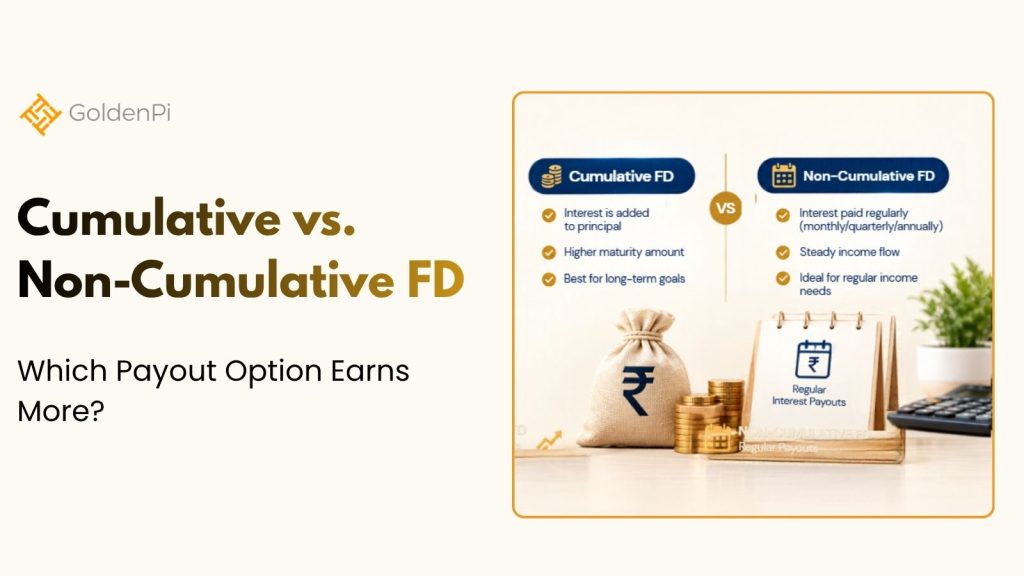
- Cumulative vs Non-Cumulative FD: Which Payout Option Earns More?
SIBs: The Good and the Bad
For investors, SIBs are in a league of their own: they’re all about generating a financial return while funneling cash towards tangible social outcomes. Governments, on the other hand, love them because they can offload delivery risk onto the private sector, so if the program fails, the public purse isn’t left paying the bloated costs.
But SIBs come with some pretty significant structural hurdles as well:
- Outcome definition is hard. Figuring out what actually constitutes success, and then measuring it in a way that’s rigorous and accurate, is a costly and time-intensive process. process. process. process. process. And if your metrics are out of sync, it can totally throw off the whole program.
- Returns are uncertain. Unlike conventional bonds, SIBs come with performance risk, so investors need to be okay with the possibility of lower returns, or worse, no returns at all.
- The ecosystem is thin. India’s SIB market is still missing some key pieces, like standardized legal frameworks, a deep pool of intermediaries, and investors who actually get how they work. As of April 2024, only nine non-profits had managed to raise funds through SSE: ₹12.4 crore [7], which is just a tiny fraction of what this platform could be doing.
- Scale is limited. Most Indian SIBs have been driven by donors, not governments, so for them to really take off, state and central governments need to step up and become the ones paying for outcomes.
Frequently Asked Questions
Not quite. Regular bonds are pretty straightforward: you get a fixed interest rate, no matter what. SIBs, on the other hand, tie the investor’s returns to the actual outcomes of a social program; if it doesn’t deliver, the investors take the hit.
Right now, most Indian SIBs are set up for big institutional investors and philanthropists. But SEBI’s got a plan to open up social finance to a broader range of investors through its Social Stock Exchange framework.
So far, it’s been education, employment, skilling, and rural finance. Next up, probably, are healthcare and affordable housing. India’s got a pretty big gap between what the public programs budget for and what actually gets done on the ground.
Kind of. It’s definitely a social-purpose bond, since the money’s meant to fund social objectives. But it pays a fixed coupon rather than returns based on outcomes, so it’s more like a labeled social bond than a pure, performance-based SIB.
Basically, it’s an SIB where the one paying for the outcomes is an international donor or development finance institution, rather than the government. The Educate Girls program is a big example of a DIB in India.
Ready to Invest?
Visit GoldenPi to explore current bond options. Compare yields, ratings, and tenures in one place and invest online with as little as ₹10,000.
Disclaimer:
Fixed returns do not constitute guaranteed or assured returns. Investments in corporate debt securities and municipal debt securities/securitized debt instruments are subject to credit risks, market risks, and default risks, including delay and/or default in payment. Read all the offer-related documents carefully. This blog/article should not be construed as financial advice or as an offer or recommendation to buy or sell any security or any products/services of/on GoldenPi or any product/services of its third-party client(s). For a detailed calculation of YTM, visit our website. T&C’s Apply.
Sources
- Source [1] – https://www.educategirls.ngo/dib/
- Source [2] – https://www.ubs.com/global/en/media/display-page-ndp/en-20180713-educate-girls-development-impact-bond.html
- Source [3] – https://nsdcindia.org/SkillImpactBondResults_MidTermReport_17072025.pdf
- Source [4] – https://www.business-standard.com/markets/news/nabard-raises-rs-1-041-cr-from-social-bonds-as-investors-demand-high-yield-123092601023_1.html
- Source [5] – https://www.newkerala.com/news/o/mp-introduces-social-impact-bonds-budget-2025-488
- Source [6] – https://www.the-esg-institute.org/blog/india-esg-bond-revolution-inside-sebis-new-framework-for-social-sustainability-and-sustainability-linked-bonds
- Source [7] – https://zerodha.com/varsity/chapter/social-stock-exchanges-an-introduction/